Claimed range567 km
Battery82.6 kWh
Efficiency6.9 kmper kWh
An electric car has no fuel average. The figure that matters is range, and
the 567 km above is the manufacturer's claim on its
home market's test cycle — Pakistani heat and air-conditioning use will
not reproduce it.
At 6.9 km per kWh, your cost per kilometre is
your own electricity tariff divided by 6.9.
We do not print a rupee figure because domestic tariffs in Pakistan are
slabbed, and a single number would be wrong for most households.
Verified fuel figures for this variant are not available yet.
EV range: 567 km (PK spec). Store km/kWh later; km/l fields kept 0. [Retired 2026-09-25: superseded by a researched row for the same car.] [Kept as canonical: Search Console shows this URL earns the clicks.]
2026
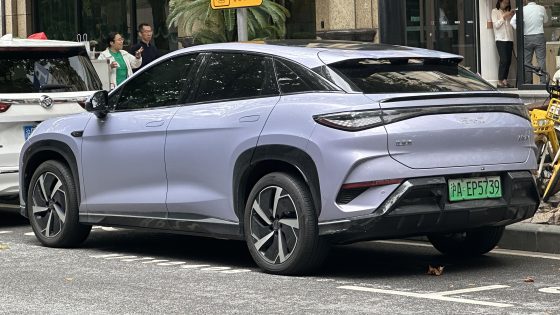
BYD Sealion 7 (EV)
1 variant
Photos
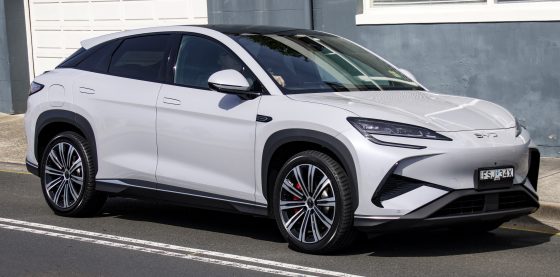
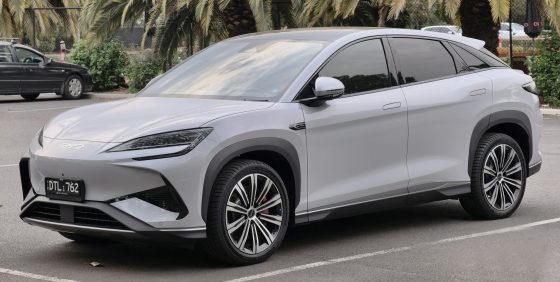
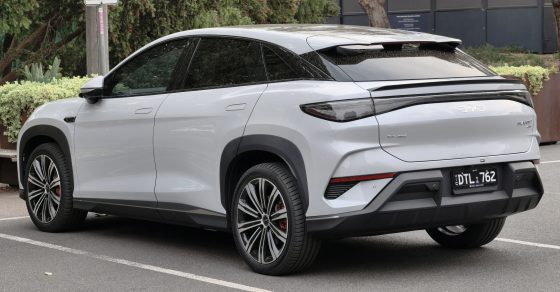
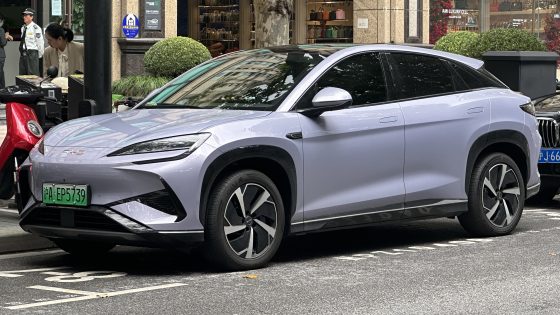
6 photos · 5 exterior, 1 interior · Photo: LuvsMG481, CC BY-SA 4.0 via Wikimedia Commons, Photo: M 93, CC BY-SA 3.0 DE via Wikimedia Commons, Photo: JustAnotherCarDesigner, CC0 via Wikimedia Commons, Photo: Kazyakuruma, CC0 via Wikimedia Commons
2026 BYD Sealion 7 (EV) variants
Prices are ex-factory and exclude freight, registration and withholding tax.
Advanced
Starts at
PKR 15,490,000
- 5
- Seat capacity
- EV
- Engine
- Automatic
- Transmission
- RWD
- Drivetrain
The good & the bad
The good
- ▲The same 82.56 kWh Blade battery as the Seal Premium in a taller, more practical body for Rs 15 lacs less - the strongest value proposition in BYD's Pakistani lineup
- ▲A 567 km claim, and even the more conservative export-cycle figure of around 450 km makes intercity travel on the Karachi to Islamabad axis practical
- ▲Genuinely large - 520 litres behind the rear seats expanding to 1,789, plus a 58-litre front boot, with double-wishbone front suspension rather than struts
- ▲Cabin equipment at a level Pakistani buyers rarely see at this price - quilted leather, 128-colour ambient lighting, head-up display, 12-speaker audio, foot-gesture tailgate
- ▲LFP Blade chemistry tolerates Pakistani heat and high states of charge better than the nickel-based packs in several competitors
- ▲The distributor is Hubco-backed, with the charging network operated by a sister company rather than outsourced
The bad
- ▼Launched January 2026, so there is effectively no Pakistani ownership history. No published owner reviews eight months in - buyers are the test fleet
- ▼Imported, with a parts supply chain that runs from China by sea. A damaged panel or a failed high-voltage component means an international order, not a trip to the parts counter
- ▼Service is three cities only. Elsewhere there is no authorised workshop and no independent capable of working on the high-voltage system
- ▼Resale is entirely unknown, and BYD is actively compressing its own used values by adding models - the Atto 2 arrived the same month, Denza in September, and a locally assembled Sealion 6 is due, which will make an imported Sealion 7 look expensive
- ▼Battery serviceability beyond warranty is untested, with no local pack repair capability and no published out-of-warranty replacement cost
- ▼The advertised charging corridor between Karachi and Peshawar is a plan, not infrastructure, and load-shedding makes home charging unreliable in many areas
- ▼Pakistan gets only the single-motor rear-drive trim; the dual-motor version that justifies the Sealion 7's performance billing elsewhere is not offered
Our BYD Sealion 7 (EV) review
Our takeCarMania research desk
Colours
Cosmos Black
Aurora White
Atlantis Grey
Shark Grey
BYD Sealion 7 (EV) by year
Photographs: Photo: LuvsMG481, CC BY-SA 4.0 via Wikimedia Commons; Photo: M 93, CC BY-SA 3.0 DE via Wikimedia Commons; Photo: JustAnotherCarDesigner, CC0 via Wikimedia Commons; Photo: Kazyakuruma, CC0 via Wikimedia Commons.
 +2
+2