
Badshahi Mosque
Walled City of Lahore, Punjab
On video
Badshahi Mosque, Lahore — 1673 by Abz S (BlueBox) on YouTube. Not ours, and not an endorsement — it is the clearest look at the drive and the valley we could find.
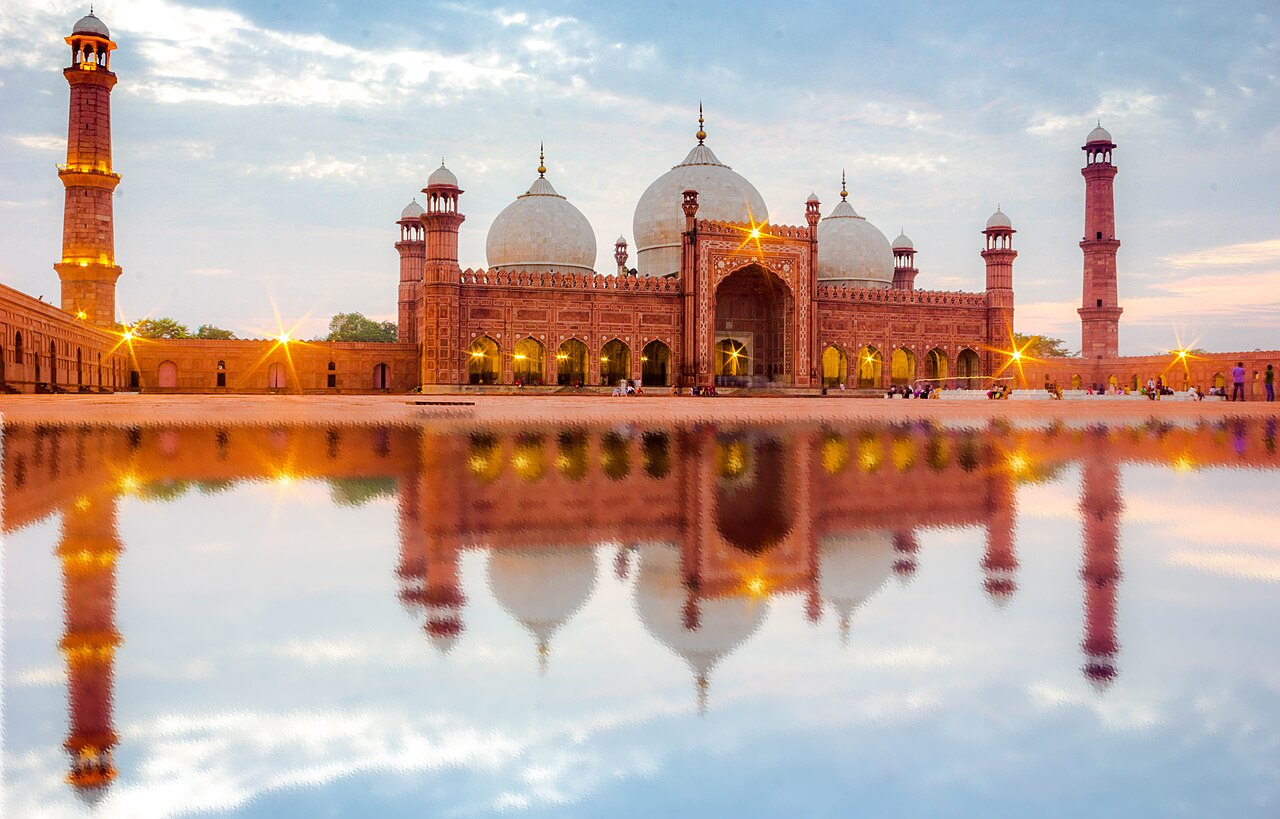
Aurangzeb built the Badshahi Mosque between 1671 and 1673, facing the Lahore Fort across the Hazuri Bagh. It was the largest mosque in the world for over three hundred years, and it is carved red sandstone inlaid with marble — a building by an emperor who otherwise did not build.
What it costs to drive there
| From | Distance | Driving | Petrol |
|---|---|---|---|
| Islamabad | 368 km | 4.2 h | Rs 10,100 |
| Rawalpindi | 356 km | 4.2 h | Rs 9,700 |
| Karachi | 1213 km | 13.8 h | Rs 33,200 |
| Peshawar | 501 km | 5.6 h | Rs 13,700 |
| Multan | 330 km | 3.8 h | Rs 9,000 |
| Quetta | 930 km | 12.3 h | Rs 25,400 |
A car doing 12 km/l at today’s Rs 328.00/litre. Open a row to work it out for your own car, your own speed and with the air conditioning on — or see every distance from Lahore.
What it is
A Mughal imperial mosque in Lahore, built between 1671 and 1673 by Aurangzeb, standing opposite the Lahore Fort on the northern edge of the historic Walled City.
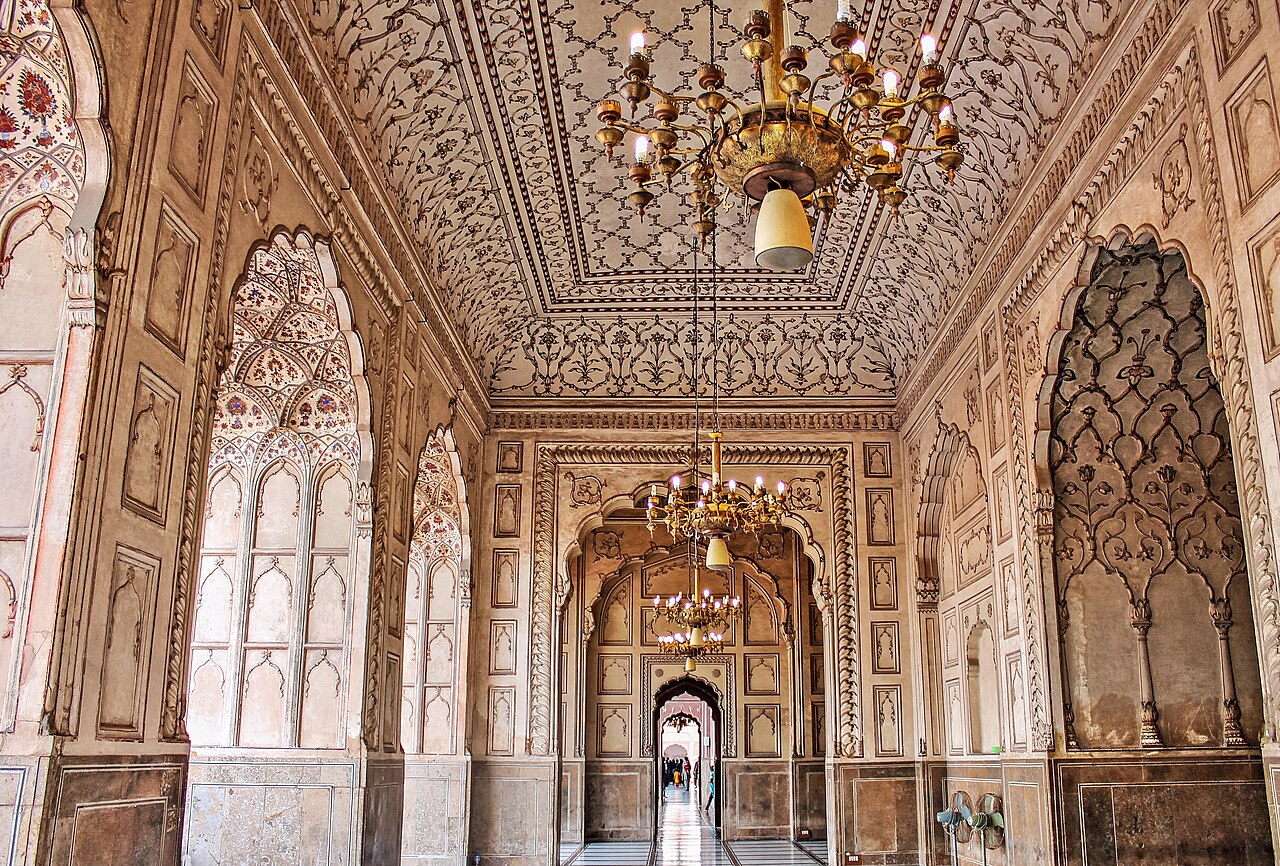
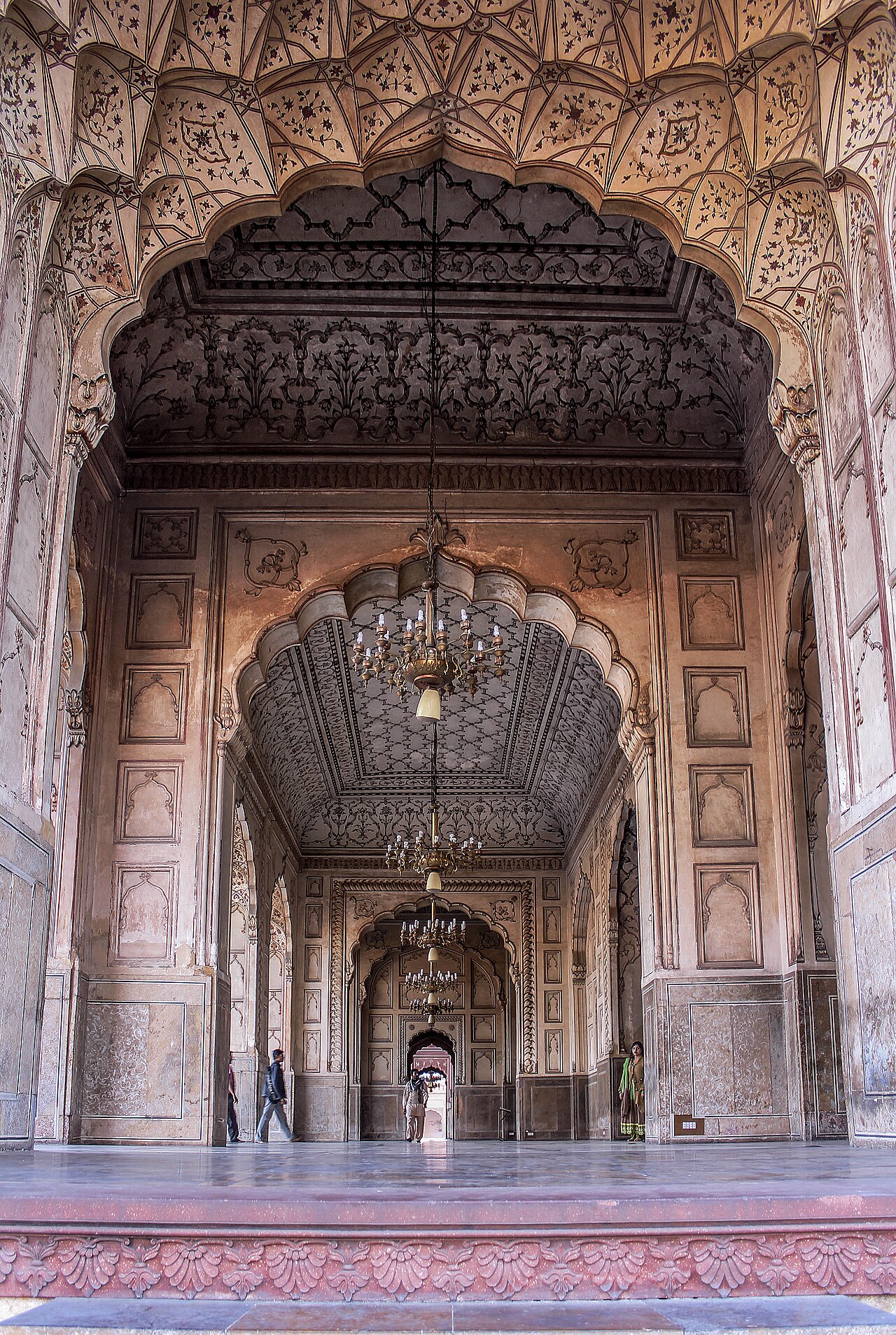
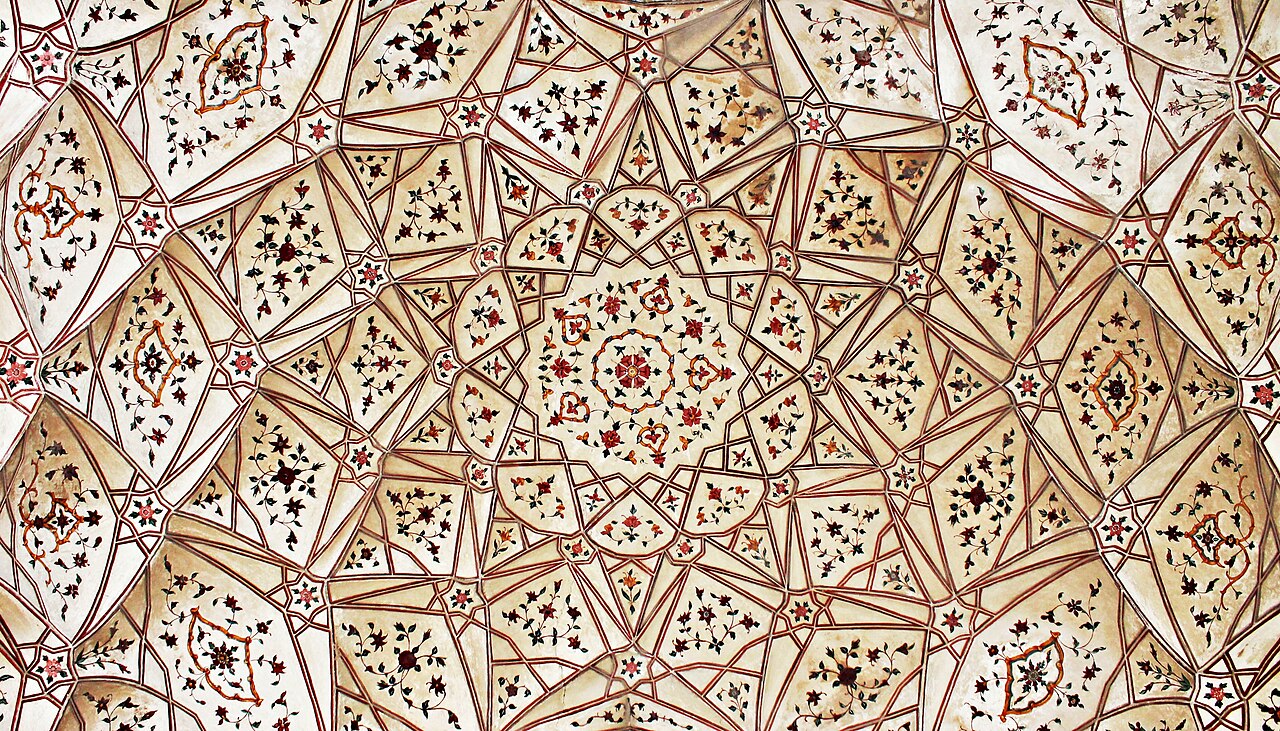
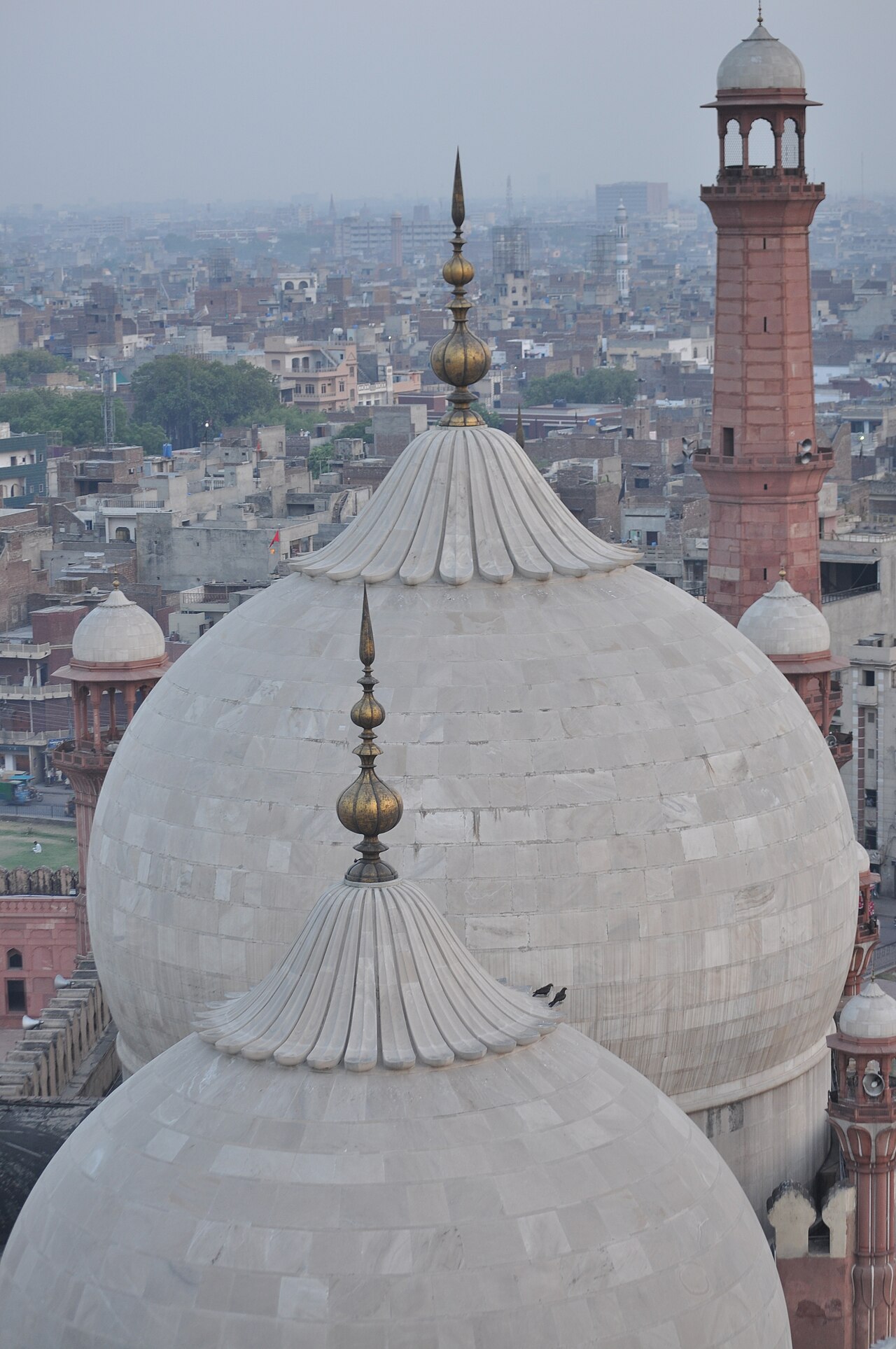
The exterior is carved red sandstone with marble inlay. It was the largest mosque built in the Mughal era and remained the largest in the world for over three centuries, until the late twentieth century. It is now the third largest in Pakistan.
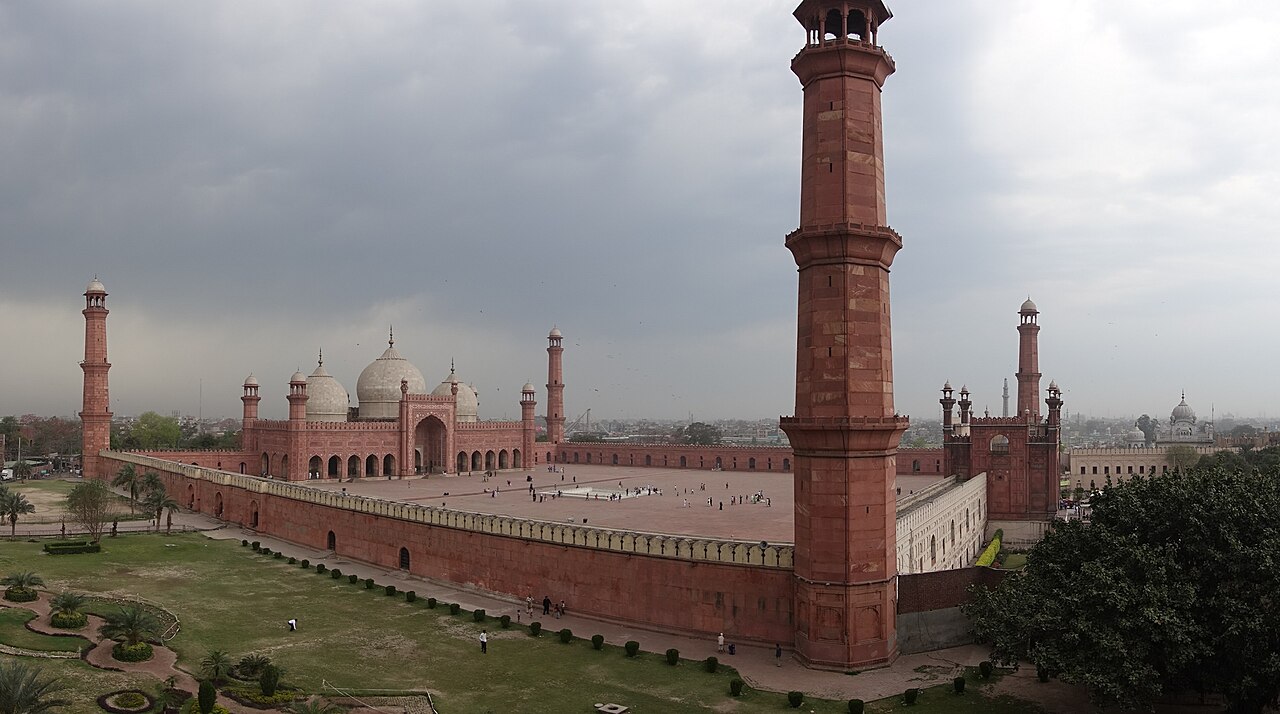
Built by the emperor who did not build
Aurangzeb, unlike the emperors before him, was not a patron of art and architecture; most of his reign went on military campaigns that expanded the empire. This mosque is the exception, and it was built to commemorate those campaigns — specifically the ones in southern India against the Maratha ruler Shivaji.
That is the thing worth standing in front of it knowing. It is a victory monument in the shape of a mosque, by a man who built almost nothing else.
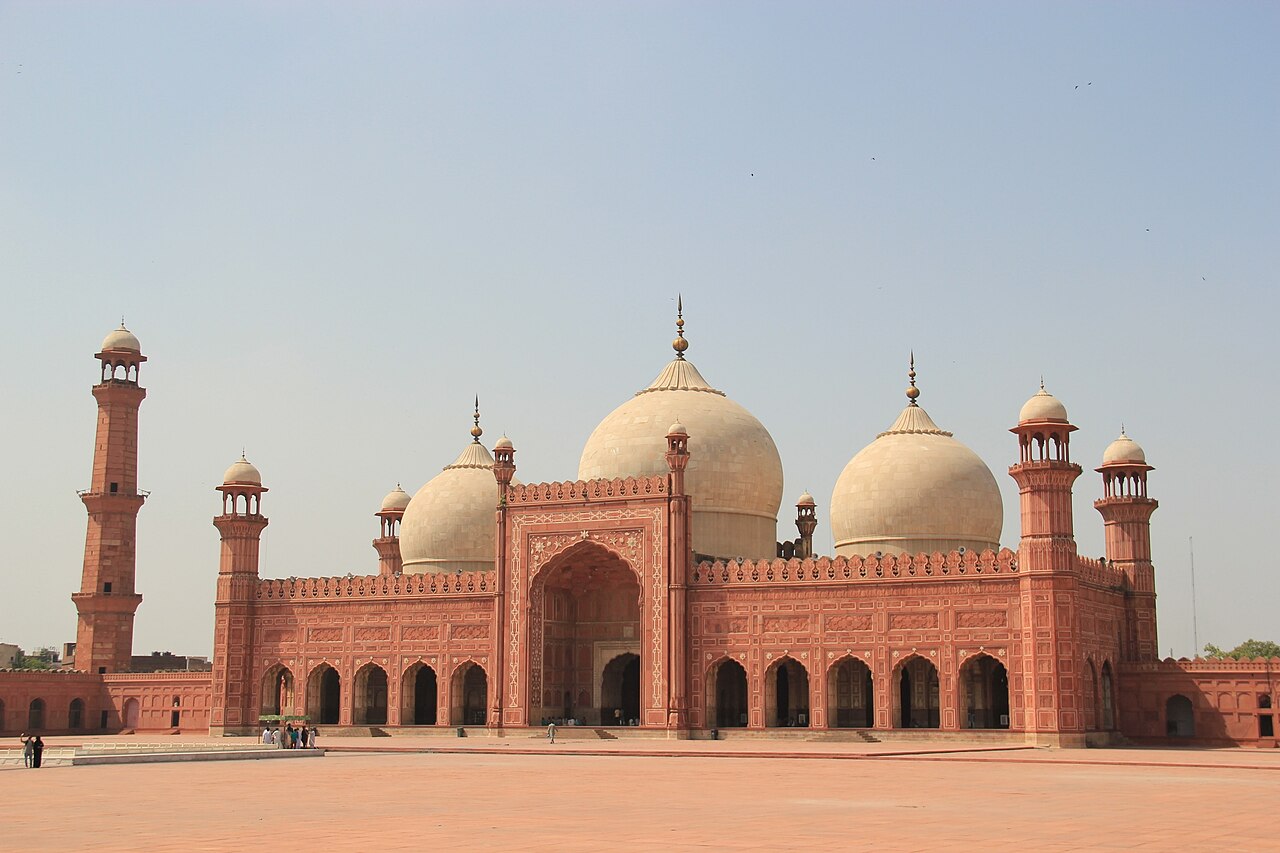
The quadrangle, and who is buried at the gate
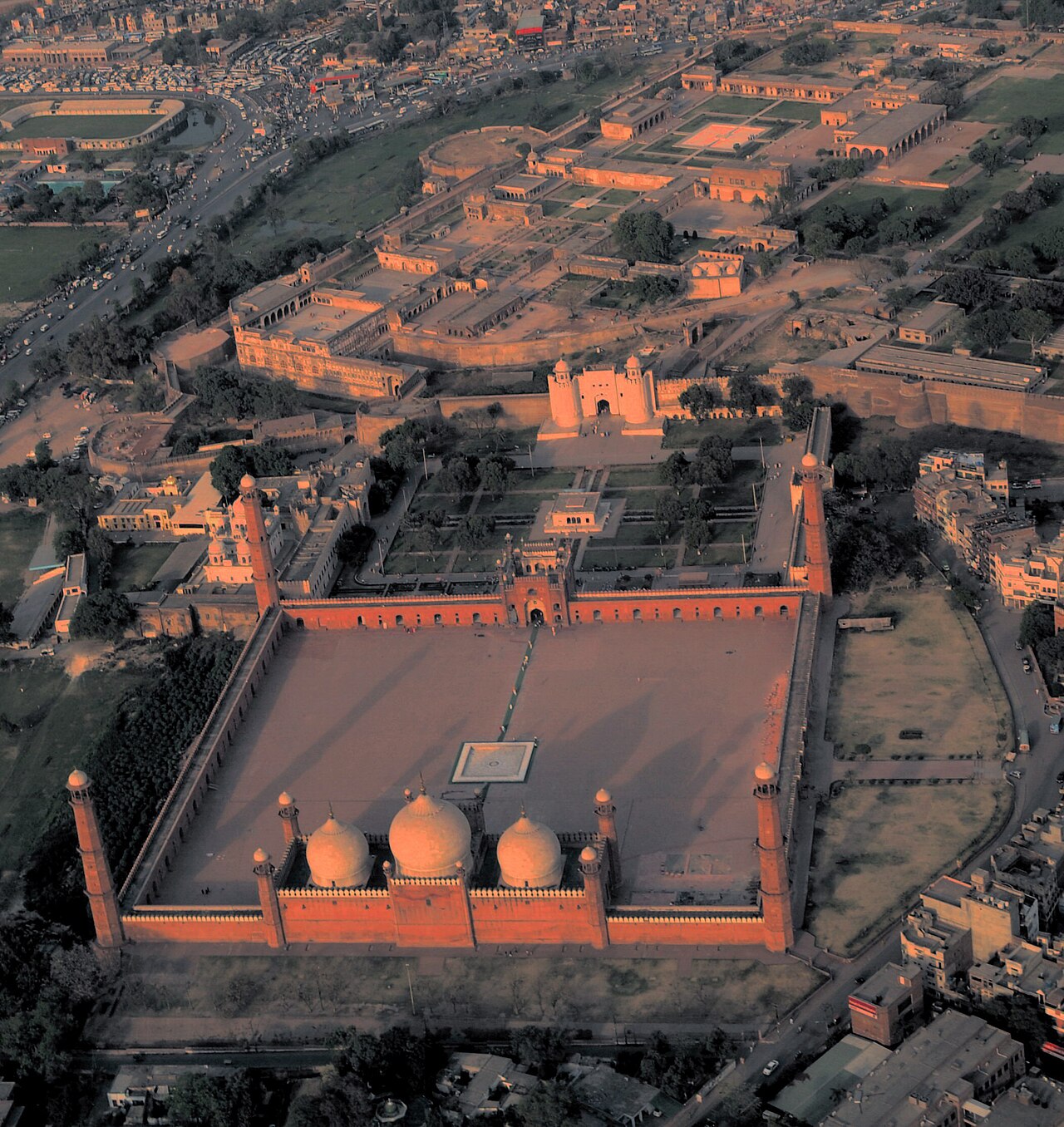
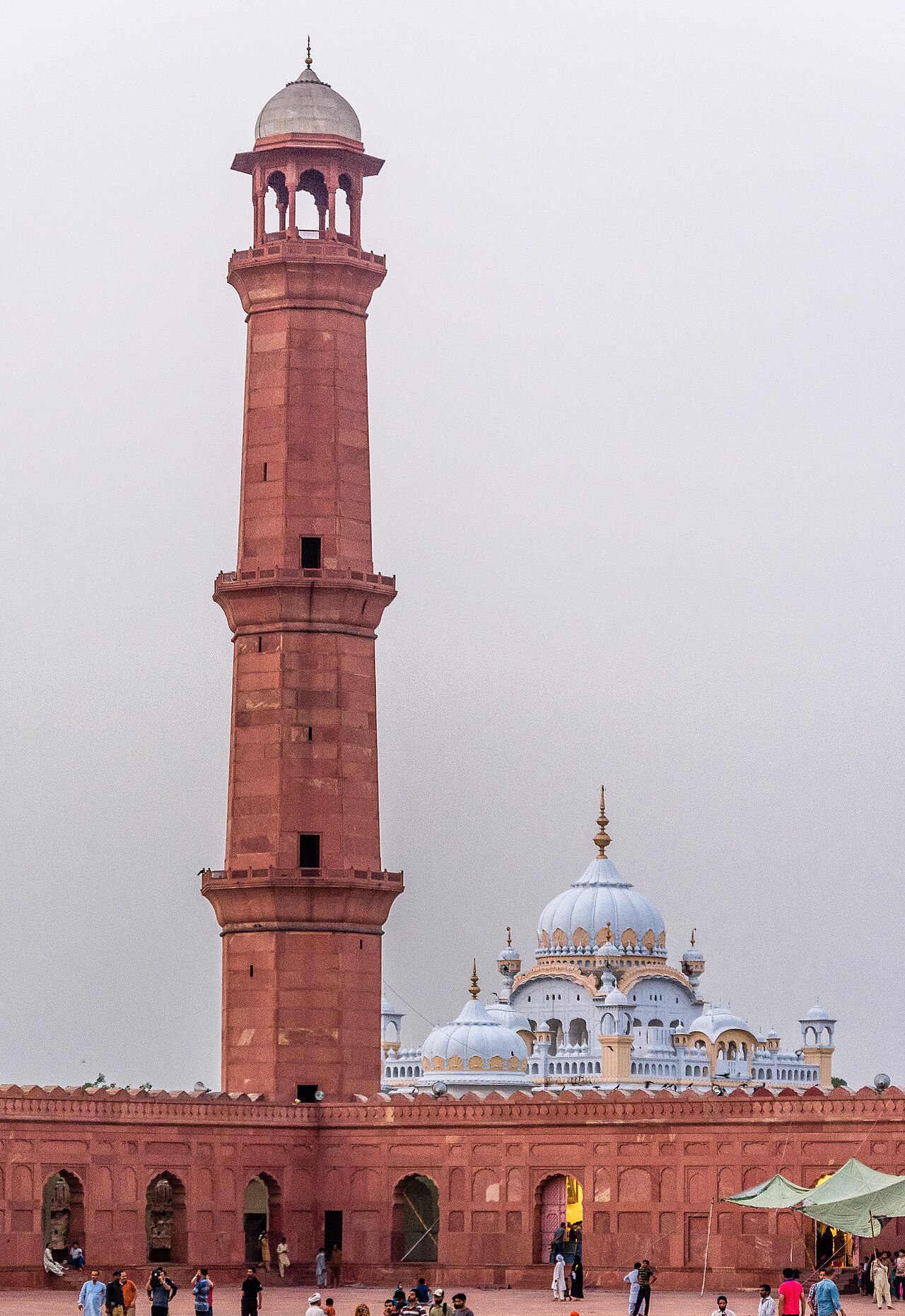
The entrance is on the western side of the rectangular Hazuri Bagh and faces the Alamgiri Gate of the Lahore Fort on the eastern side. The Roshnai Gate — one of the original thirteen gates of Lahore — is to the south.
Near the mosque's entrance is the tomb of Muhammad Iqbal. Also near it is the tomb of Sir Sikandar Hayat Khan, who is credited with much of the mosque's preservation and restoration.
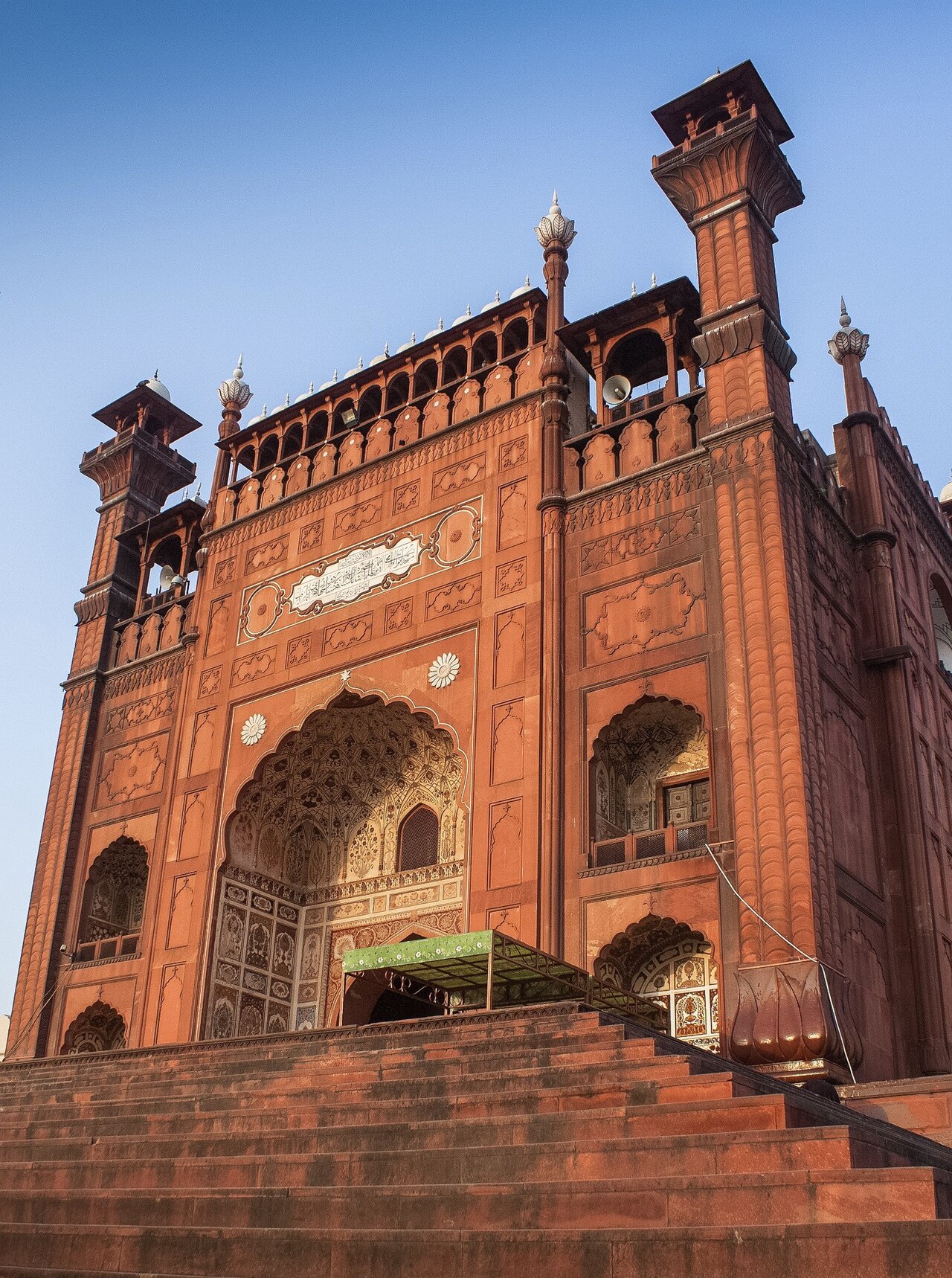
What there is to see
- The courtyard
- The largest mosque courtyard in the world when it was built.
- The prayer hall
- Under the three marble domes, at the western end.
- Iqbal's tomb
- At the entrance, in the Hazuri Bagh.
- Hazuri Bagh
- The quadrangle between the mosque, the fort, the Roshnai Gate and Ranjit Singh's samadhi.
- Lahore Fort
- Directly opposite, through the Alamgiri Gate.
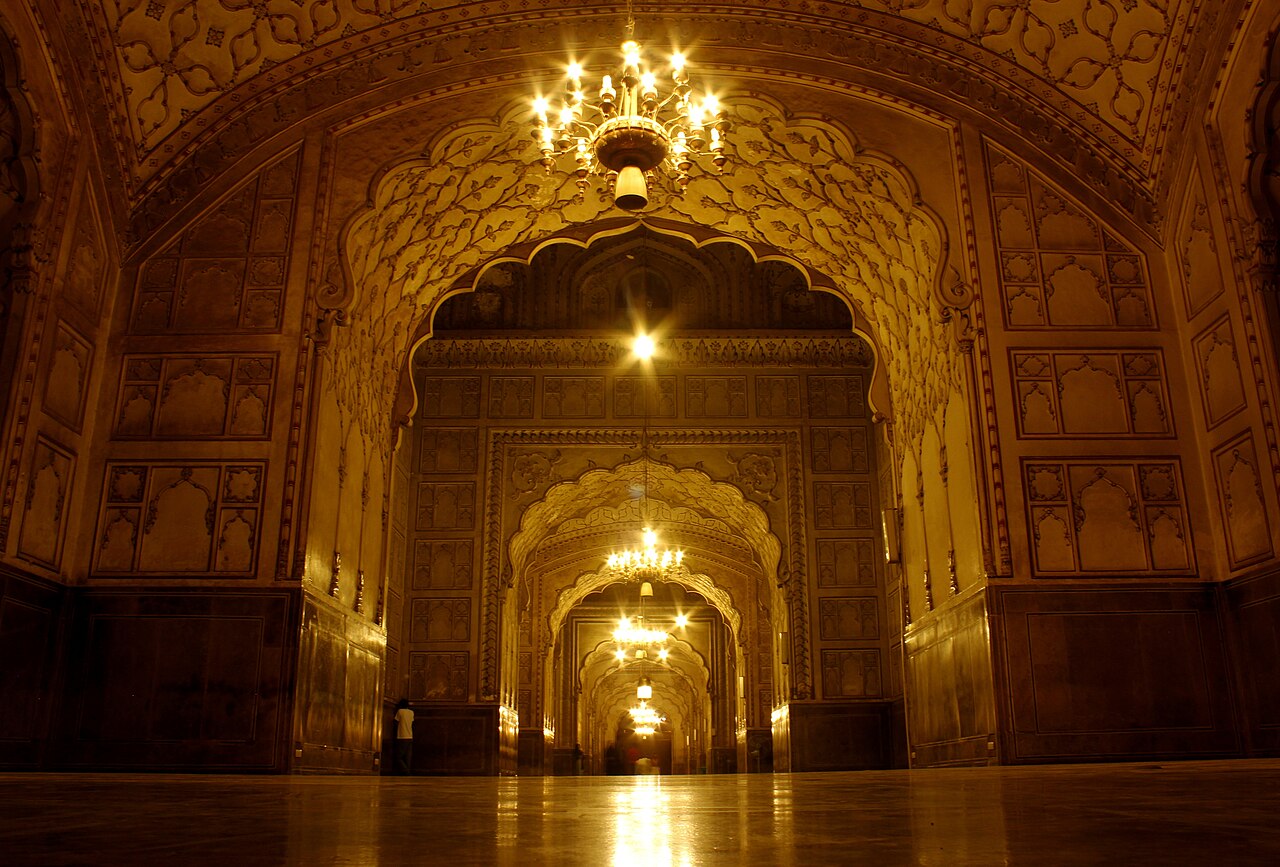
When to go, and when not to
October to March. The courtyard is a vast expanse of stone with no shade at all, and in summer it is genuinely too hot to cross barefoot in the middle of the day.
Late afternoon, when the sandstone goes the colour it is famous for, and when the call to prayer fills the quadrangle. This is a working mosque; dress and behave accordingly.
Where this comes from
- Badshahi Mosque — Wikipedia — The 1671–1673 construction under Aurangzeb, the red sandstone and marble inlay, its standing as the largest mosque in the world for over three hundred years and third largest in Pakistan now, the Shivaji campaigns as the occasion for it, the Hazuri Bagh and Roshnai Gate, and the tombs of Iqbal and Sikandar Hayat Khan. Written from it, not copied; Wikipedia is CC BY-SA 4.0.
- OpenStreetMap — Road distances and driving times, via OSRM.