
Katas Raj
Chakwal District, Punjab
On video
Inside a Huge Hindu Temple Complex in Pakistan (Katas Raj) by Karl Rock on YouTube. Not ours, and not an endorsement — it is the clearest look at the drive and the valley we could find.
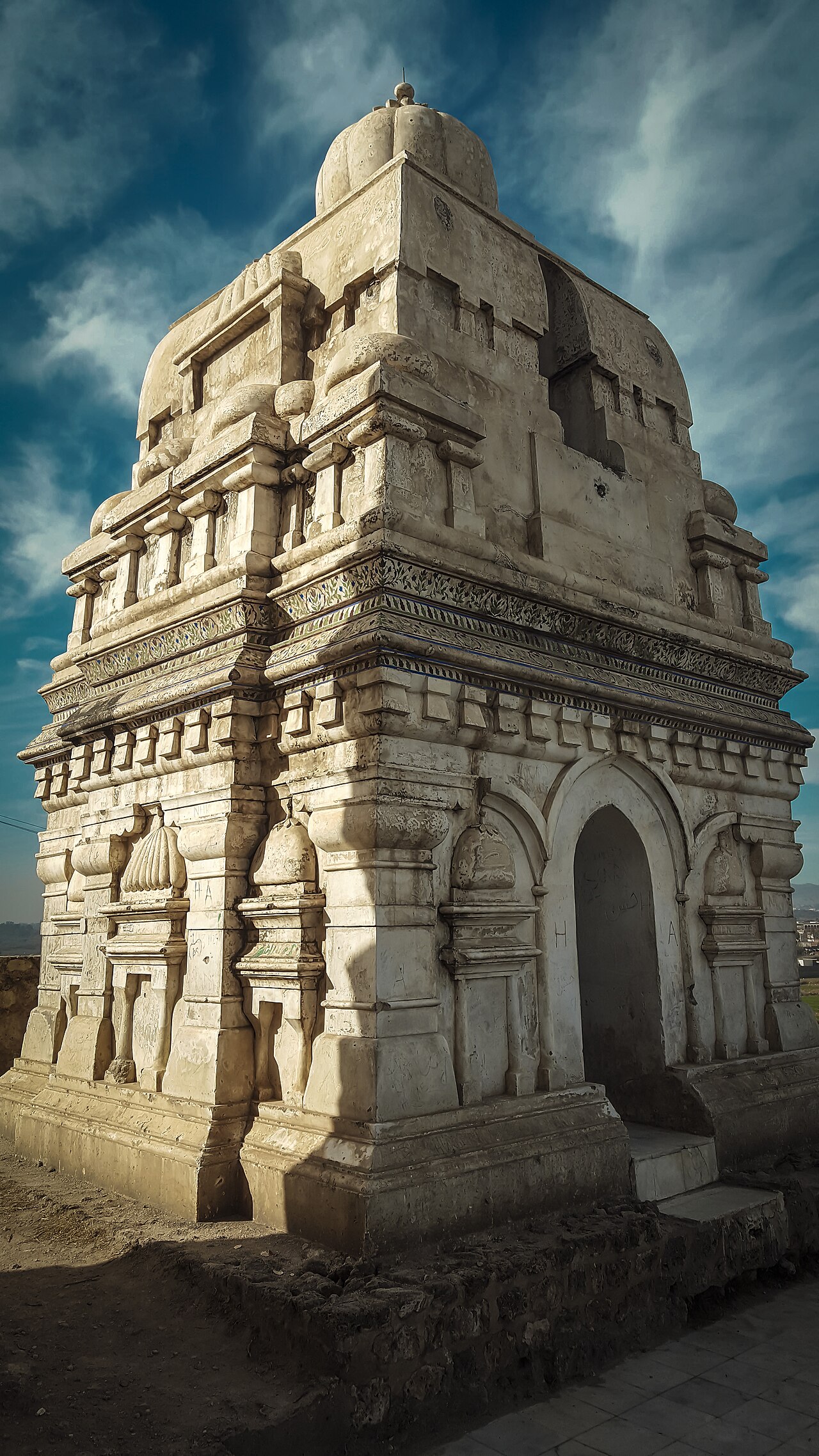
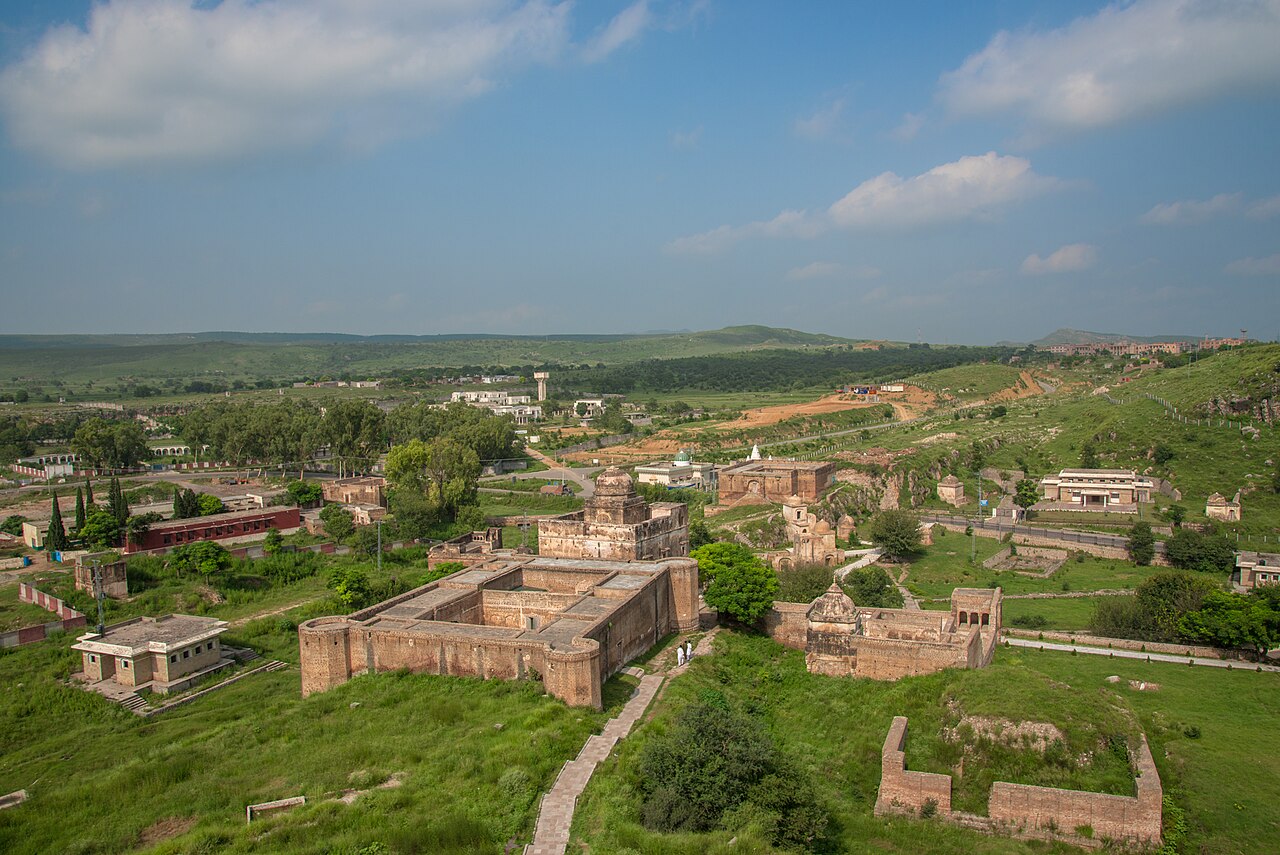
Katas Raj is a complex of Hindu temples around a sacred pool in the Salt Range, linked straight to the M2 motorway. The oldest of them is from the sixth century, a Chinese monk described a temple here in the fourth, and it is one of the few places in Pakistan where you can park and walk into something this old.
What it costs to drive there
| From | Distance | Driving | Petrol |
|---|---|---|---|
| Islamabad | 156 km | 1.8 h | Rs 4,200 |
| Rawalpindi | 145 km | 1.8 h | Rs 3,900 |
| Lahore | 257 km | 3.1 h | Rs 7,000 |
| Karachi | 1311 km | 15.5 h | Rs 35,500 |
| Peshawar | 290 km | 3.2 h | Rs 7,900 |
| Multan | 427 km | 5.4 h | Rs 11,600 |
A car doing 12 km/l at today’s Rs 325.00/litre. Open a row to work it out for your own car, your own speed and with the air conditioning on — or see every distance from Katas Raj.
What it is
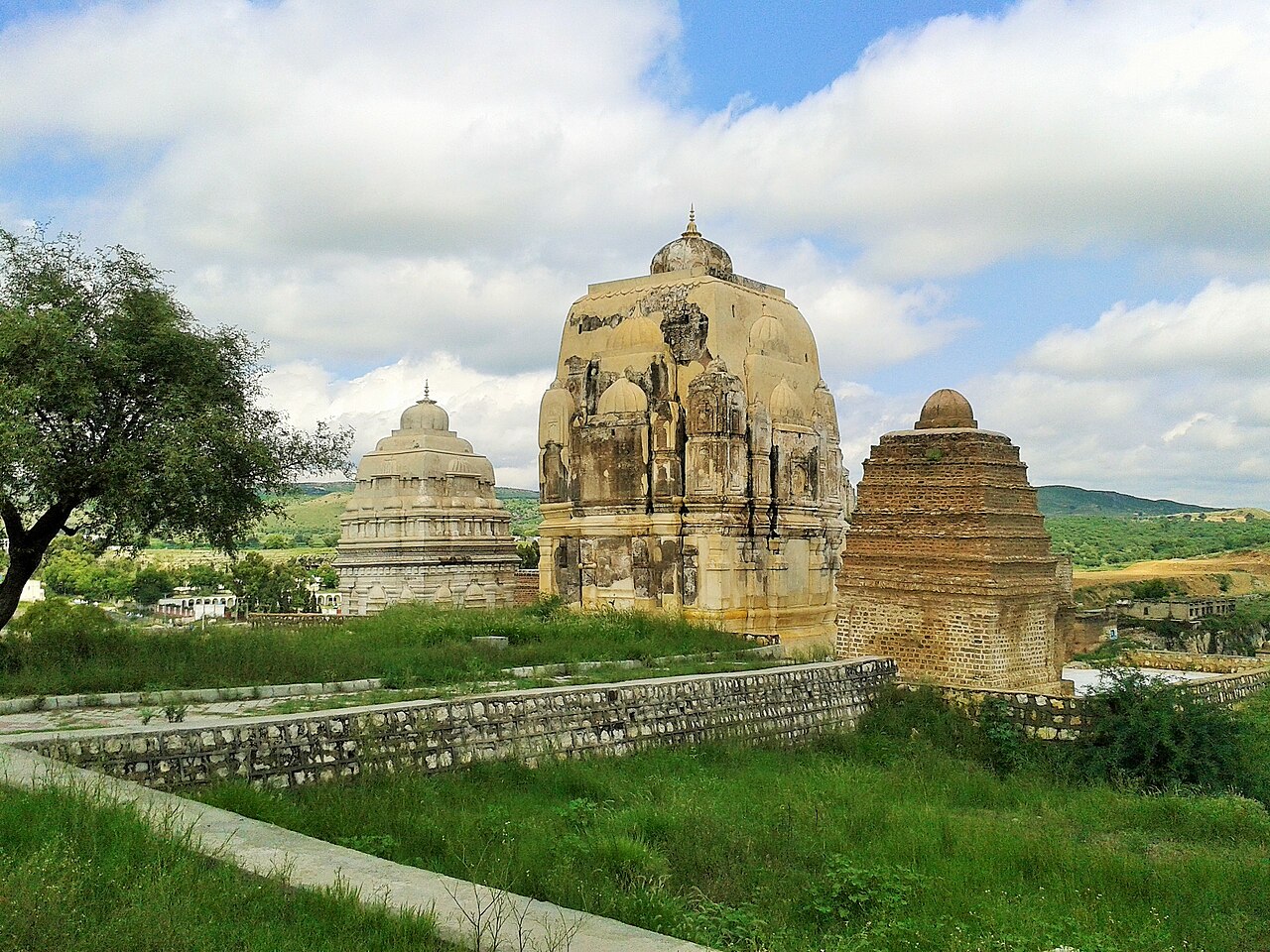
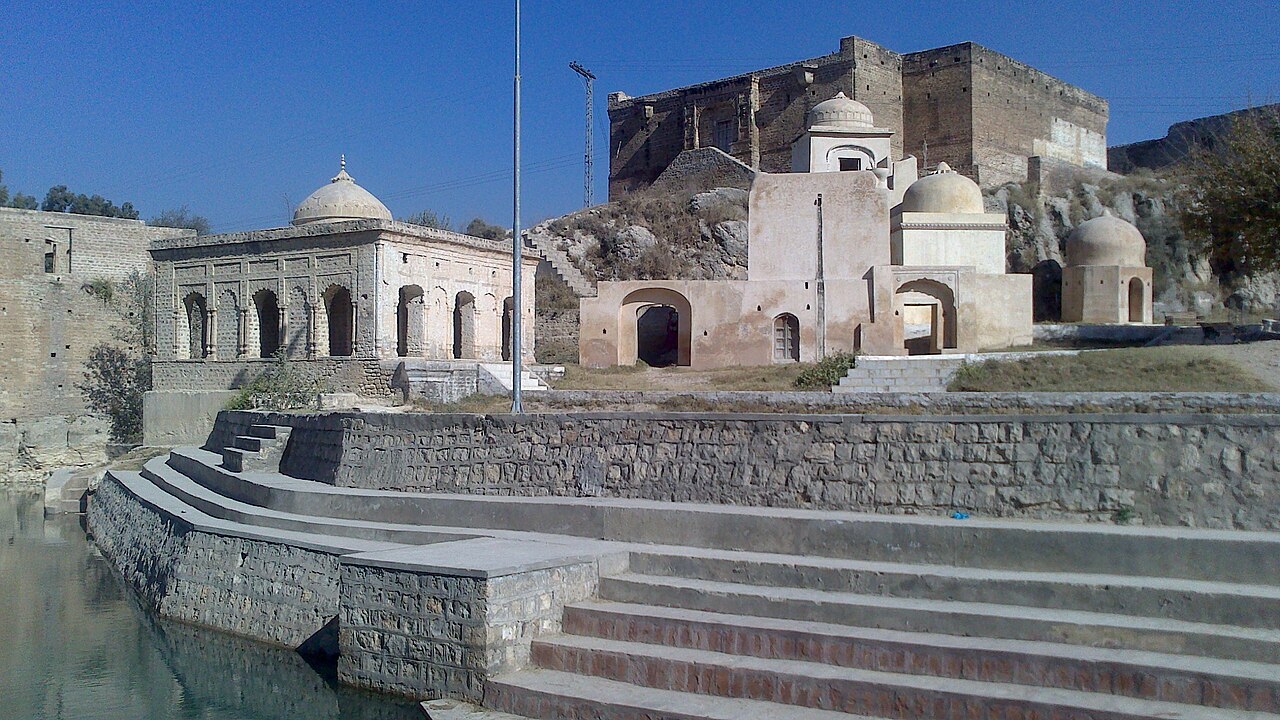
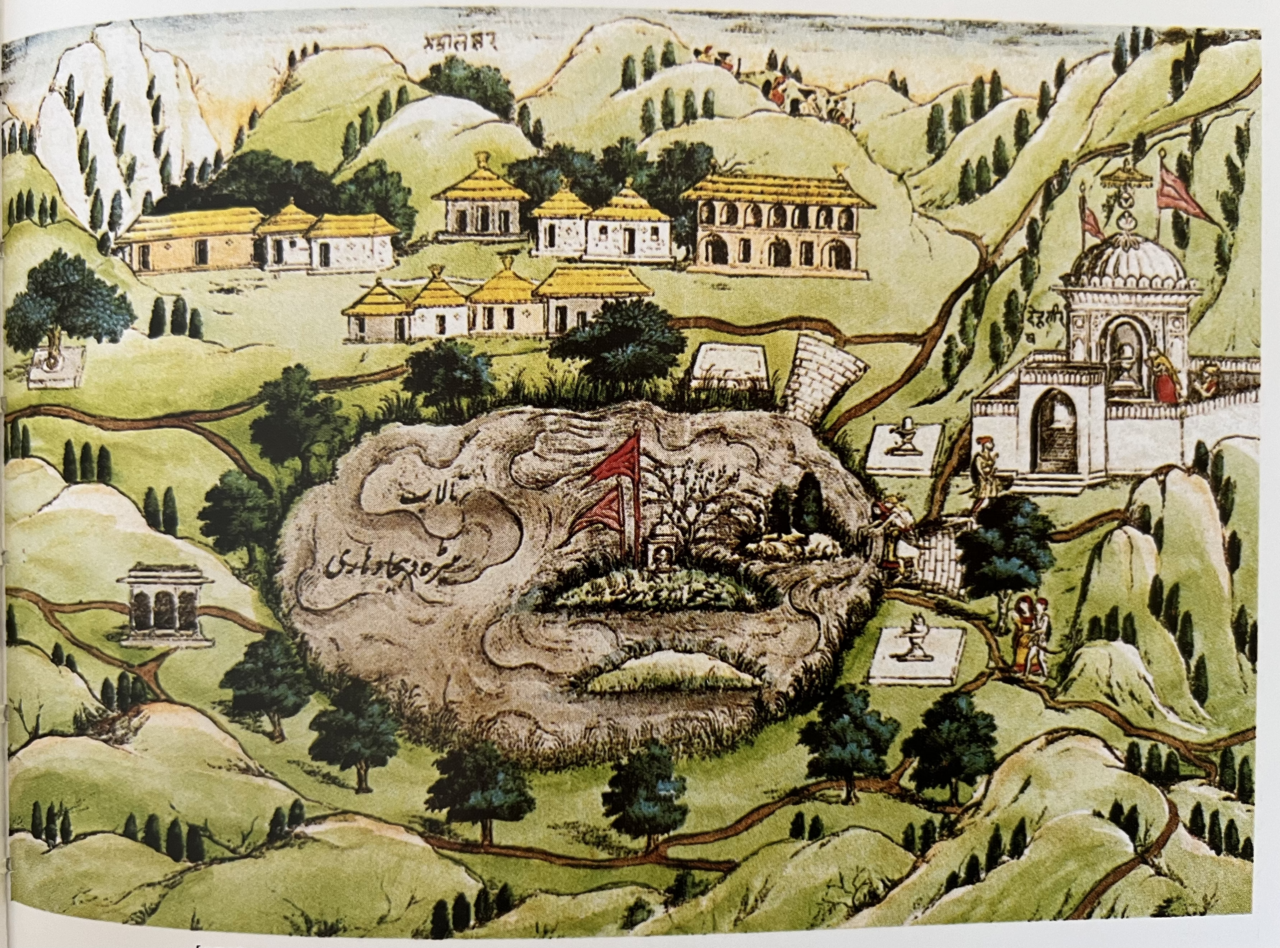
A Hindu temple complex in the Salt Range of Punjab, near Kallar Kahar on the Pothohar plateau at about 610 metres. The main group is linked by walkways around a pond called Katas, which Hindus regard as sacred; a second group, Satgarha, stands some distance to the south-west.
The oldest temple dates to the sixth century CE. The site is linked to the M2 motorway in the municipal committee of Choa Saidan Shah, Chakwal District — which is why it is one of the easiest ancient sites in the country to reach by car.
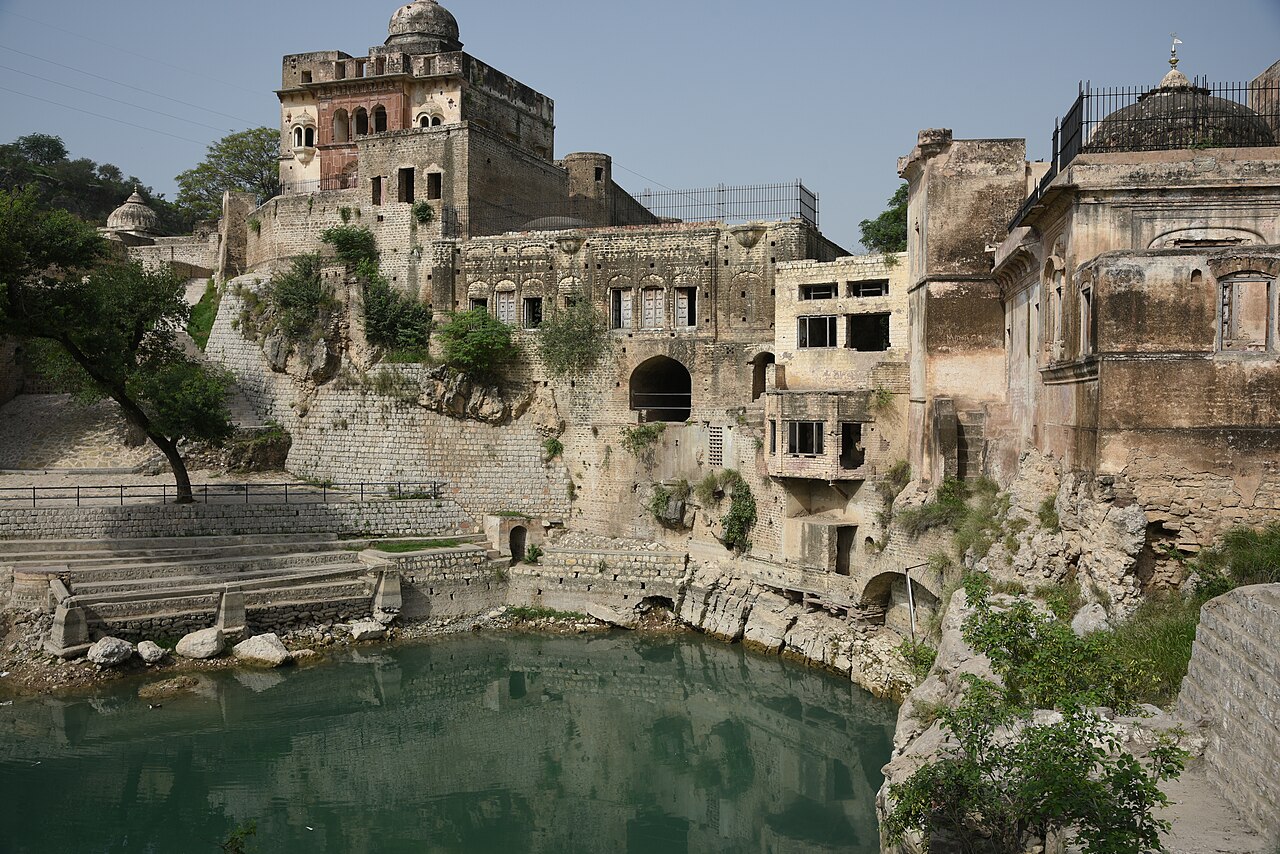
The name, and the pool
The name comes from the Sanskrit kataksha, 'tearful eyes'. The pond was originally Viskund, 'poison spring', then Amarkund, then Chamaskund, and finally Katakshkund — the spring of tearful eyes. In Urdu and Persian it is Chashm-e-Alam, sorrowful eyes.
The pool is the reason the complex exists and still the centre of it.
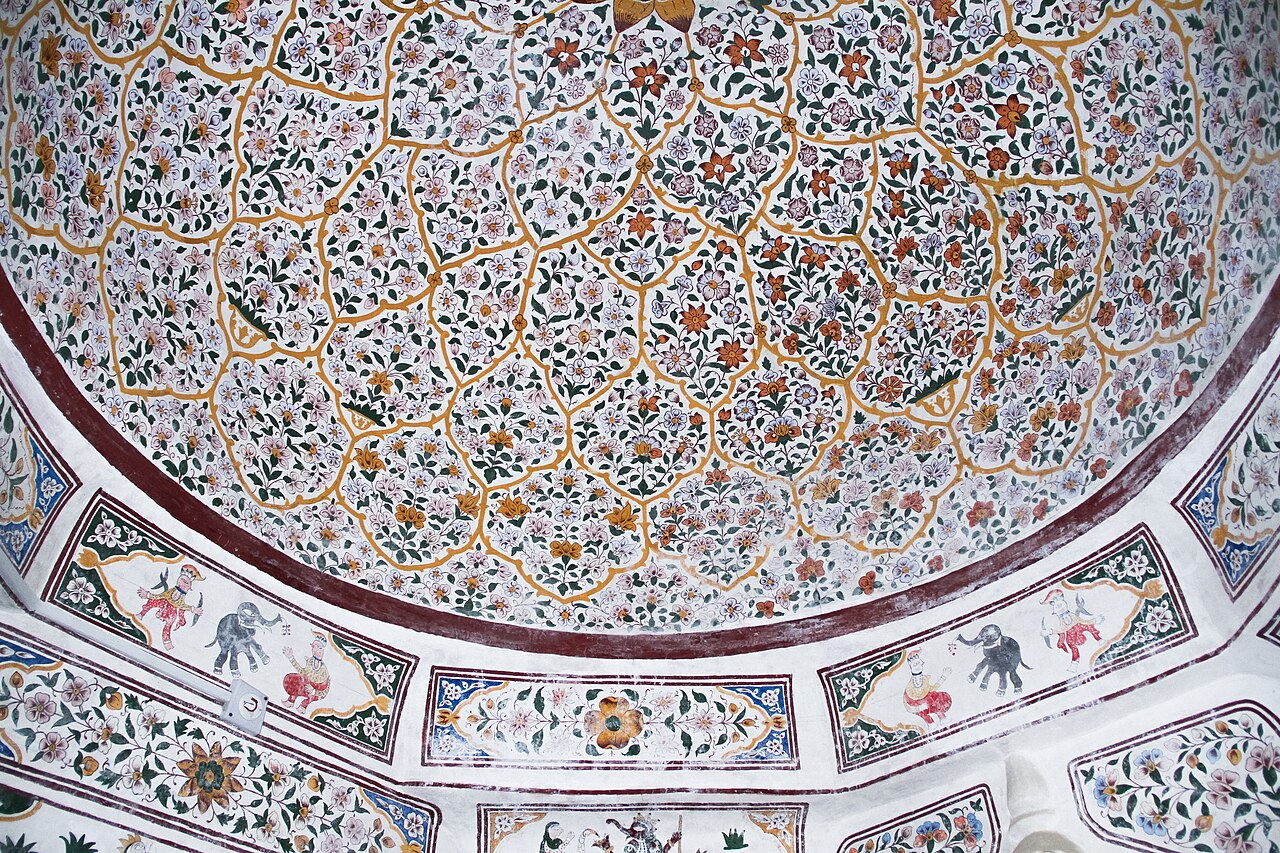
How old, and the argument about it
The Salt Range has a deep archaeological record: prehistoric axes, granite knives, terracotta bangles and pottery similar to finds at Harappa have all come out of Katas Raj, though the pottery has not been dated.
The fourth-century Chinese monk Faxian described a temple here. The seventh-century traveller Xuanzang reported a Buddhist stupa from the time of Ashoka, two hundred feet tall and surrounded by ten springs. The Hindu Shahi dynasties built temples here from the mid-seventh to the tenth centuries — though the nineteenth-century British archaeologist Alexander Cunningham dated the shrines to around 66 BCE instead. The same dynasties funded Malot, Amb, Nandana and other temples across northern Punjab.
The dates genuinely conflict in the sources, which is worth knowing before watching a video that states one of them flatly.
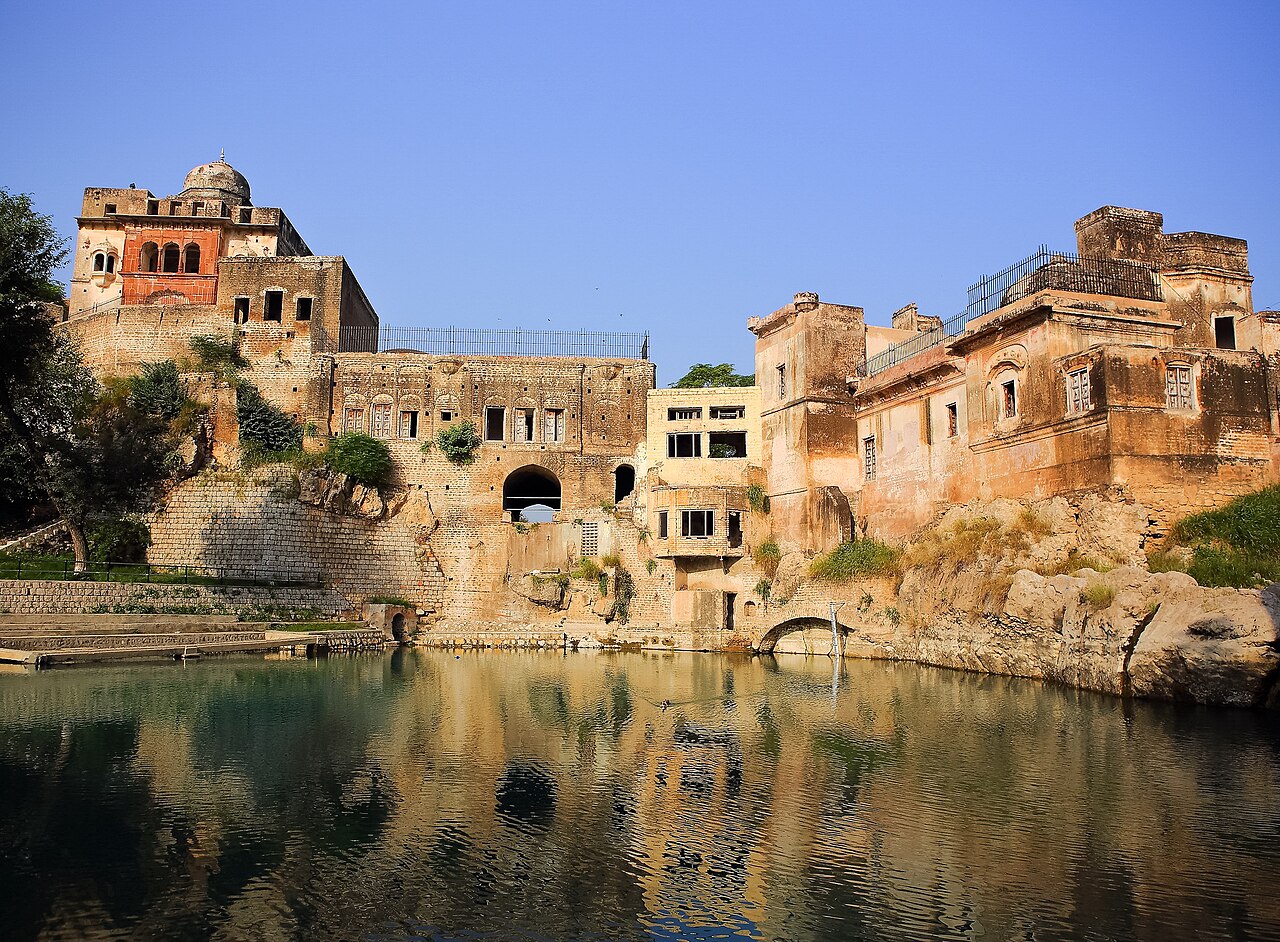
What there is to see
- The pool
- Katas itself, with the main temple group around it.
- Satgarha
- The older group to the south-west, a short walk from the main complex.
- The haveli
- The building in the complex attributed to Hari Singh Nalwa.
- Khewra Salt Mine
- In the same Salt Range and an easy pairing by car.
- Kallar Kahar
- Nearby, with Takht-e-Babri and the lake.
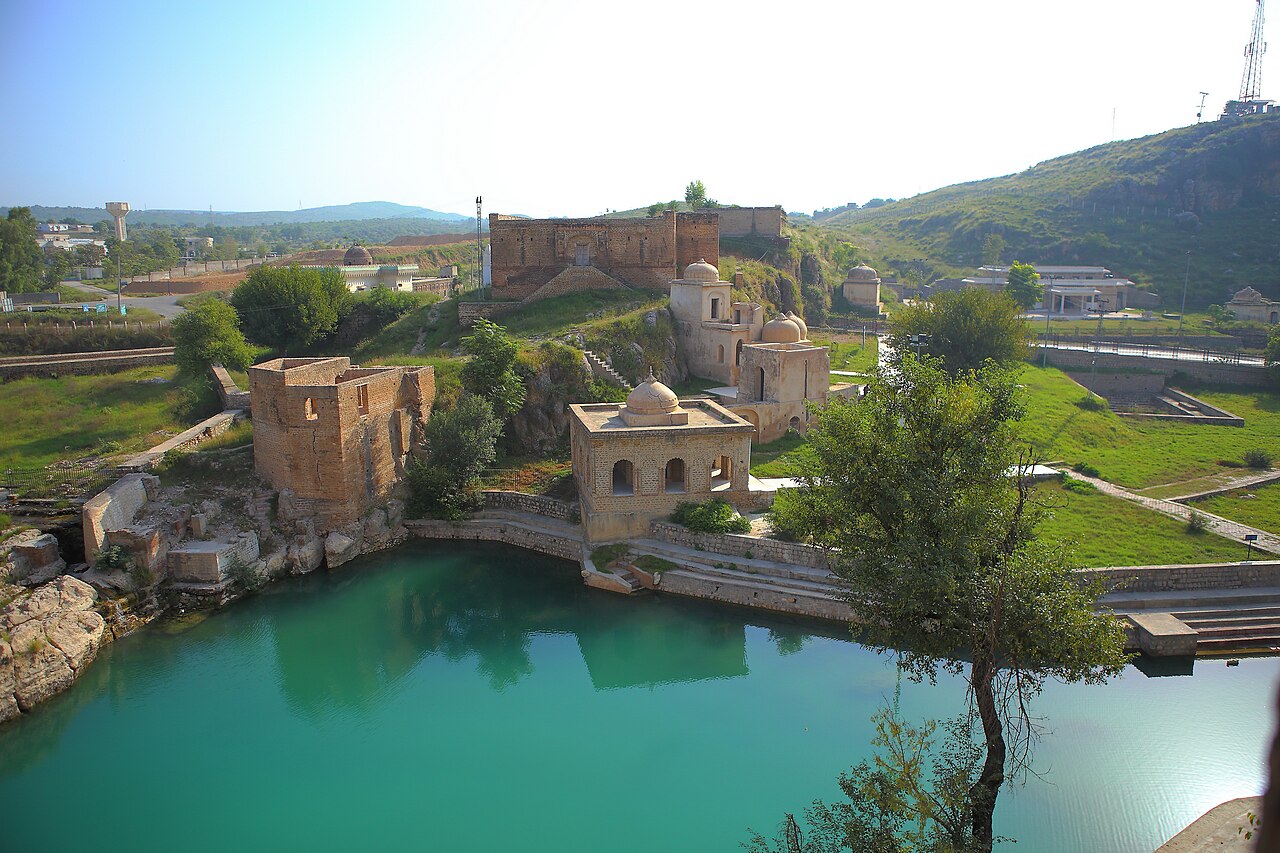

When to go, and when not to
October to March. The Salt Range is open, dry, exposed country and the site has little shade; in summer that is punishing by mid-morning.
Early in the day is better in any season, both for the light on the pool and because it is quieter before the motorway traffic turns off.
Where this comes from
- Katas Raj Temples — Wikipedia — The sixth-century dating of the oldest temple, the Satgarha group, the 610-metre altitude and the link to the M2, the etymology and the pool's changing names, the Harappan-style finds, Faxian and Xuanzang, the Shahi temple-building and Cunningham's conflicting date. Written from it, not copied; Wikipedia is CC BY-SA 4.0.
- OpenStreetMap — Road distances and driving times, via OSRM.