
Lahore Fort
Walled City of Lahore, Punjab
On video
Exploring Lahore Fort — History, Architecture and Untold Stories by Past And Present with Bilal on YouTube. Not ours, and not an endorsement — it is the clearest look at the drive and the valley we could find.
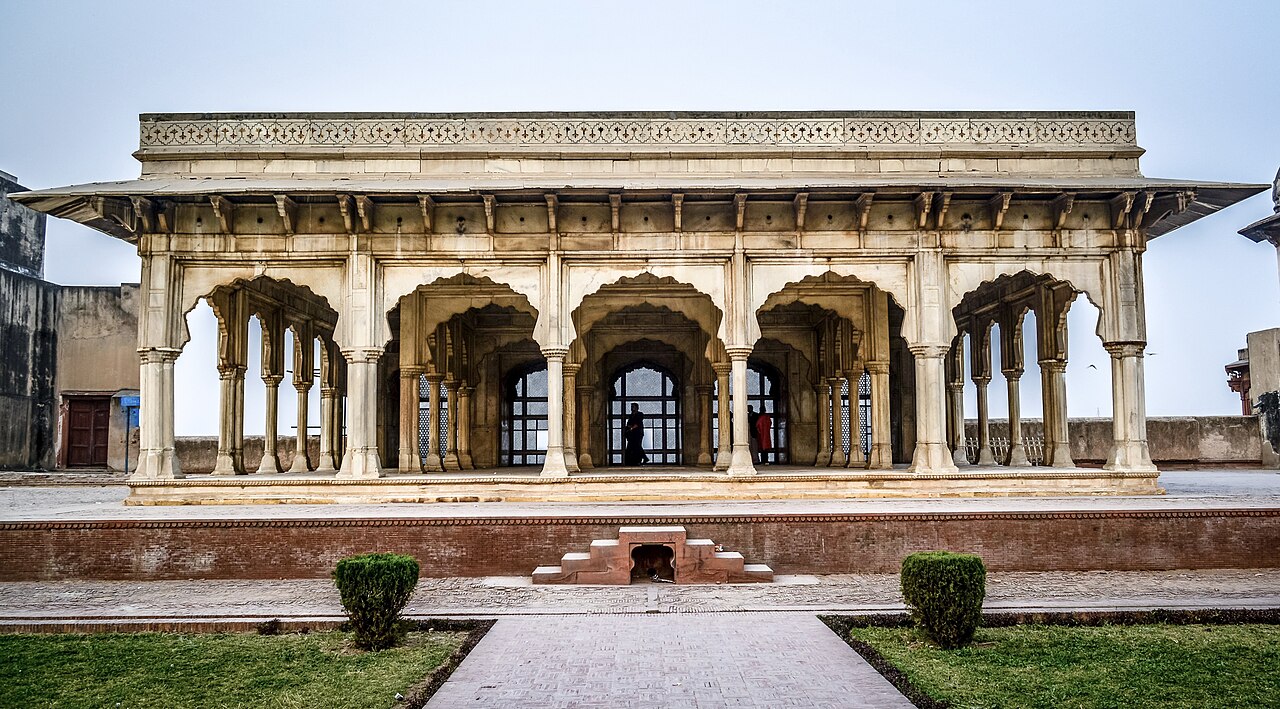
The Lahore Fort is twenty hectares of citadel at the top of the Walled City, holding twenty-one notable monuments. Akbar laid its foundations in 1566, Shah Jahan filled it with marble, Aurangzeb built the gate, Ranjit Singh lived in it, and UNESCO listed it in 1981.
What it costs to drive there
| From | Distance | Driving | Petrol |
|---|---|---|---|
| Islamabad | 368 km | 4.2 h | Rs 10,100 |
| Rawalpindi | 356 km | 4.2 h | Rs 9,700 |
| Karachi | 1213 km | 13.8 h | Rs 33,200 |
| Peshawar | 501 km | 5.6 h | Rs 13,700 |
| Multan | 330 km | 3.8 h | Rs 9,000 |
| Quetta | 930 km | 12.3 h | Rs 25,400 |
A car doing 12 km/l at today’s Rs 328.00/litre. Open a row to work it out for your own car, your own speed and with the air conditioning on — or see every distance from Lahore.
What it is
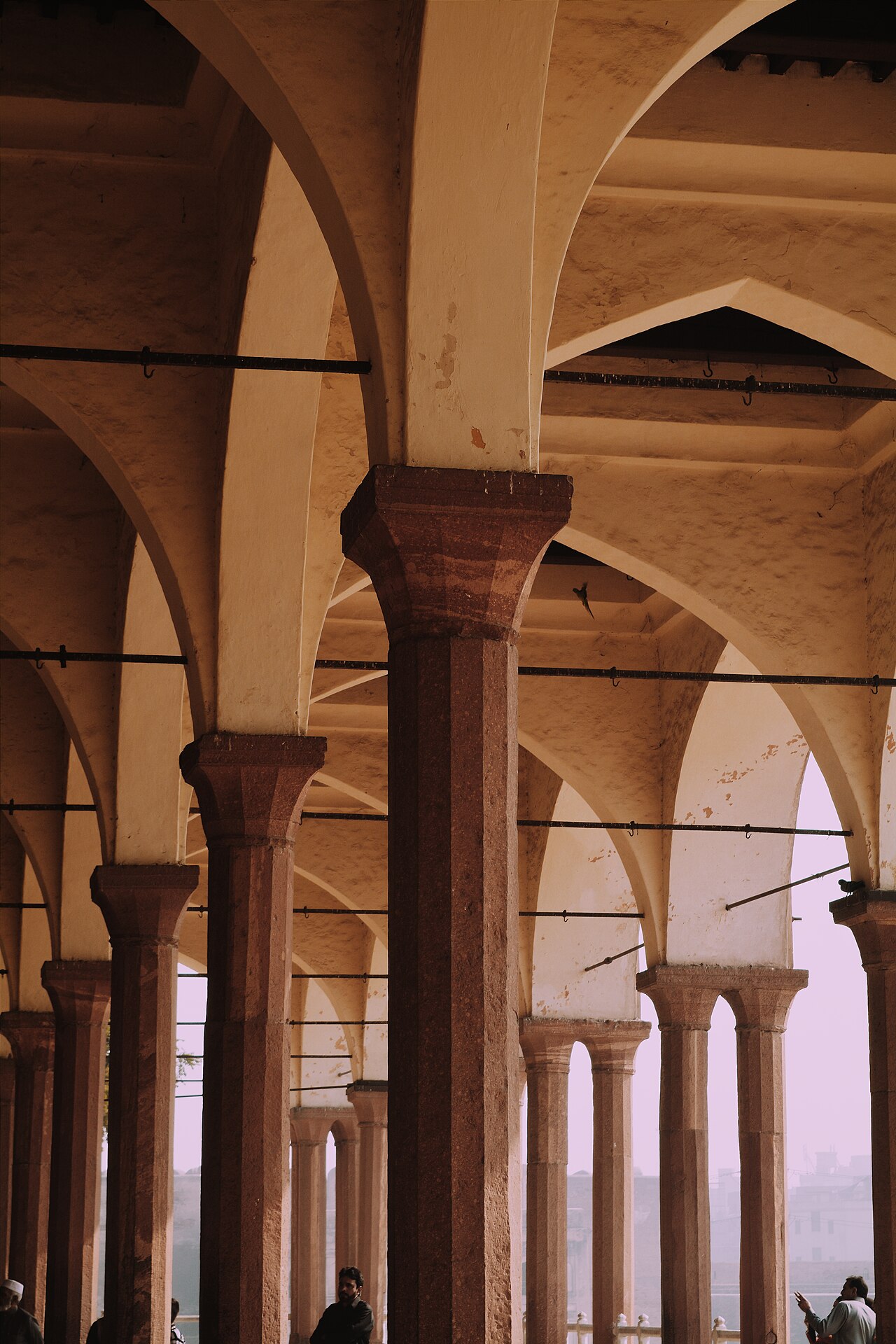
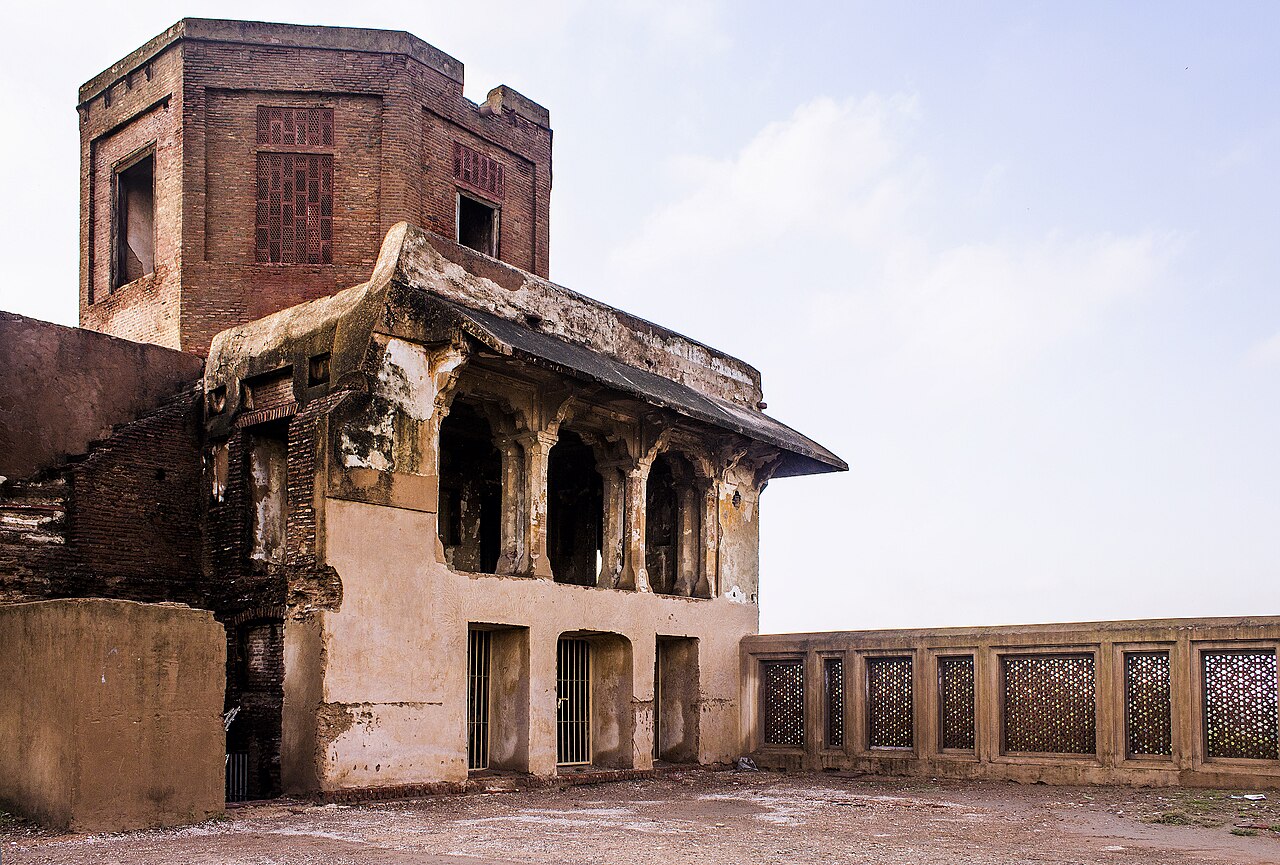
A citadel at the northern end of the Walled City, spread over more than twenty hectares and containing twenty-one notable monuments, some from Akbar's time. It was almost entirely rebuilt in the seventeenth century, when the Mughal empire was at its height.
The site has been lived on for millennia, but the first record of anything fortified here is an eleventh-century mudbrick fort. The foundations of the present one were laid in 1566 under Akbar, in a style that mixes Islamic and Hindu motifs deliberately.

Four regimes, four layers
Shah Jahan's additions are the marble ones, with Persianate floral designs inlaid into them. The Alamgiri Gate — the main entrance, and the one in every photograph — was built by Aurangzeb and faces the Badshahi Mosque across the Hazuri Bagh.
After the Mughals fell, the fort became the residence of Maharaja Ranjit Singh, founder of the Sikh Empire, and the Sikhs added to it again. It passed to the East India Company after their victory over the Sikhs at Gujrat in February 1849.
In 1981 UNESCO inscribed it as a World Heritage Site for its outstanding repertoire of Mughal monuments from the empire's artistic peak.
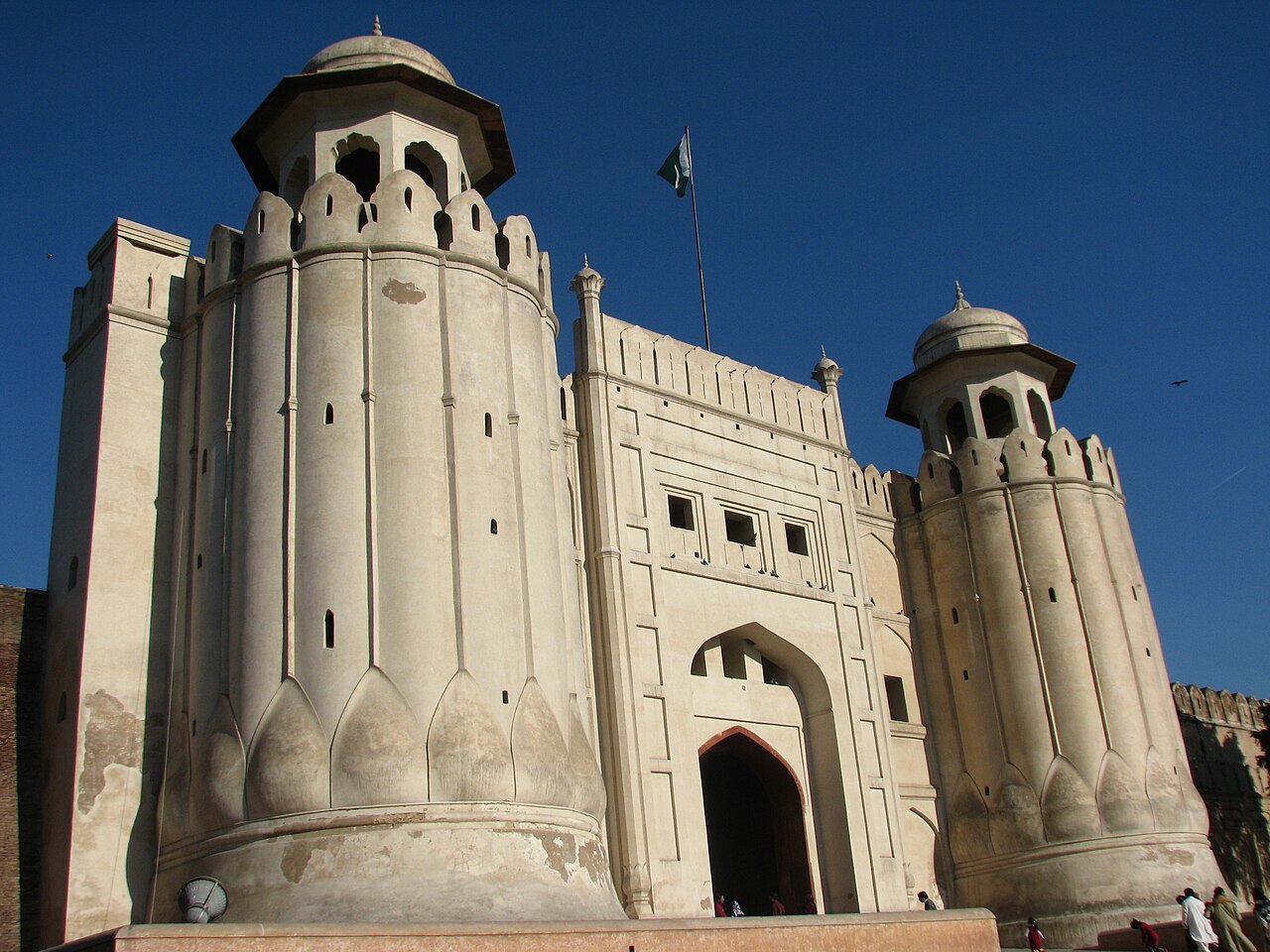
Where it sits
The Alamgiri Gate is part of a set of buildings that, with the Badshahi Mosque, the Roshnai Gate and the Samadhi of Ranjit Singh, form a quadrangle around the Hazuri Bagh. The four are a single visit, not four.
Minar-e-Pakistan and Iqbal Park are immediately north. The Walled City and Delhi Gate, with the Wazir Khan Mosque, are a short way east.

What there is to see
- Alamgiri Gate
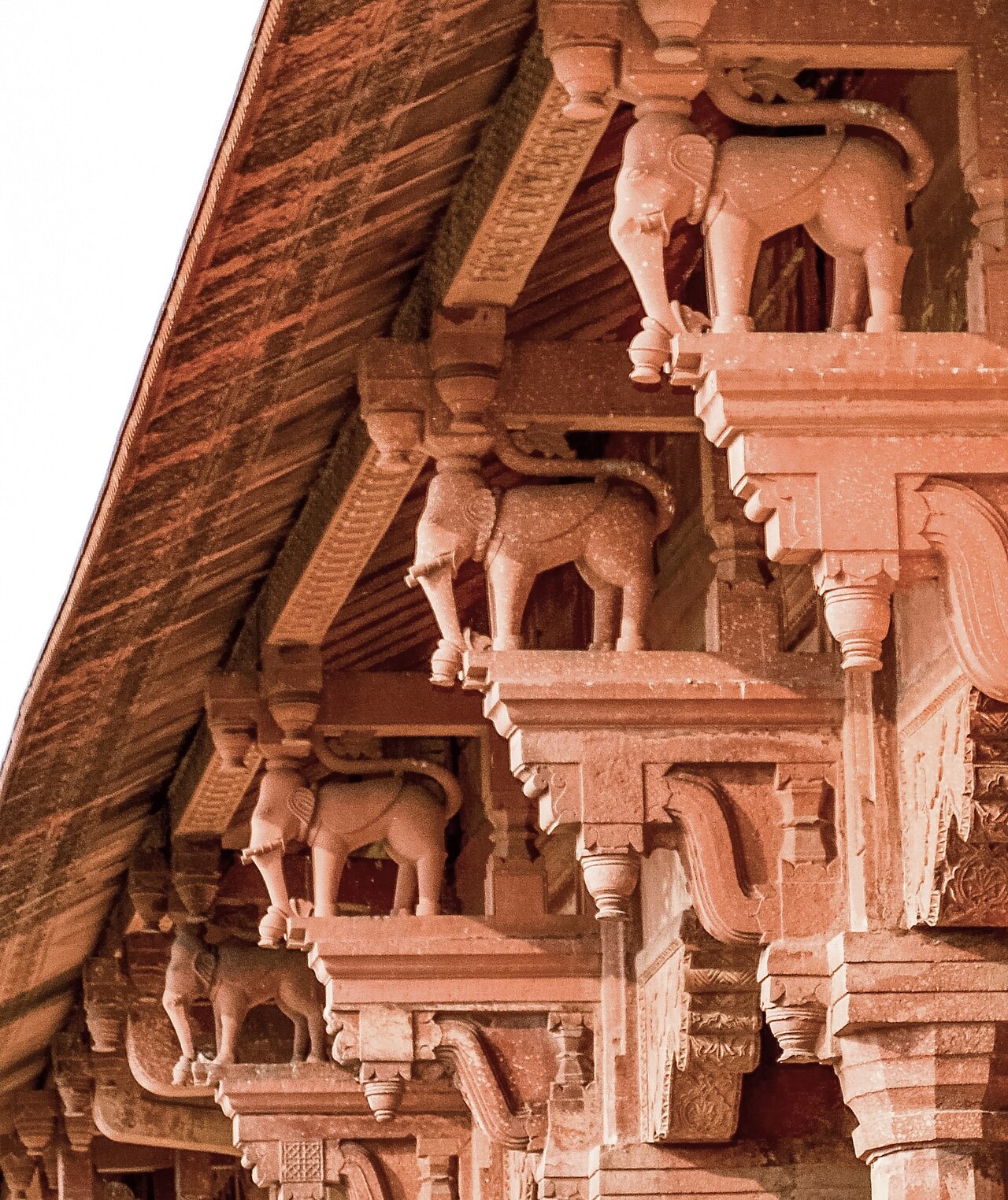
- Aurangzeb's entrance, built wide enough for elephants, facing the Badshahi Mosque.
- Sheesh Mahal
- The mirrored palace, from Shah Jahan's rebuilding.
- Naulakha Pavilion
- Marble, inlaid in pietra dura, on the western side.
- Diwan-e-Aam and Diwan-e-Khas
- The halls of public and special audience.
- Badshahi Mosque
- Across the Hazuri Bagh — the other half of the same quadrangle.
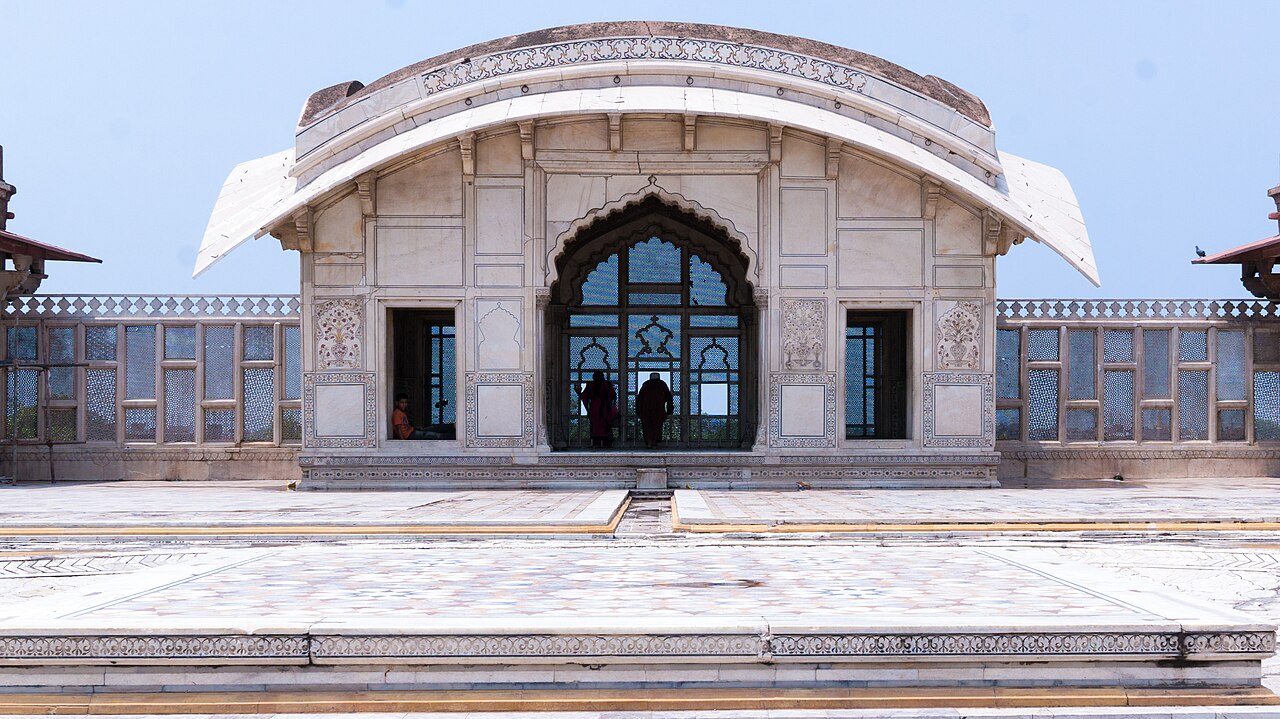
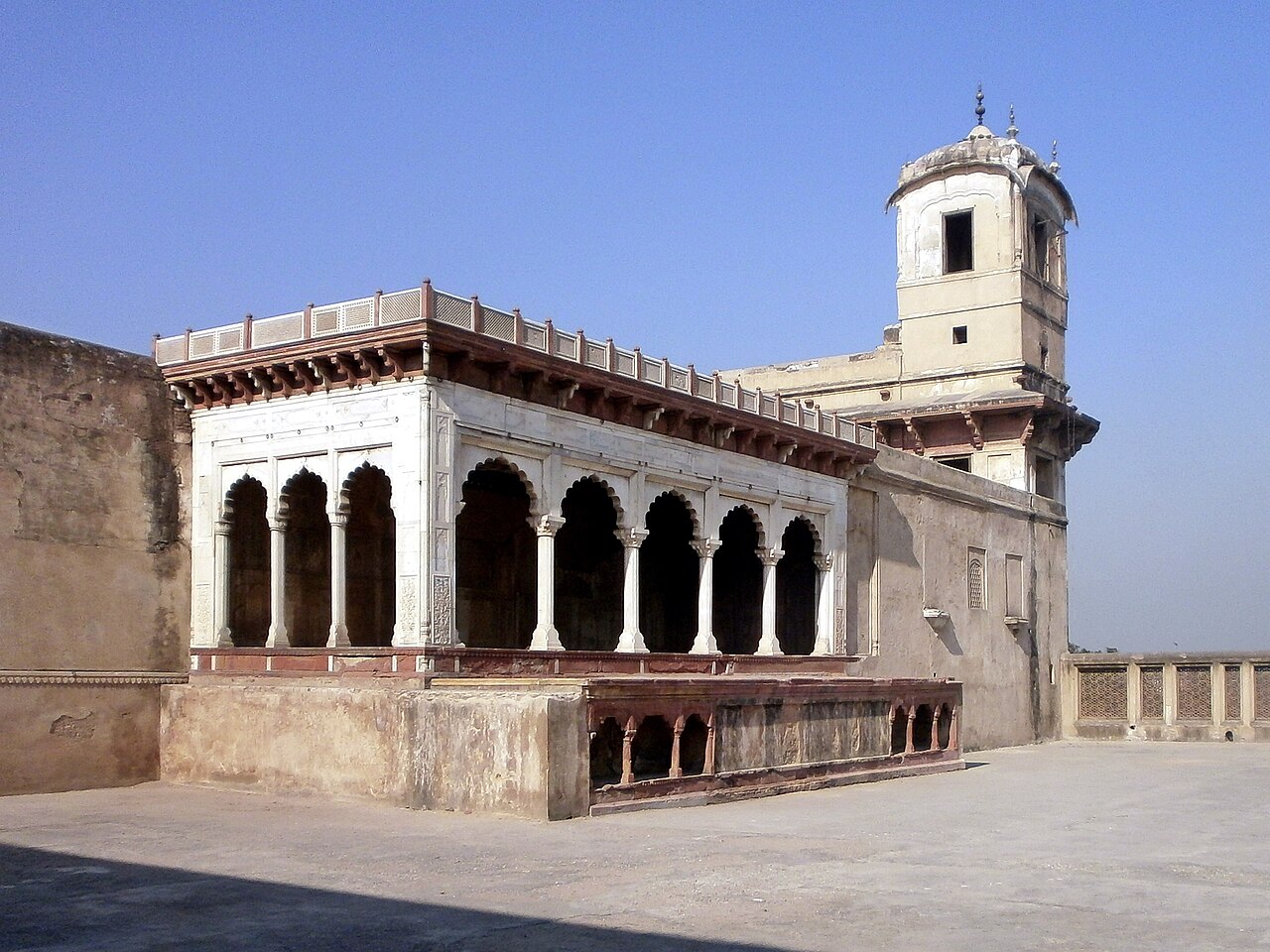
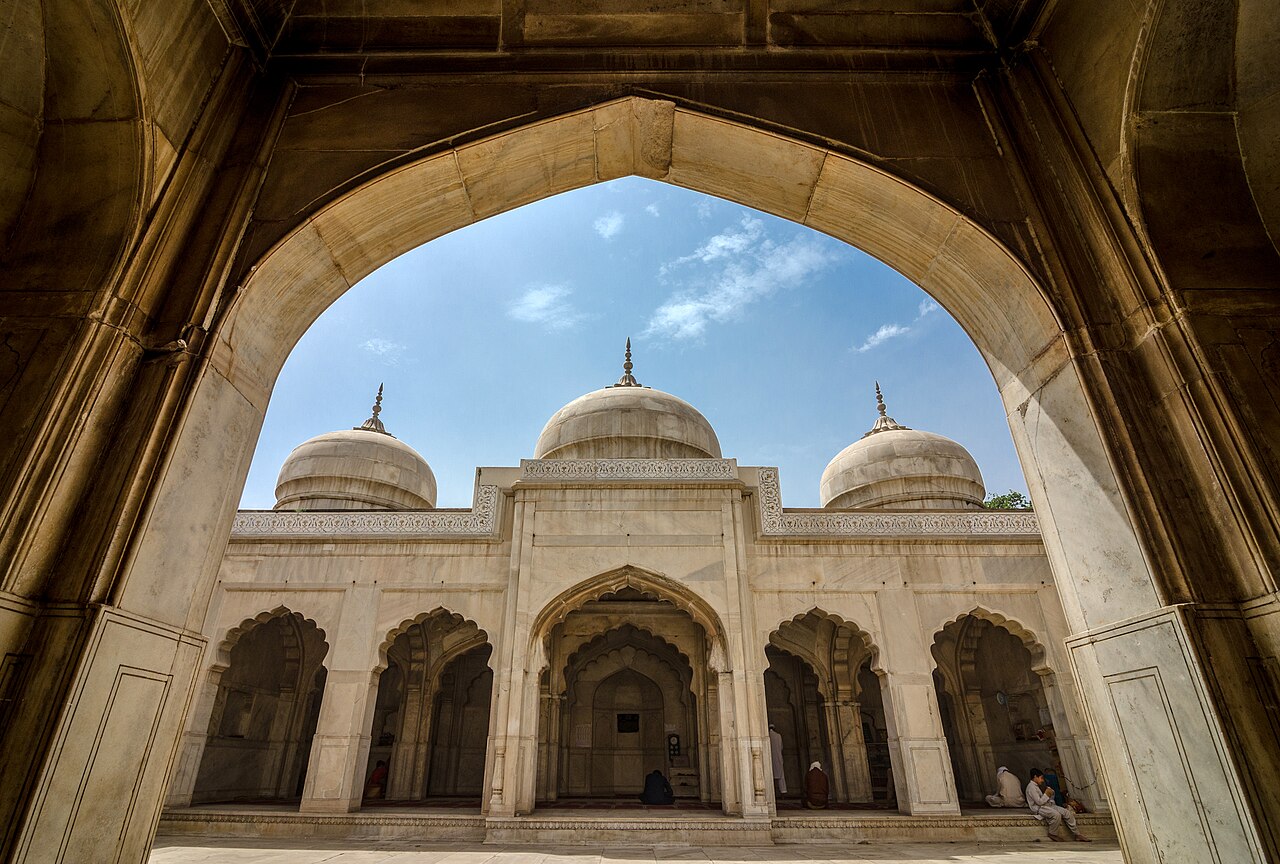


When to go, and when not to
October to March. Twenty hectares is a long walk on open stone, and a Lahore summer afternoon inside it is punishing.
Early morning is best for the Alamgiri Gate and the light on the Picture Wall, and it is also when the Walled City is easiest to drive into.
Where this comes from
- Lahore Fort — Wikipedia — The twenty hectares and twenty-one monuments, the eleventh-century mudbrick fort, the 1566 foundations under Akbar, Shah Jahan's marble and Aurangzeb's Alamgiri Gate, Ranjit Singh's residence, the 1849 annexation after Gujrat, the 1981 UNESCO listing, and the Hazuri Bagh quadrangle. Written from it, not copied; Wikipedia is CC BY-SA 4.0.
- OpenStreetMap — Road distances and driving times, via OSRM.