
Makli
Thatta District, Sindh
On video
Makli - A Living Necropolis (with English subtitles) by Directorate General of Antiquities & Archaeology on YouTube. Not ours, and not an endorsement — it is the clearest look at the drive and the valley we could find.
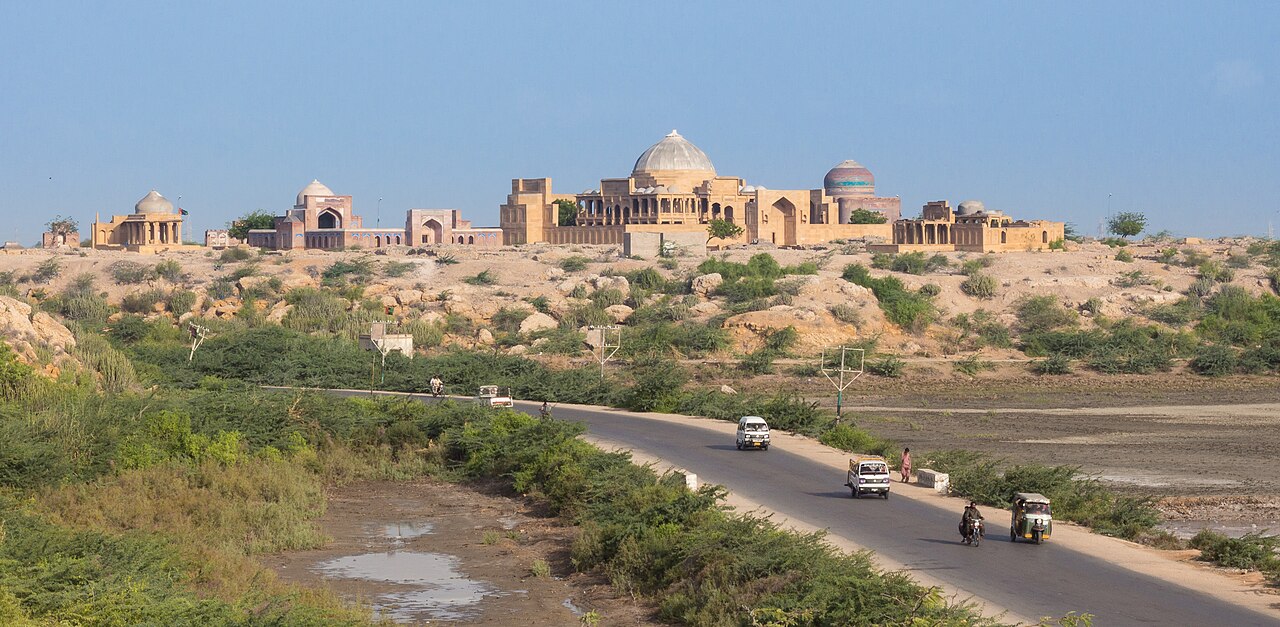
Makli is one of the largest funerary sites in the world: somewhere between half a million and a million tombs spread over ten kilometres of plateau above Thatta, built over four hundred years. It is a UNESCO World Heritage Site and it is almost always empty.
How far you can drive: The distances below are to Thatta. Makli is about six kilometres further, up on the plateau above the town, on metalled road — close enough that most people do the two as one stop.
What it costs to drive to Thatta
| From | Distance | Driving | Petrol |
|---|---|---|---|
| Islamabad | 1364 km | 16.3 h | Rs 37,300 |
| Rawalpindi | 1354 km | 16.3 h | Rs 37,000 |
| Lahore | 1156 km | 13.6 h | Rs 31,600 |
| Karachi | 101 km | 1.7 h | Rs 2,800 |
| Peshawar | 1499 km | 17.8 h | Rs 41,000 |
| Multan | 836 km | 10.1 h | Rs 22,900 |
A car doing 12 km/l at today’s Rs 328.00/litre. Open a row to work it out for your own car, your own speed and with the air conditioning on — or see every distance from Thatta.
What it is
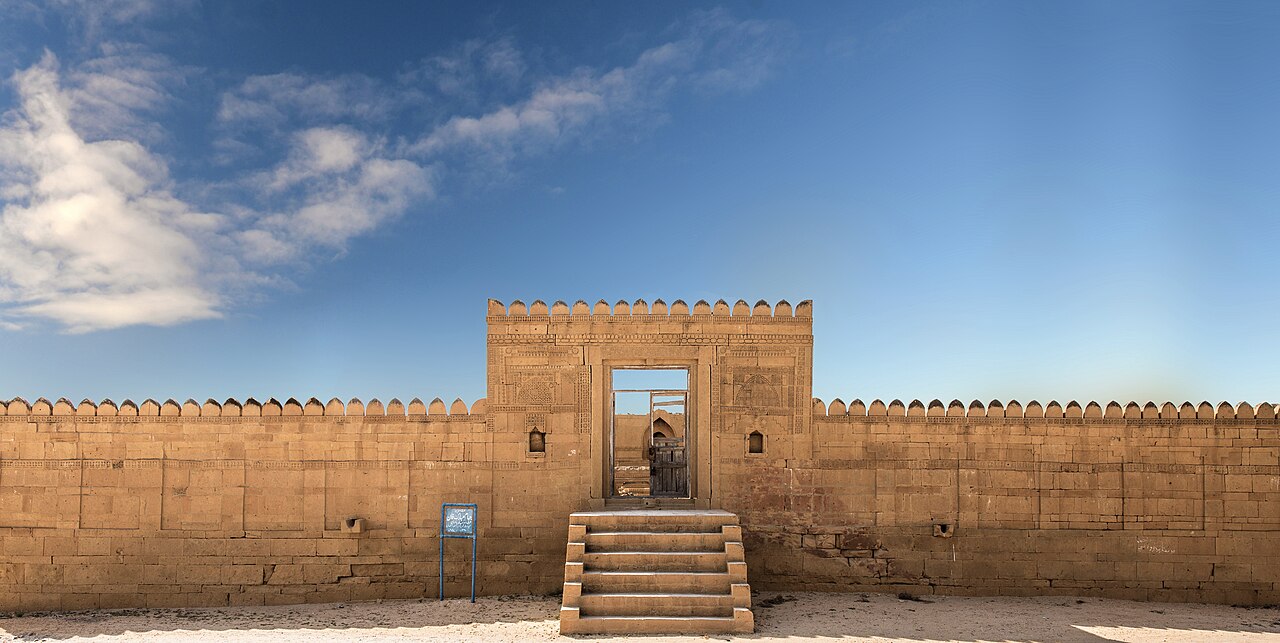
A necropolis on a plateau about six kilometres from Thatta, which was the capital of lower Sindh until the seventeenth century. It holds roughly 500,000 to a million tombs built over a four-hundred-year period, with large monuments belonging to royalty, Sufi saints and scholars.
UNESCO inscribed it in 1981 as an outstanding testament to Sindhi civilisation between the fourteenth and eighteenth centuries. It lies about 98 kilometres east of Karachi, near the head of the Indus delta.
The name, and the argument about it
The usual story is that a Hajj pilgrim stopped here, was overcome, and declared the place Makkah for him; the Sufi saint Sheikh Hamad Jamali then named it Makli, Little Makkah. Historical evidence does not confirm that.
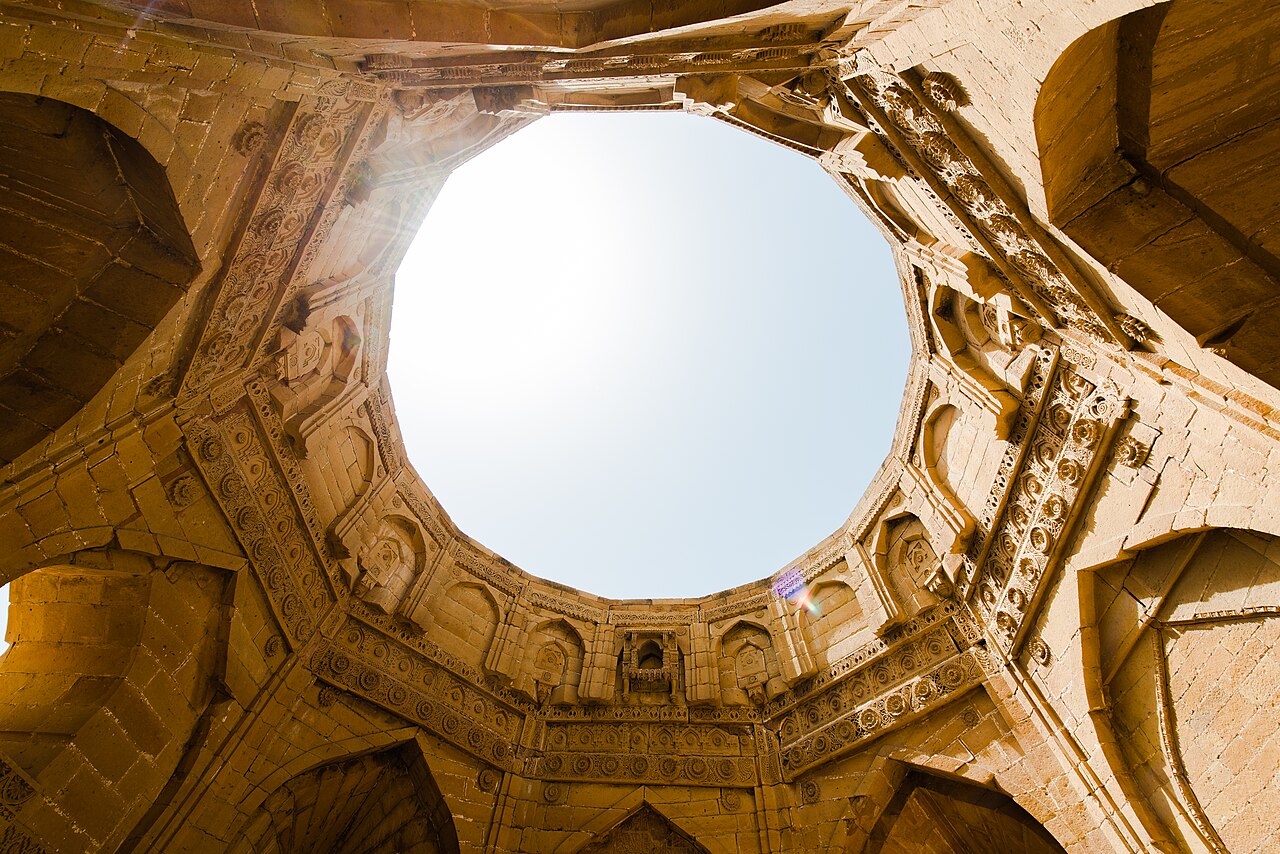
The historian Ali Ahmad Brohi argued instead that the name comes from an ancient Mahakali temple, and pointed out that the tomb of Jam Nizamuddin II contains stones that look like they came from one. Both accounts are in circulation and neither is settled.
How it became a graveyard
The Sufi saint, poet and scholar Shaikh Jamali set up a khanqah here and was buried on the site. The fourteenth-century Samma ruler Jam Tamachi venerated him and wanted to be buried near him, and that is where the tradition starts.
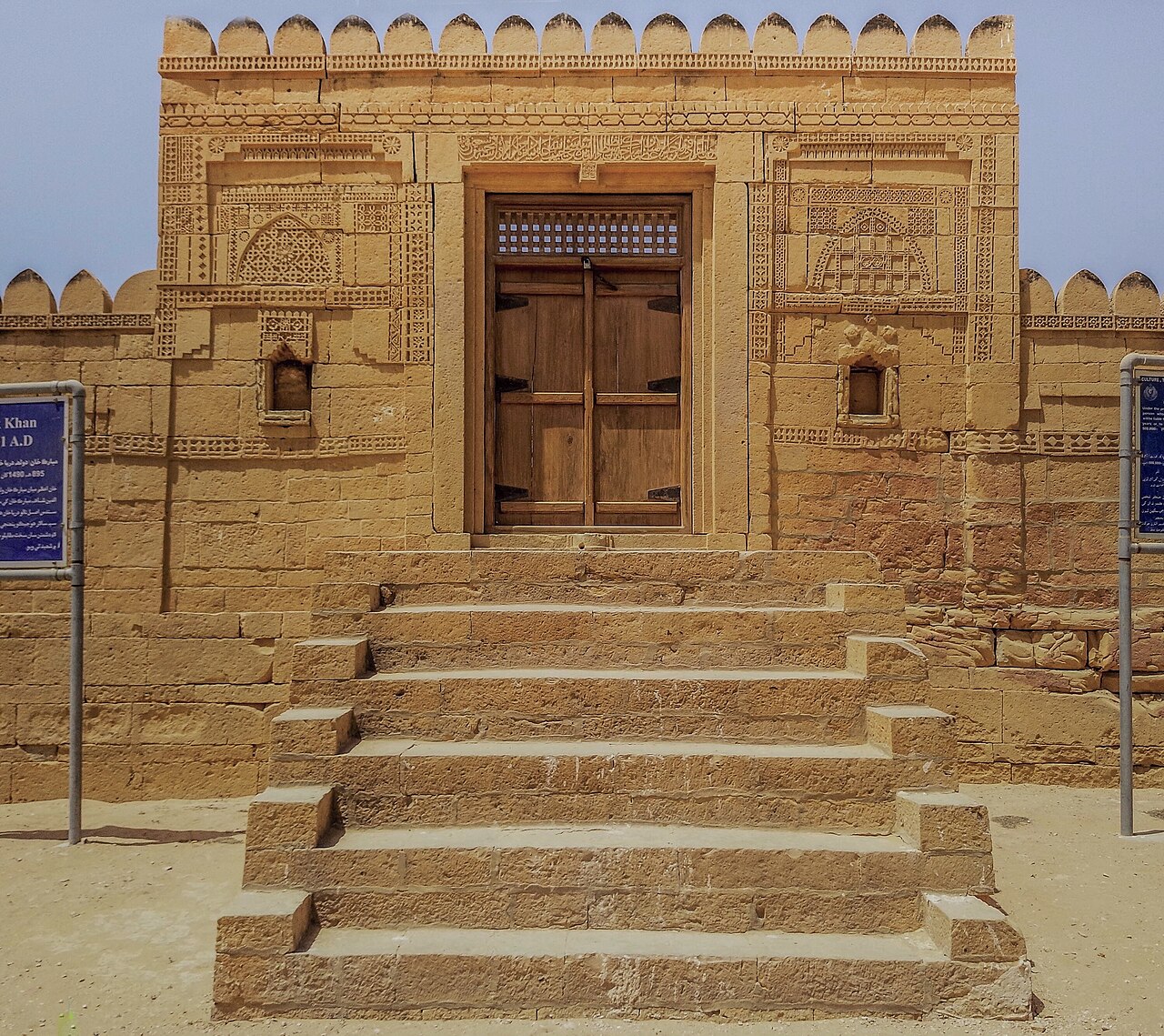
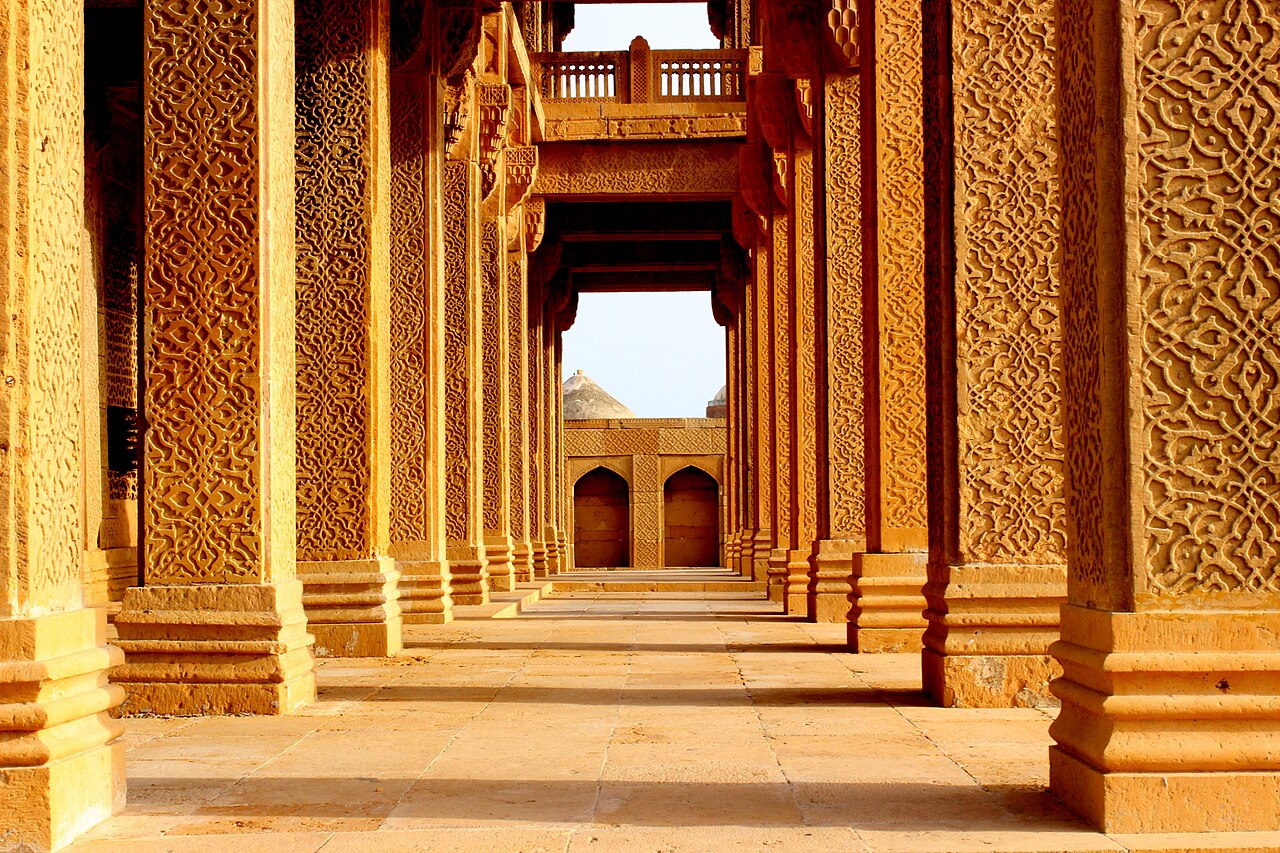
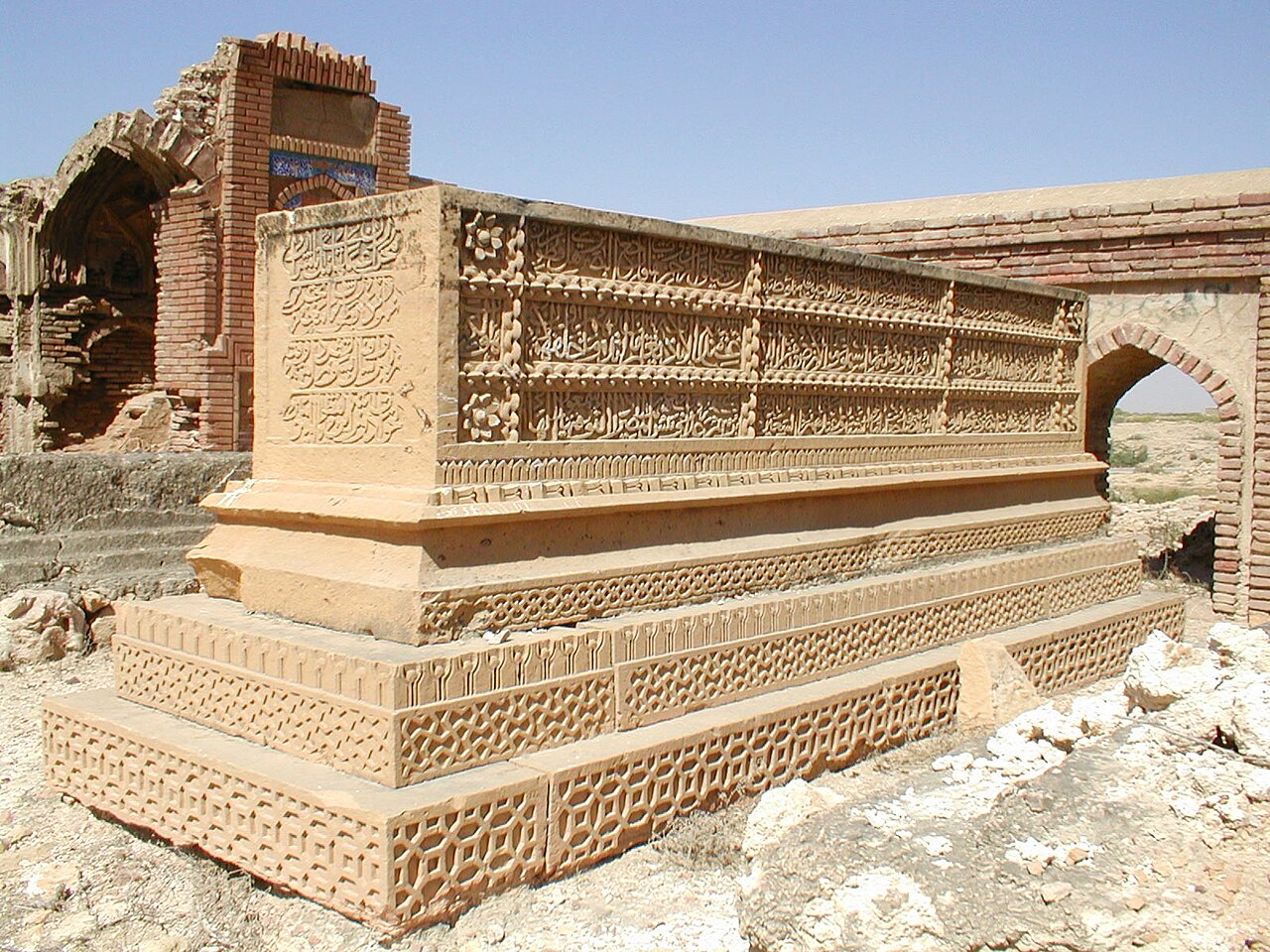
The site grew into a major funerary ground under the Samma dynasty, whose capital was near Thatta. The architecturally finest tombs, though, are Mughal-era, from roughly 1570 to 1640.

What there is to see
- Tomb of Jam Nizamuddin II
- The Samma-era tomb, and the single finest building on the site.
- The Mughal tombs
- Roughly 1570-1640, and the best of the architecture here.
- The canopy tombs
- The other form the monuments take - open stone canopies over a grave.
- Thatta
- Six kilometres below, with the Shah Jahan mosque.
- The scale
- Ten kilometres of plateau. You will not walk it; drive between the groups.



When to go, and when not to
November to February. The plateau is open, bare and east of Karachi, and in summer it is brutal with nowhere to get out of the sun.
Late afternoon light is what the carved sandstone wants, and it is also the hour the site is at its emptiest.
Where this comes from
- Makli Necropolis - Wikipedia — The size of the site and the tomb count, the 1981 UNESCO listing and its wording, the six kilometres from Thatta and 98 from Karachi, both accounts of the name, and the Samma and Mughal phases. Written from it, not copied; Wikipedia is CC BY-SA 4.0.
- OpenStreetMap — Road distances and driving times, via OSRM.