
Lake Saif-ul-Malook
Kaghan Valley, Mansehra District, Khyber Pakhtunkhwa
On video
Beautiful Pakistan — Naran to Lake Saif ul Malook Jeep Track 4K by Ali Ahmed on YouTube. Not ours, and not an endorsement — it is the clearest look at the drive and the valley we could find.
Saif-ul-Malook is a glacial lake at 3,224 metres above Naran, one of the highest in Pakistan, named after a prince in a fairy story that is better known here than most history. It is also nine kilometres of jeep track above the nearest tarmac, which is the part people find out late.
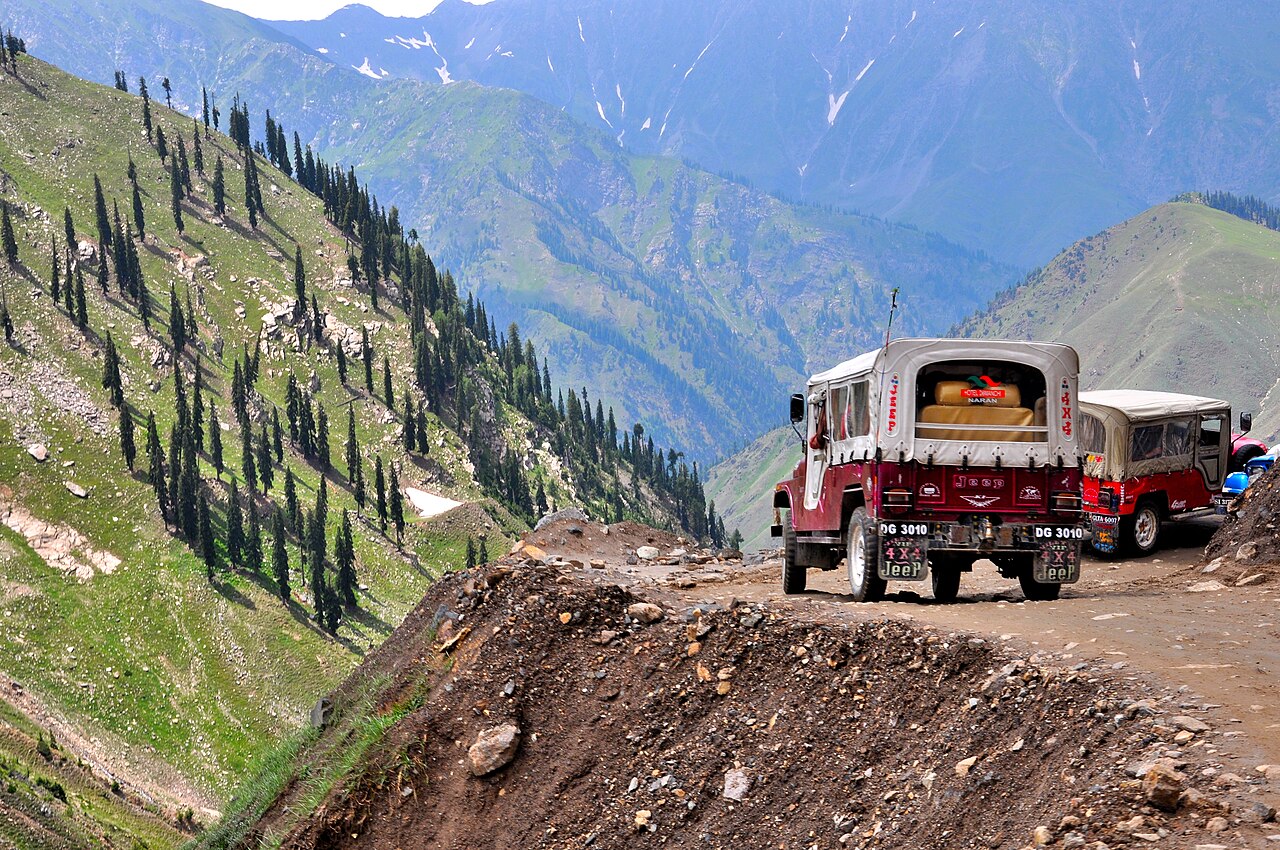
How far you can drive: The distances below are to Naran. The lake is nine kilometres further on, above the tree line at 3,224 metres, and that last stretch is a jeep track rather than a road — which is why Naran bazaar is full of hired jeeps all summer. Leaving the car in Naran is the normal thing to do, not a failure.
Weather at Naran
Up at 2,572 m: 5.4°C there now, clear. Over the next 24 hours -11.1°C to 8.3°C. It goes below freezing.
This is the weather at Naran, not a road report — whether the road is open depends on ploughing, landslides and local decisions no forecast knows about, so check before you set off. Forecast from MET Norway, CC BY 4.0.
What it costs to drive to Naran
| From | Distance | Driving | Petrol |
|---|---|---|---|
| Islamabad | 241 km | 3 h | Rs 6,500 |
| Rawalpindi | 250 km | 3.1 h | Rs 6,800 |
| Lahore | 601 km | 6.8 h | Rs 16,300 |
| Karachi | 1634 km | 20.8 h | Rs 44,300 |
| Peshawar | 335 km | 3.8 h | Rs 9,100 |
| Multan | 745 km | 9.6 h | Rs 20,200 |
A car doing 12 km/l at today’s Rs 325.00/litre. Open a row to work it out for your own car, your own speed and with the air conditioning on — or see every distance from Naran.
What it is
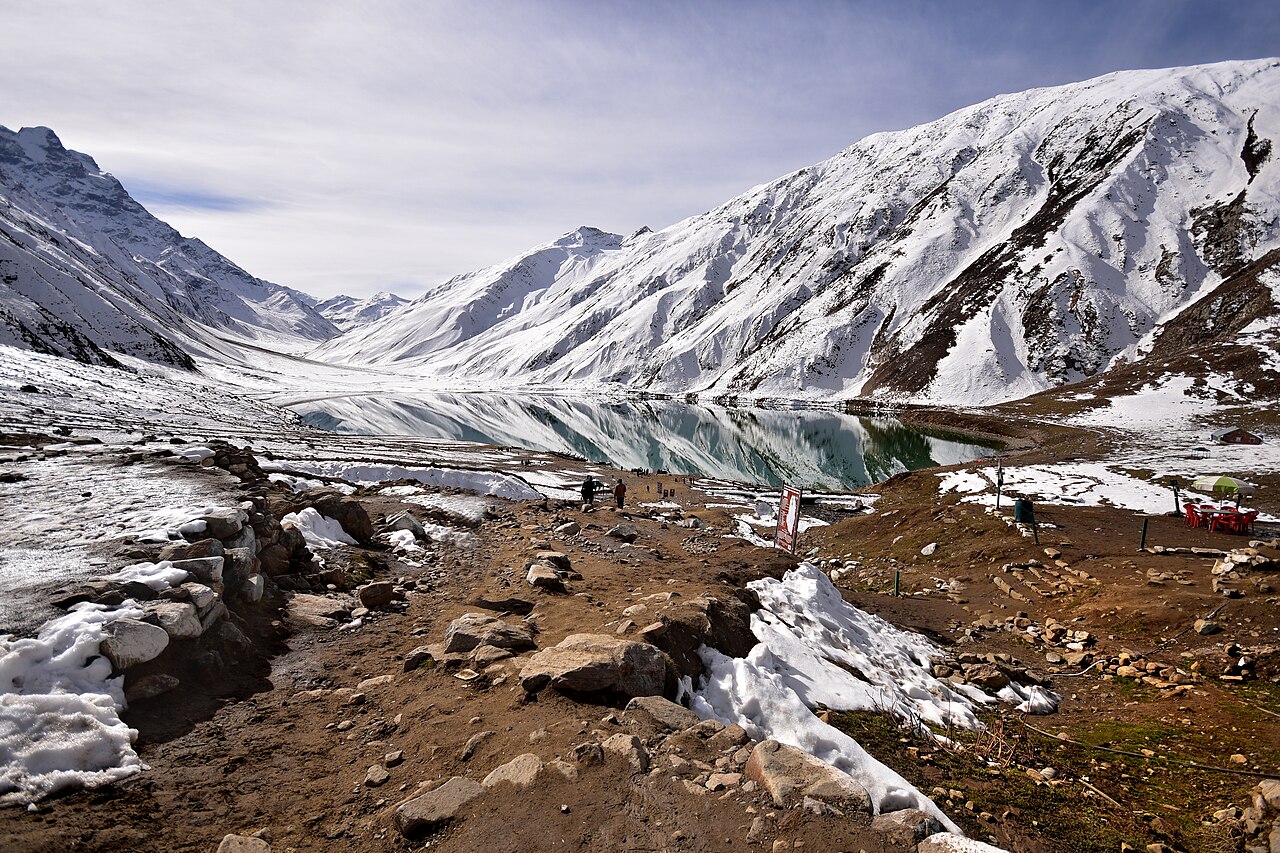
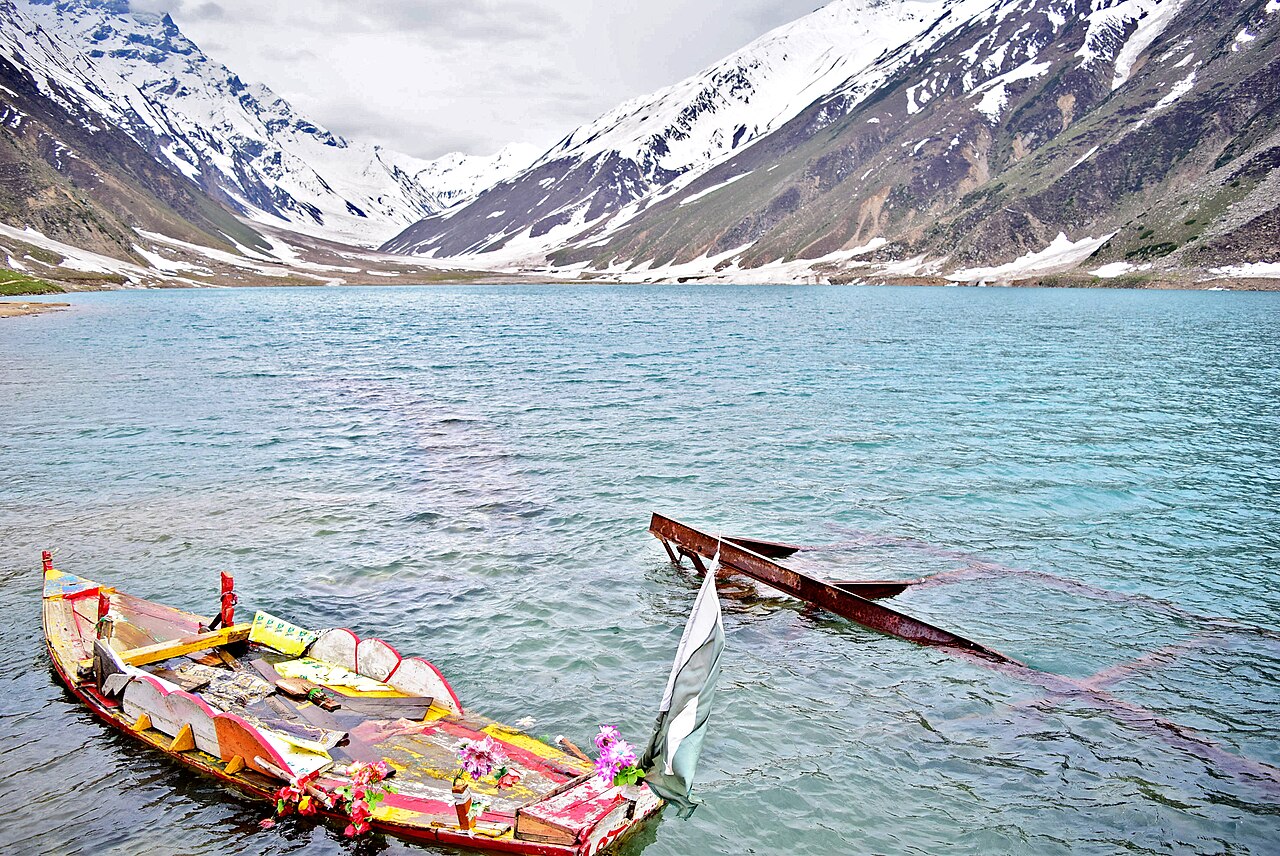
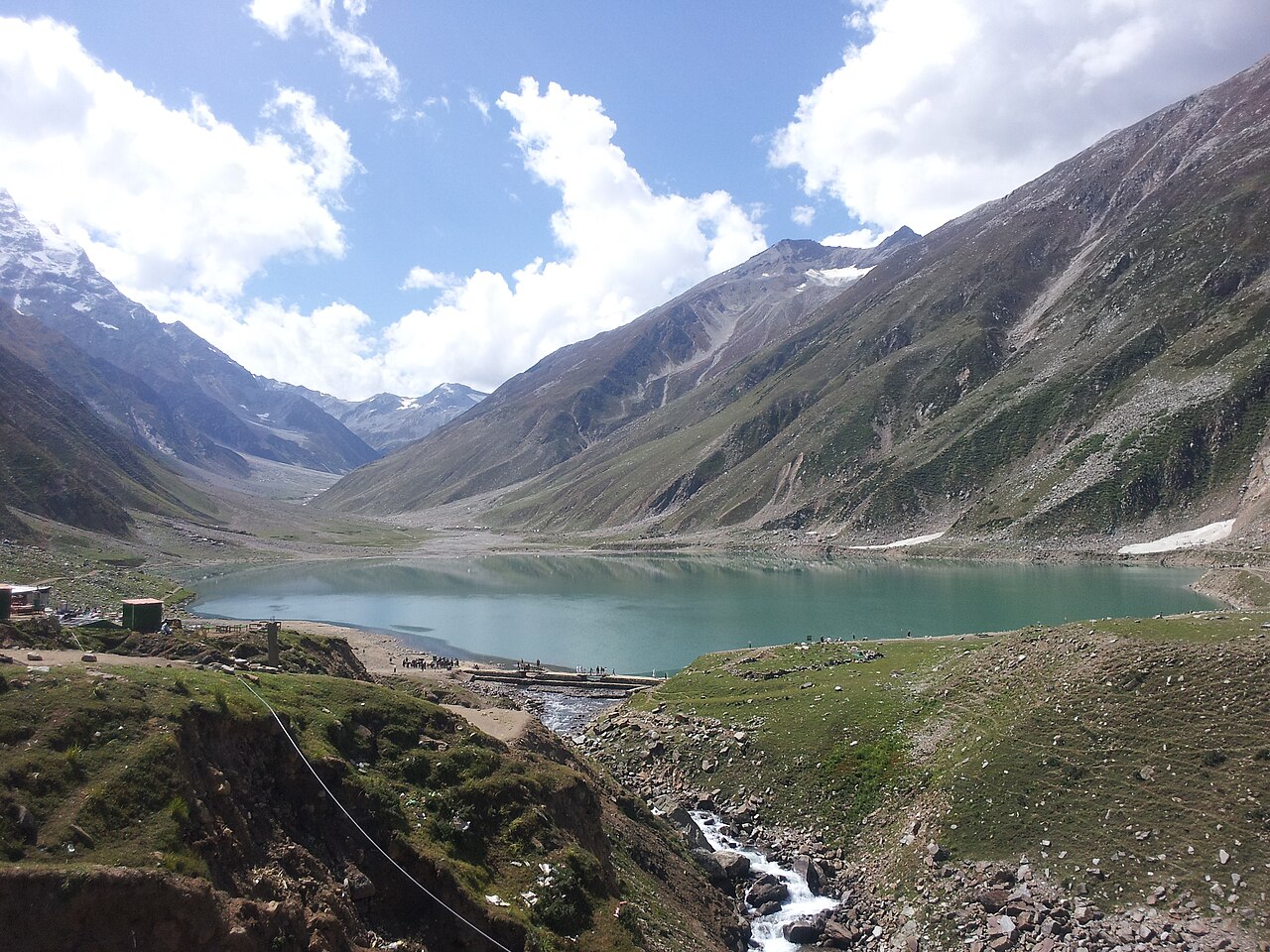
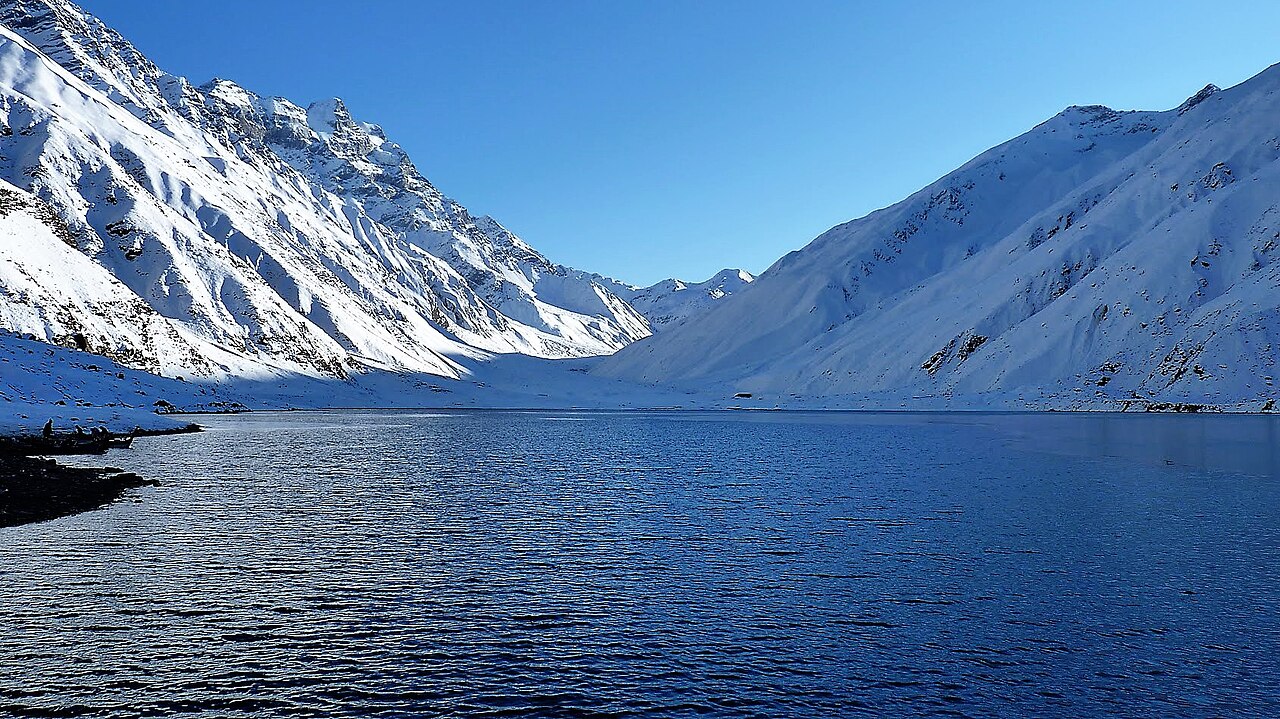
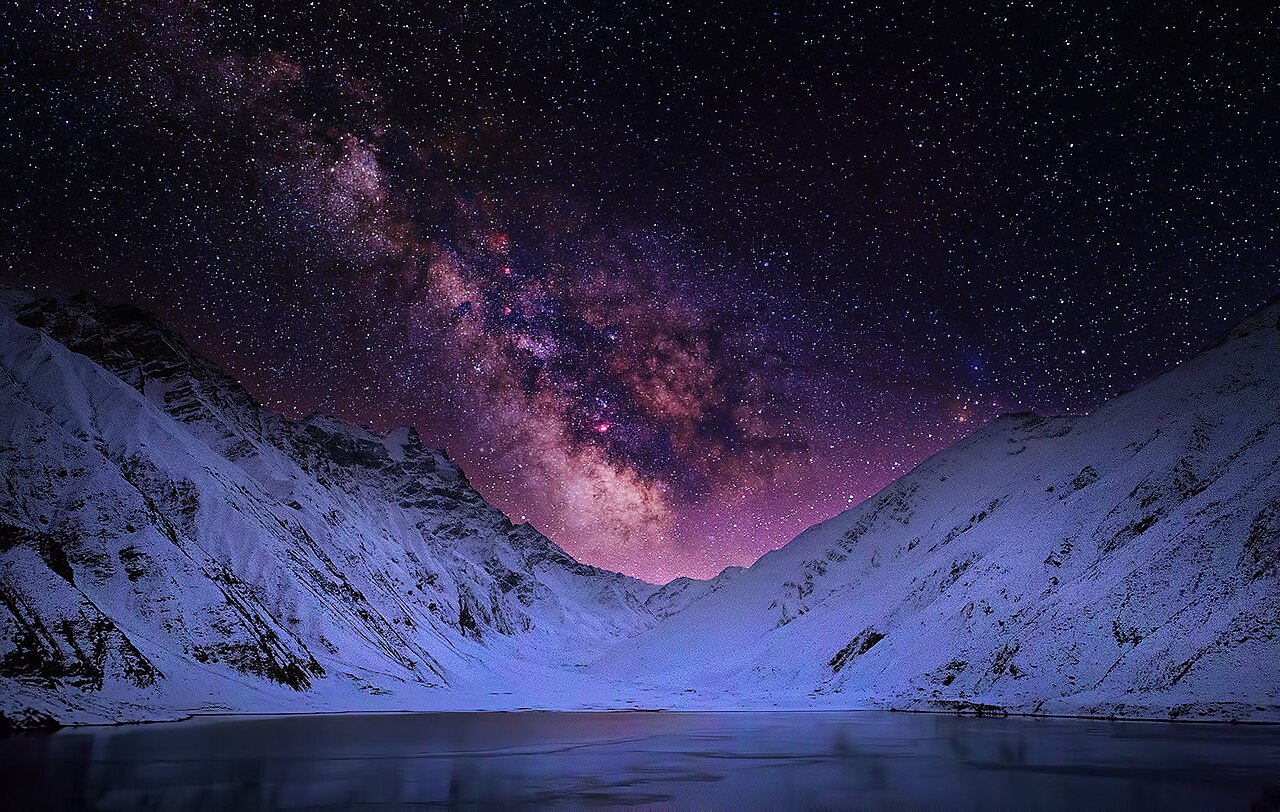
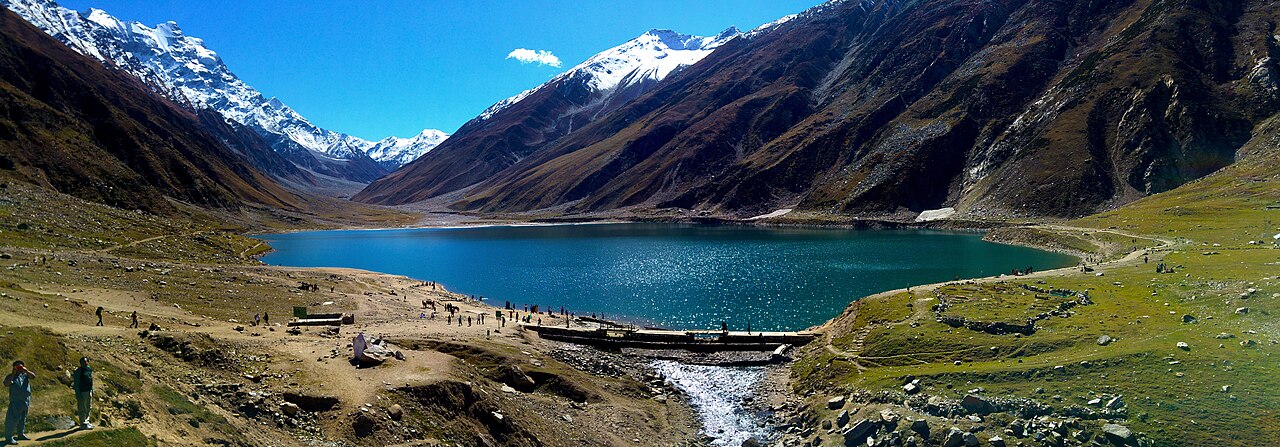
A mountain lake at the northern end of the Kaghan valley, in Saiful Muluk National Park, about nine kilometres north of Naran in Mansehra District. At 3,224 metres it is above the tree line, which is why the pictures look the way they do: rock, water, snow and nothing growing.
Malika Parbat, the highest peak in the valley, stands over it.
How it got there
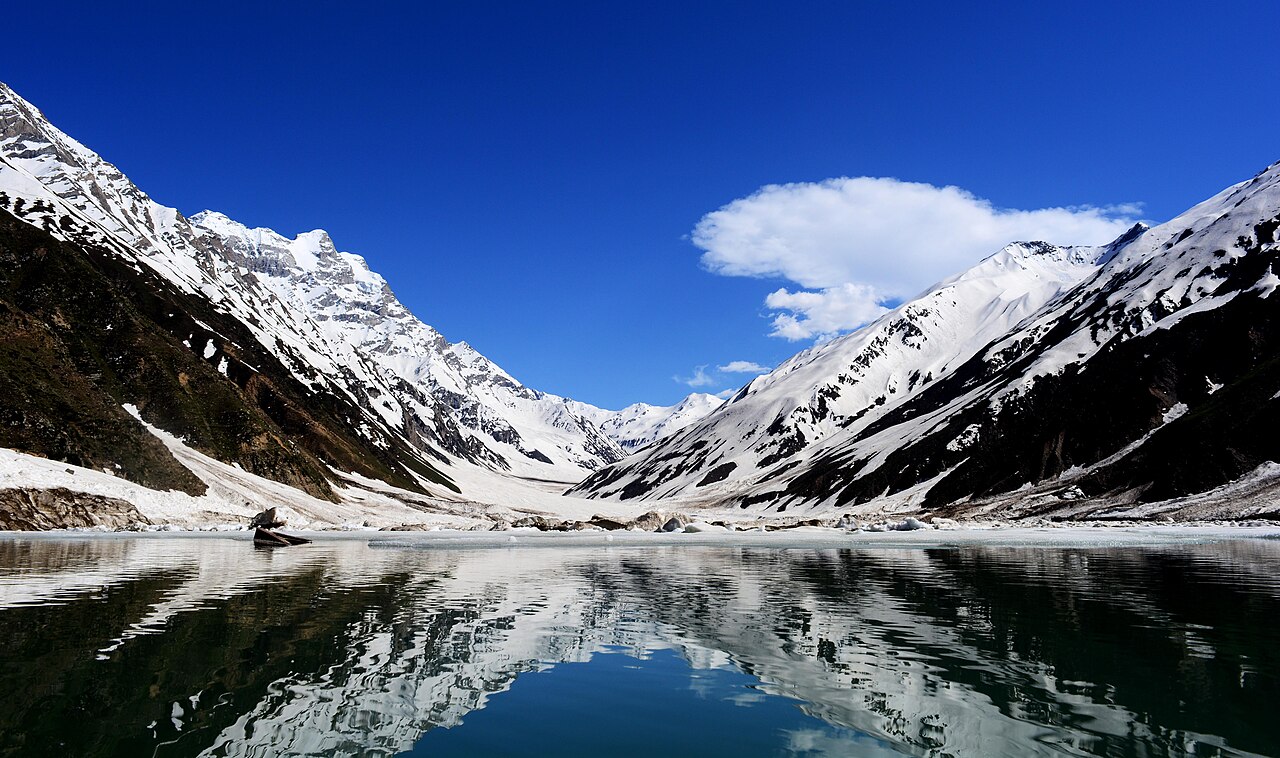
Glacial moraine blocked the stream running through the valley and the meltwater collected behind it. The Kaghan valley itself was shaped in the Pleistocene, roughly 300,000 years ago, when the whole area was under ice; as temperatures rose and the glaciers pulled back they left a depression where the ice had been.
The water in it is still meltwater, and still cold. Brown trout up to about seven kilograms live in it, along with blue-green algae and some twenty-six species of vascular plant around the shore.
The story the lake is named after
Saif-ul-Malook is a prince in a folk tale — an Egyptian prince who falls in love with a fairy princess, Badi-ul-Jamal, at this lake. The story is an Arabic fable, a late addition to the Thousand and One Nights, with manuscripts dating to the seventeenth century.
In this part of the world it is known through the Punjabi verse of the nineteenth-century Sufi poet Mian Muhammad Bakhsh, and it is his version people mean when they talk about the lake of the fairies.
Getting up there
The lake is reachable from Naran through the summer. The jeep track is nine kilometres and rough; a saloon does not belong on it and the hired jeeps exist for exactly this reason.
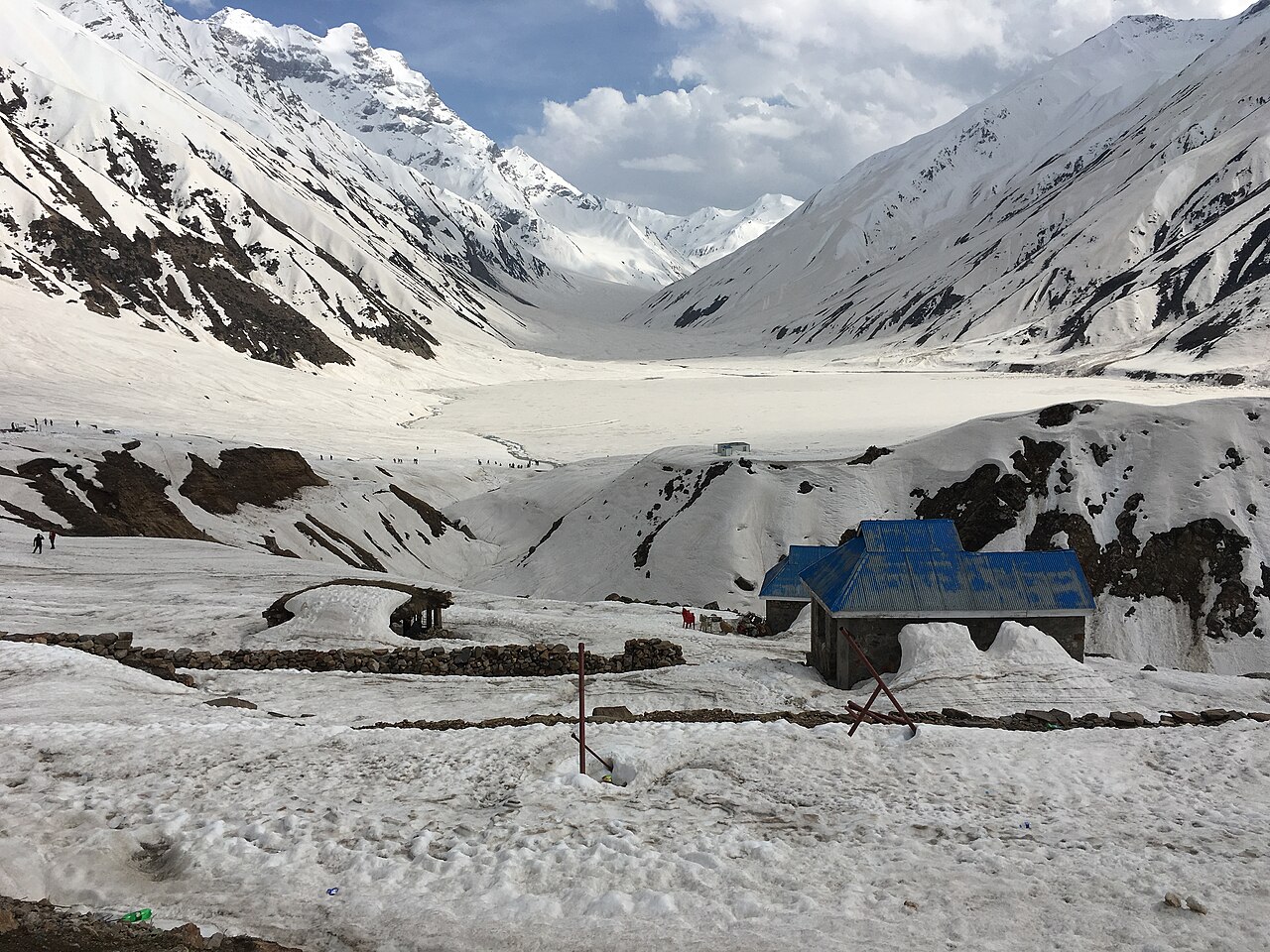
In winter access is limited: heavy snowfall and landslides cut the lake off from the valley below, and the road to Naran itself is the first thing to go.
What there is to see
- The lake
- 3,224 metres, above the tree line, with Malika Parbat behind it.
- The jeep track
- Nine kilometres up from Naran. The reason you leave the car behind.
- Malika Parbat
- The highest peak in the Kaghan valley, over 5,200 metres.
- Naran
- The town below, and where the drive actually ends.
- Lulusar
- Further up the valley road towards Babusar, and reachable by car.

When to go, and when not to
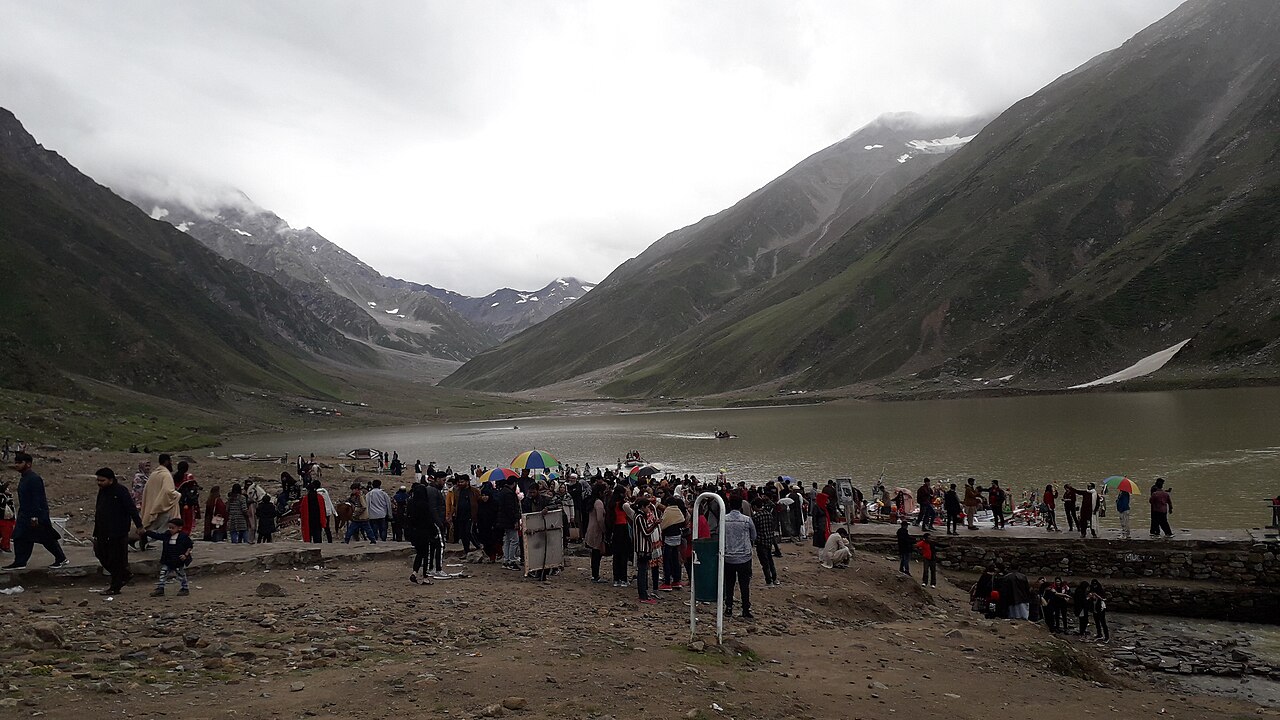
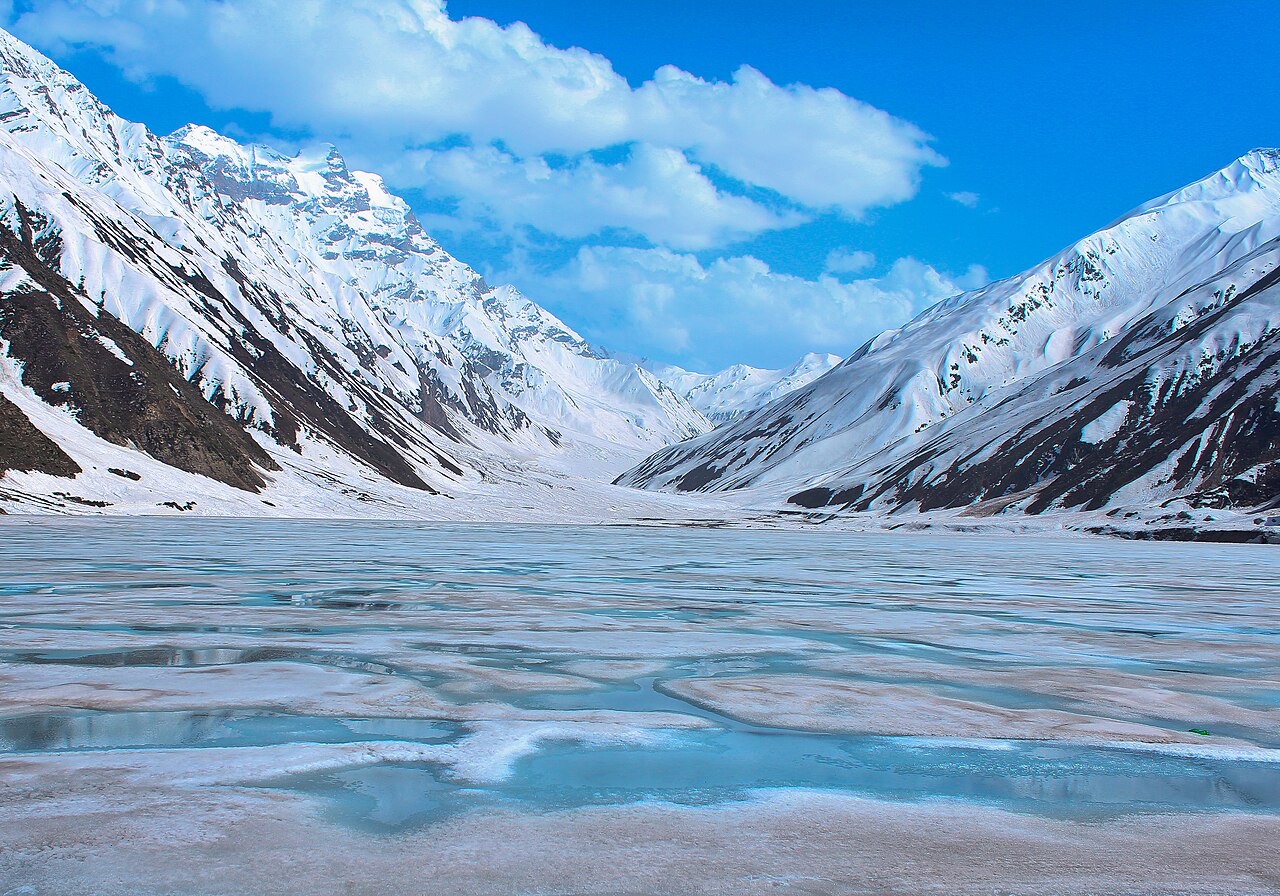
Summer, and really only summer — roughly late June to early September, once the track has cleared. The lake freezes and stays frozen for much of the year.
Outside that window the track is shut by snow and landslides and the lake is cut off from Naran entirely. Going in May and expecting water rather than ice is a common mistake.
Where this comes from
- Lake Saiful Muluk — Wikipedia — The 3,224-metre height, the nine kilometres from Naran, the glacial moraine and the Pleistocene dating, the trout and the plant count, the folk tale and Mian Muhammad Bakhsh, and the winter access. Written from it, not copied; Wikipedia is CC BY-SA 4.0.
- MET Norway — The live forecast and the town's height, CC BY 4.0.
- OpenStreetMap — Road distances and driving times, via OSRM.