
Shah Jahan Mosque
Thatta District, Sindh
On video
Shah Jahan Mosque, Thatta, Sindh by spreebird on YouTube. Not ours, and not an endorsement — it is the clearest look at the drive and the valley we could find.
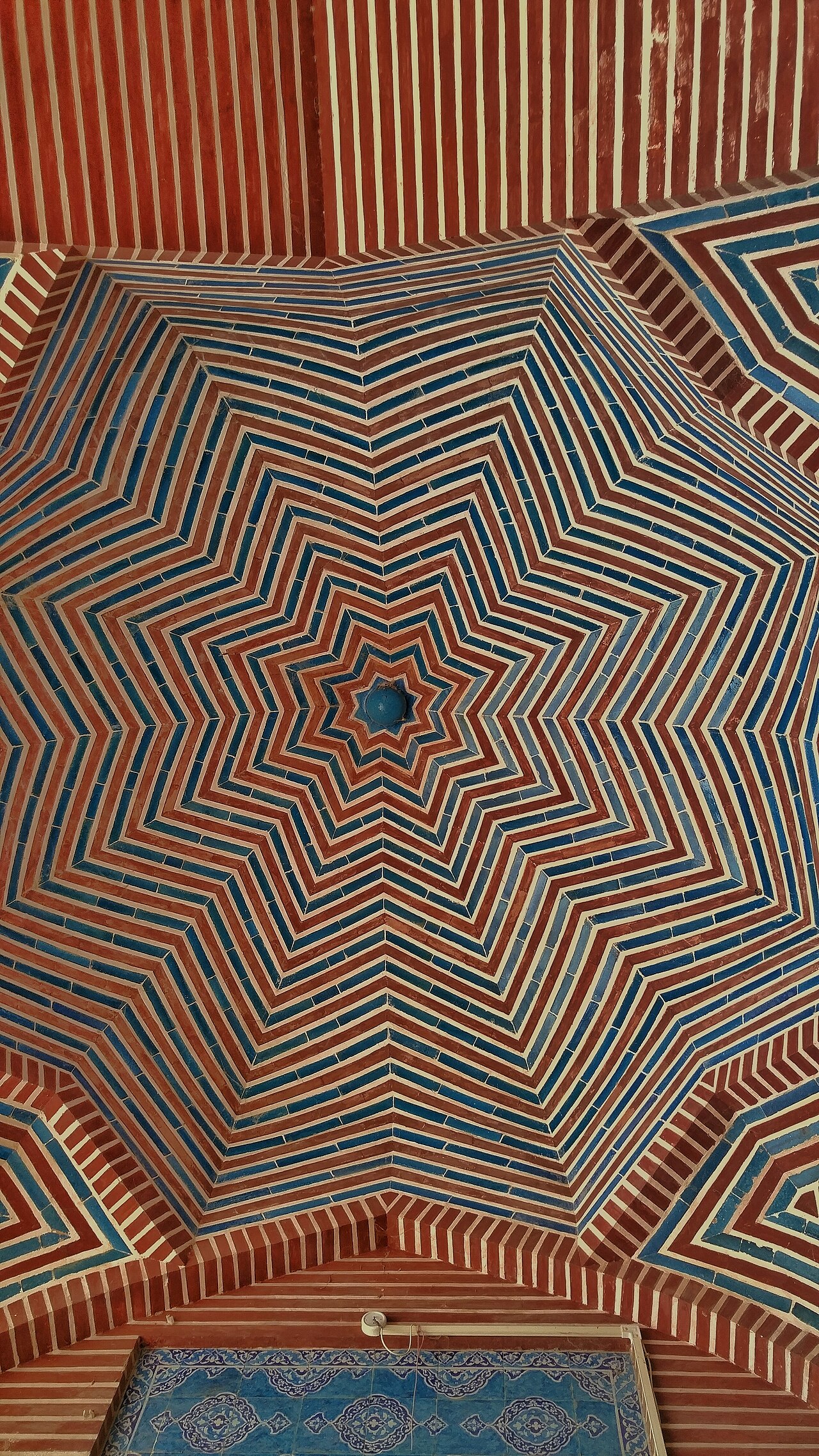
The Shah Jahan Mosque at Thatta has no minarets and ninety-three domes, and is considered to have the most elaborate tilework in South Asia. Shah Jahan built it as a thank-you: Thatta sheltered him when he was a refugee from his own father.
What it costs to drive there
| From | Distance | Driving | Petrol |
|---|---|---|---|
| Islamabad | 1364 km | 16.3 h | Rs 37,300 |
| Rawalpindi | 1354 km | 16.3 h | Rs 37,000 |
| Lahore | 1156 km | 13.6 h | Rs 31,600 |
| Karachi | 101 km | 1.7 h | Rs 2,800 |
| Peshawar | 1499 km | 17.8 h | Rs 41,000 |
| Multan | 836 km | 10.1 h | Rs 22,900 |
A car doing 12 km/l at today’s Rs 328.00/litre. Open a row to work it out for your own car, your own speed and with the air conditioning on — or see every distance from Thatta.
What it is
The main congregational mosque of Thatta, built in the seventeenth century. It is usually described as having the most elaborate display of tile-work in South Asia, and it is unusual among Mughal mosques for its geometric brickwork, which is a decorative language Mughal buildings generally do not use.
It sits in eastern Thatta, which was the capital of Sindh in the sixteenth and seventeenth centuries before the regional capital moved to Hyderabad. The Makli necropolis is next door, and Karachi is about 100 kilometres away.

Why it is here
Shah Jahan took refuge in Thatta from his father Jahangir, after rebelling against him. The hospitality he received from the people of Sindh made an impression, and when he became emperor he ordered this mosque built as a token of gratitude.
There may have been a second motive: a devastating storm hit the region in 1637 and nearly destroyed Thatta, and the building work would have helped.

Why it looks Central Asian
The architecture is heavily influenced by Central Asia rather than by the Mughal buildings of Lahore and Agra, and that is not an accident of local taste.
Shah Jahan was occupied at the time with his Central Asian campaign to recover Samarkand, his family's ancestral city. The Timurid influence in the design is the campaign showing up in the brickwork.

What there is to see
- The domes
- Ninety-three of them, and an acoustic arrangement that carries a voice across the hall.
- The tilework
- Blue and white, and the most elaborate in the region.
- The brick geometry
- Unusual for a Mughal mosque, and the Central Asian signature.
- Makli
- The necropolis next door — the two are one visit.
- Thatta
- The old capital of lower Sindh, around it.


When to go, and when not to
November to February. This is lower Sindh, about 100 kilometres from Karachi, and the summer here is severe.
Pair it with Makli, six kilometres up on the plateau, and with Bhambore on the way back towards Karachi. The three make one long day.
Where this comes from
- Shah Jahan Mosque, Thatta — Wikipedia — The seventeenth-century construction, the tilework and the unusual geometric brickwork, Shah Jahan's refuge in Thatta and the mosque as a token of gratitude, the 1637 storm, the Central Asian and Timurid influence and the Samarkand campaign, and the position near Makli and 100 kilometres from Karachi. Written from it, not copied; Wikipedia is CC BY-SA 4.0.
- OpenStreetMap — Road distances and driving times, via OSRM.