
Skardu
Baltistan Division, Gilgit-Baltistan
On video
Exploring Skardu: Gateway to Gilgit-Baltistan | Karakoram Highway Adventure | 4K Drone View by Travelcations on YouTube. Not ours, and not an endorsement — it is the clearest look at the drive and the valley we could find.
Skardu is the town at the end of most Pakistani road trips that go far enough north to run out of road. It sits where the Shigar river meets the Indus, on a wide valley floor with the Karakoram standing over it, and it is the base camp for almost everything beyond — K2 and the Baltoro, the Deosai plains, the lakes, and the cold desert that sits improbably at the edge of town.
Weather at Skardu
Up at 2,319 m: -6.7°C there now, clear. Over the next 24 hours -6.9°C to 0.4°C. It goes below freezing.
This is the weather at Skardu, not a road report — whether the road is open depends on ploughing, landslides and local decisions no forecast knows about, so check before you set off. Forecast from MET Norway, CC BY 4.0.
What it costs to drive there
| From | Distance | Driving | Petrol |
|---|---|---|---|
| Islamabad | 635 km | 8 h | Rs 17,400 |
| Rawalpindi | 646 km | 8.1 h | Rs 17,700 |
| Lahore | 999 km | 11.8 h | Rs 27,300 |
| Karachi | 2046 km | 24.1 h | Rs 55,900 |
| Peshawar | 730 km | 8.8 h | Rs 20,000 |
| Gilgit | 212 km | 2.6 h | Rs 5,800 |
A car doing 12 km/l at today’s Rs 328.00/litre. Open a row to work it out for your own car, your own speed and with the air conditioning on — or see every distance from Skardu.
What it is
Skardu is the capital of Baltistan Division and of Skardu District, and the largest town in a valley that the Indus has cut through the mountains. The valley floor is low by Karakoram standards — the airport sits at 2,230 metres — while the peaks around it rise to between 4,500 and 5,800 metres.
That gap is why the town matters. It is the last place with a bazaar, hotels, fuel and a hospital before the roads turn into tracks and the tracks turn into glaciers. Askole and Hushe, the roadheads for K2, the Gasherbrums, Broad Peak and the Trango Towers, are both reached from here.

A Buddhist valley, then a kingdom
Baltistan was inside the Tibetan cultural world from around the seventh century, and the evidence is still standing: Tibetan inscriptions are found across the region, and the Manthal rock outside Skardu carries a large carved Buddha from that period. The Balti language spoken in the town today is a Tibetan one.
After Tibetan authority faded around the ninth or tenth century, the Maqpon dynasty took over and ruled Baltistan from Skardu for roughly seven hundred years. Around the year 1500 Maqpon Bokha was crowned, made Skardu his capital, and brought craftsmen from Kashmir and Chilas to build it up. Kharpocho Fort dates from about then.
Islam arrived with scholars crossing the mountains from Central Asia and Iran in the fourteenth century, and the fort contains a mosque thought to date from the sixteenth.

The Dogra century
In 1839 the Dogra commander Zorawar Singh beat the Balti forces in the field and took Skardu Fort for the Dogra house of Jammu, then under Sikh suzerainty. The garrison's defenders were massacred. Baltistan rebelled two years later, after the Dogras were defeated in Tibet, and Gulab Singh sent a force that retook the fort — getting in, by one account, because a guard had been persuaded to leave a gate unlocked.
Baltistan stayed under Dogra rule, administered from Srinagar, until the fighting of 1947–48 — which is the short version of why a Tibetan-speaking valley in the Karakoram is today a district of Pakistan.

What there is to see
- Kharpocho Fort
- On the hill above the town, with the whole valley and the Indus laid out below it. Built by the Maqpon rulers, originally seven storeys, on a plan compared to Leh Palace and the Potala in Lhasa.
- The Manthal Buddha rock
- A large Buddha carved into a granite face just outside town, left from the centuries when this was a Buddhist valley. It takes ten minutes to reach and is usually empty.
- Satpara Lake
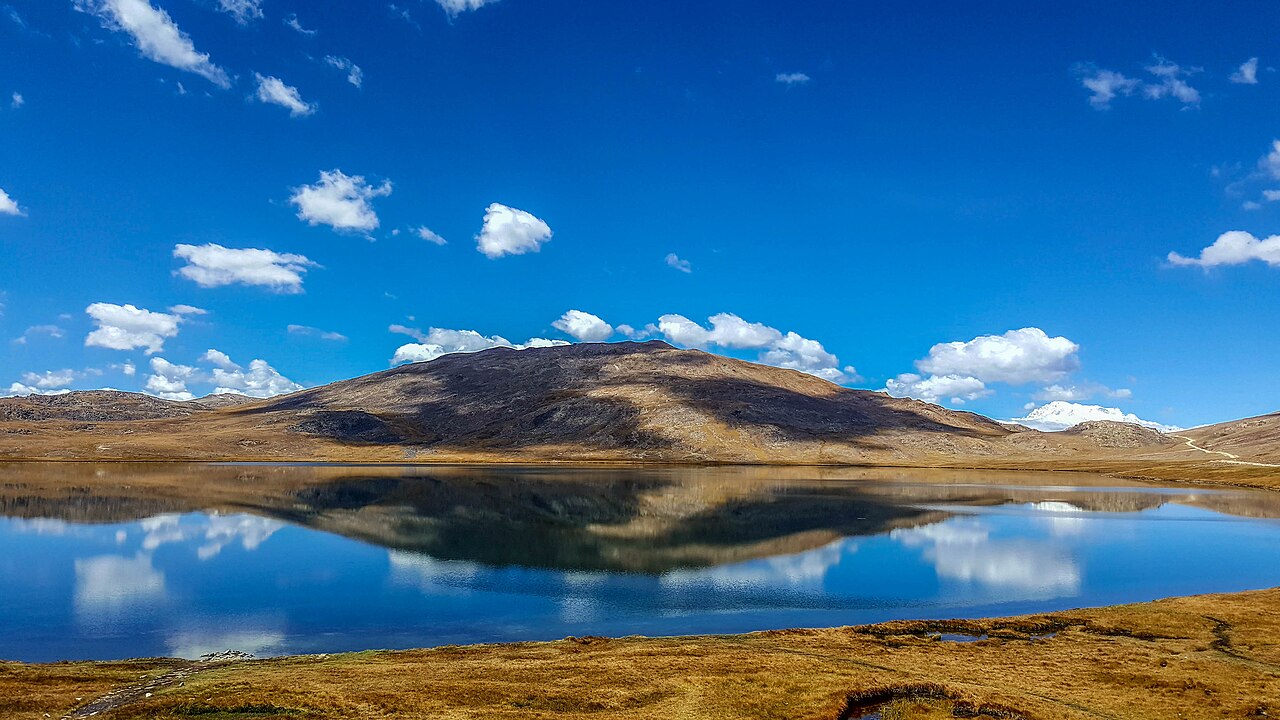
- The valley's main lake, about ten kilometres from town, and the source of Skardu's drinking water. A dam was built on it; the powerhouse units came into operation between 2011 and 2013.
- Lower Kachura, or Shangrila
- The lake most people mean when they say Shangrila, after the resort built on it. Its restaurant is inside the fuselage of a DC-3 that crash-landed nearby in October 1953 — everyone on board survived.
- Katpana cold desert
- Sand dunes on the valley floor, at over two thousand metres, which take snow in winter. There is no other way to describe it that makes it sound real.
- Deosai
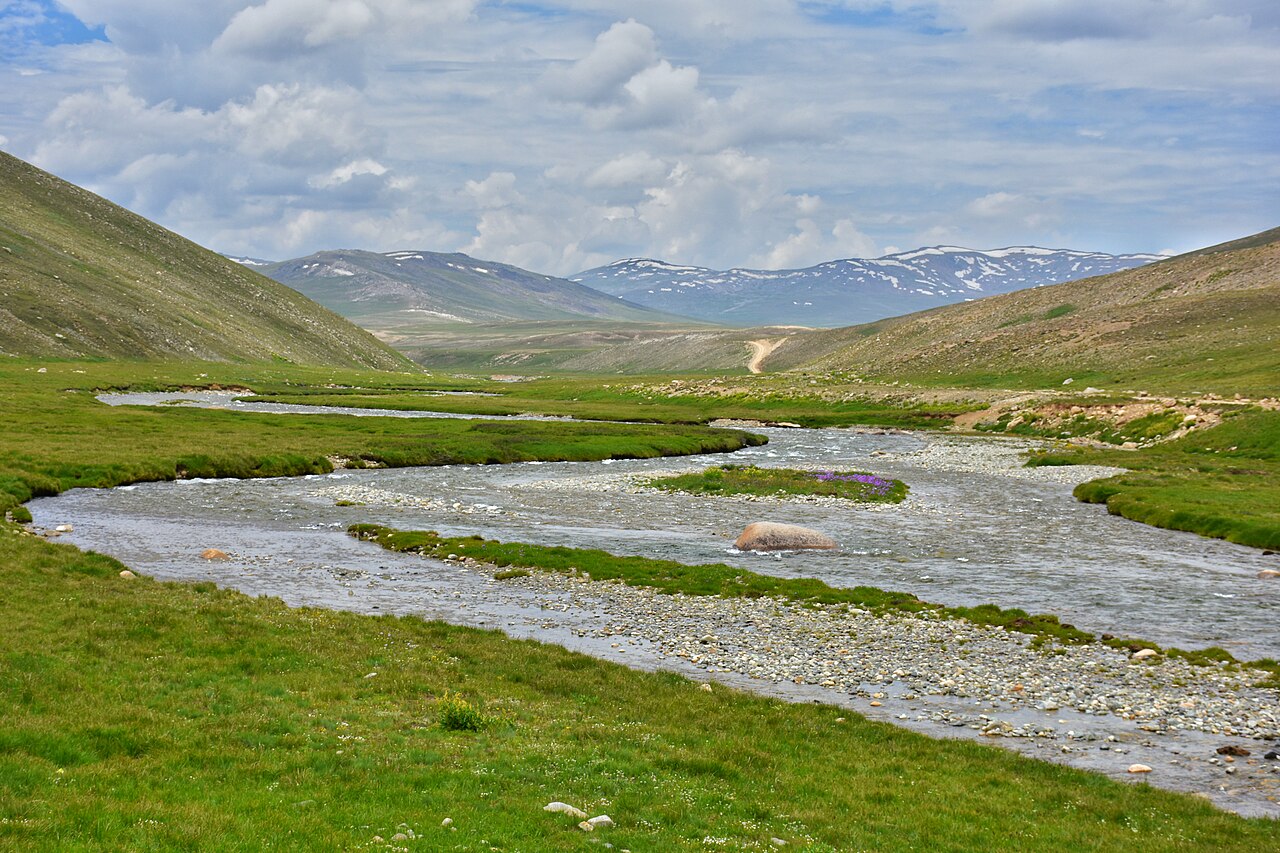
- The high plains south of Skardu, crossed by the road to Astore and Chilas. It is open in summer only.




When to go, and when not to
The season is April to October. Outside it the valley can be cut off for long stretches by snow, and that is not a figure of speech — the road and the flights both go.
Summer here is mild rather than hot: the mountains keep the heat of the plains out and they also block the monsoon, so there is little summer rain. They pay for it in winter, when the town drops below −10°C through December and January. The coldest reading on record is −24.1°C, on 7 January 1995.
Where this comes from
- Skardu — Wikipedia — History, geography, climate records and the sights above. Text on this page is written from it, not copied; Wikipedia is CC BY-SA 4.0.
- MET Norway — The live forecast and the town's height, CC BY 4.0.
- OpenStreetMap — Road distances and driving times, via OSRM.