
Taxila
Rawalpindi District, Punjab
On video
Taxila Full Documentary — Museum, Dharmarajika and the sites by CARVAN on YouTube. Not ours, and not an endorsement — it is the clearest look at the drive and the valley we could find.
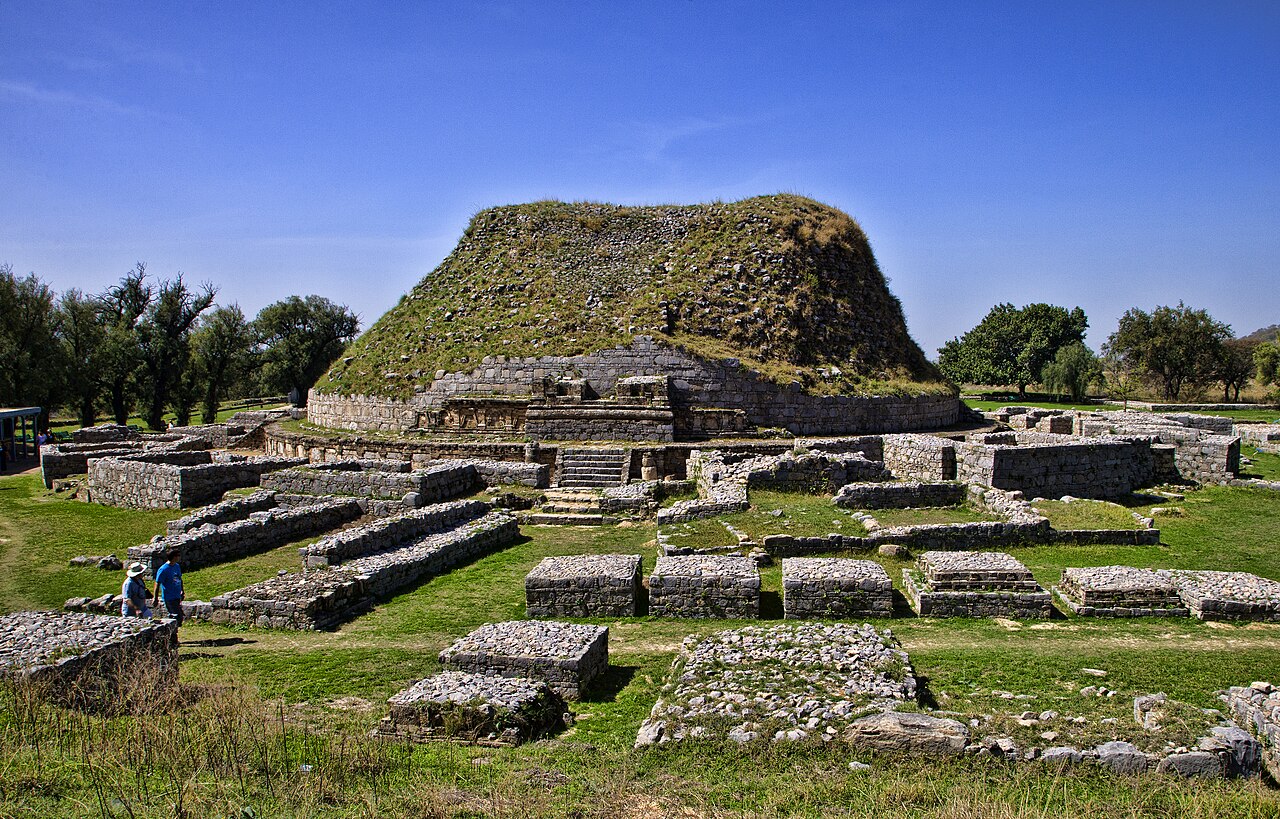
Taxila is one of the oldest cities in Asia, founded around 1000 BCE, and a UNESCO World Heritage Site since 1980. Alexander came here. So did Ashoka, the Indo-Greeks, the Scythians, the Parthians and the Kushans, and each of them left something standing. It is 25 kilometres from Islamabad.
What it costs to drive there
| From | Distance | Driving | Petrol |
|---|---|---|---|
| Islamabad | 36 km | 0.6 h | Rs 1,000 |
| Rawalpindi | 32 km | 0.6 h | Rs 900 |
| Lahore | 368 km | 4.3 h | Rs 10,100 |
| Karachi | 1419 km | 16.6 h | Rs 38,800 |
| Peshawar | 146 km | 1.7 h | Rs 4,000 |
| Multan | 512 km | 7.1 h | Rs 14,000 |
A car doing 12 km/l at today’s Rs 328.00/litre. Open a row to work it out for your own car, your own speed and with the air conditioning on — or see every distance from Taxila.
What it is
A city and World Heritage Site in Rawalpindi District, on the Pothohar plateau about 25 kilometres north-west of the Islamabad–Rawalpindi metropolitan area and just south of Haripur District. It is one of Punjab's most visited places, drawing up to a million people a year.
Ancient Taxila, with Pushkalavati, was one of the capitals of the Gandhara civilisation, and has been suggested as the capital of the Achaemenid province of Hindush between about 500 and 330 BCE.
Everyone came through here
The city is named in Panini's writings. Its king — Taxiles to the Greeks — accepted Alexander's suzerainty in 326 BCE once the Achaemenids had fallen. The Mauryans took it within decades, and Buddhist texts have Ashoka governing here before he became king.
After that the Indo-Greeks, the Indo-Scythians, the Indo-Parthians and the Kushans each made Taxila their capital in turn, and each left buildings. Some scholars count what is conventionally called the University of ancient Taxila among the earliest centres of learning in Asia.
The Hunas devastated it in the fifth century. When the Chinese monk Xuanzang passed through in the seventh he described a city in decline, and after that it faded. The ruins were rediscovered in the mid-nineteenth century by Alexander Cunningham and excavated at length by Sir John Marshall.
What is actually on the ground
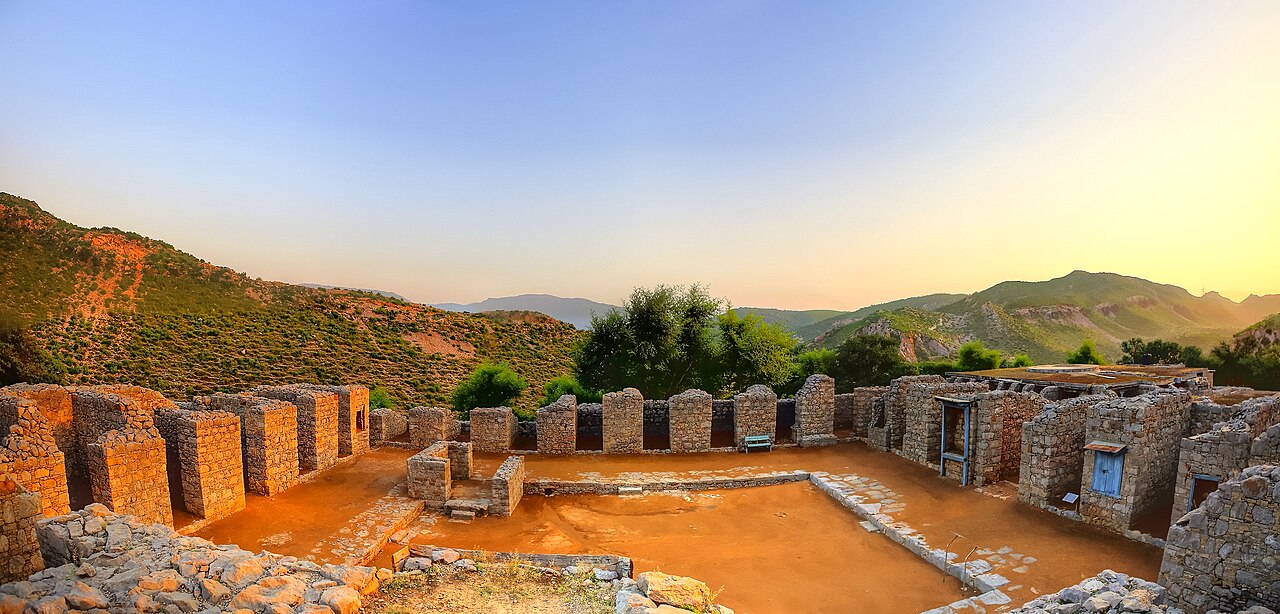
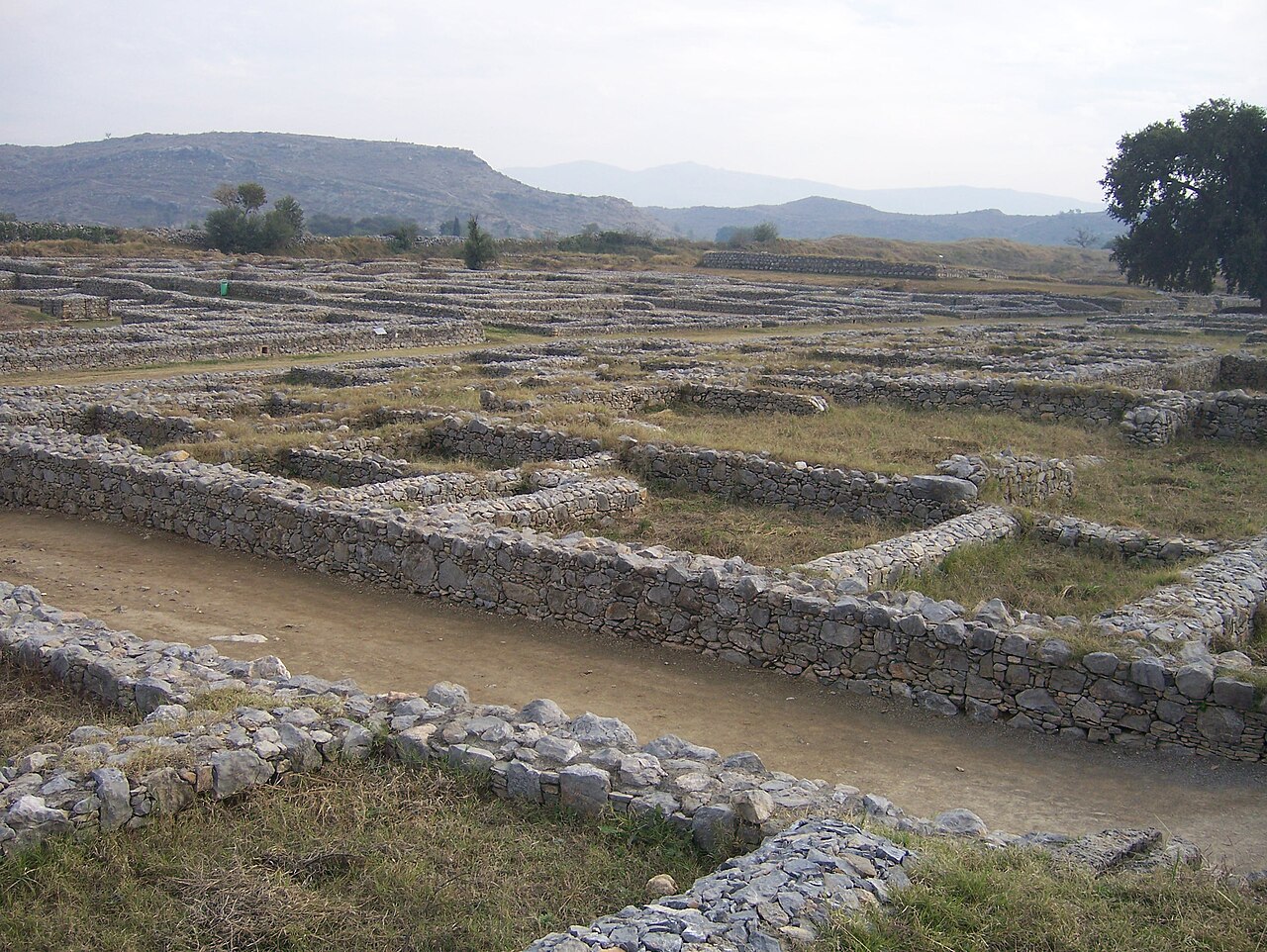
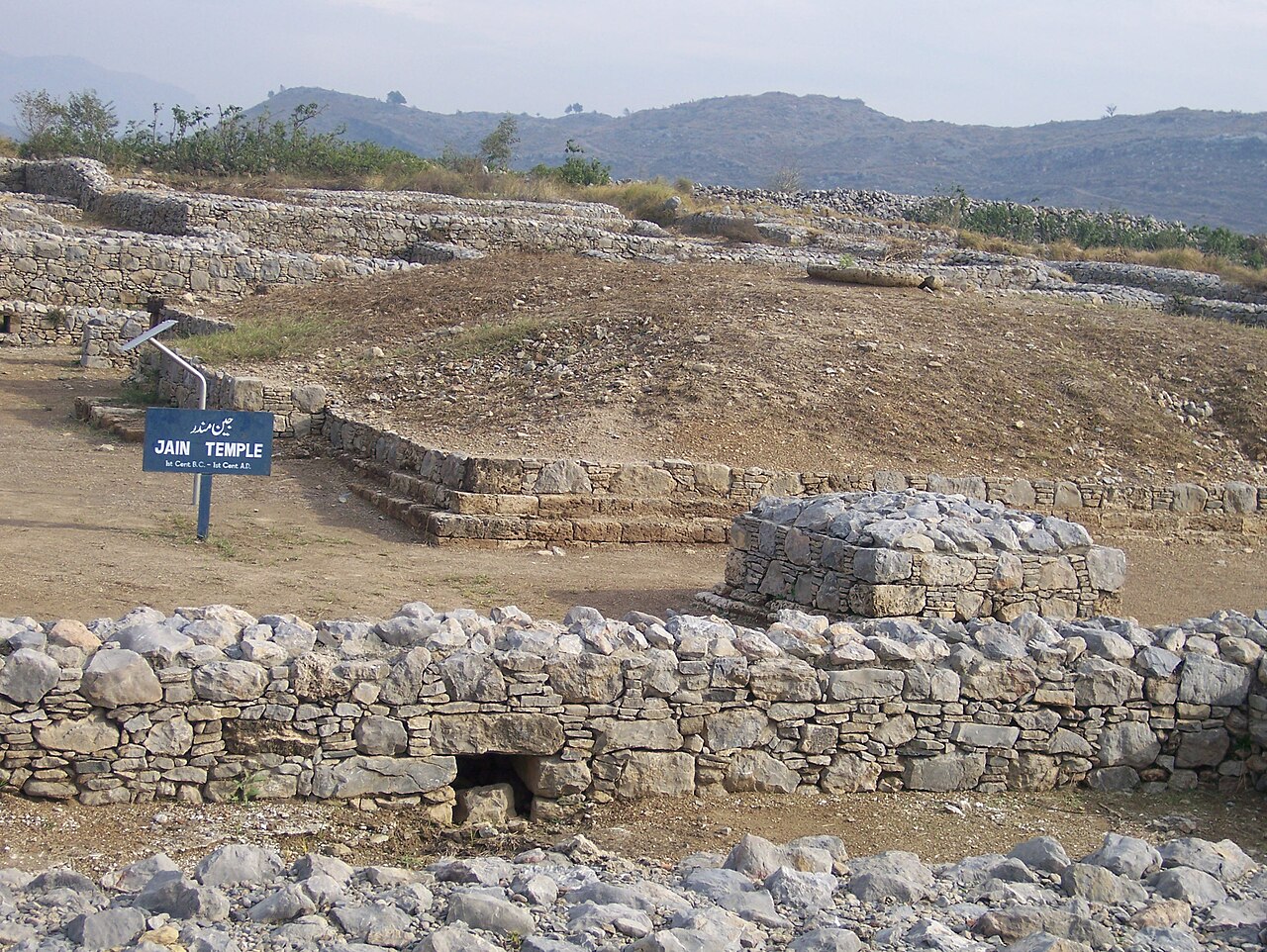
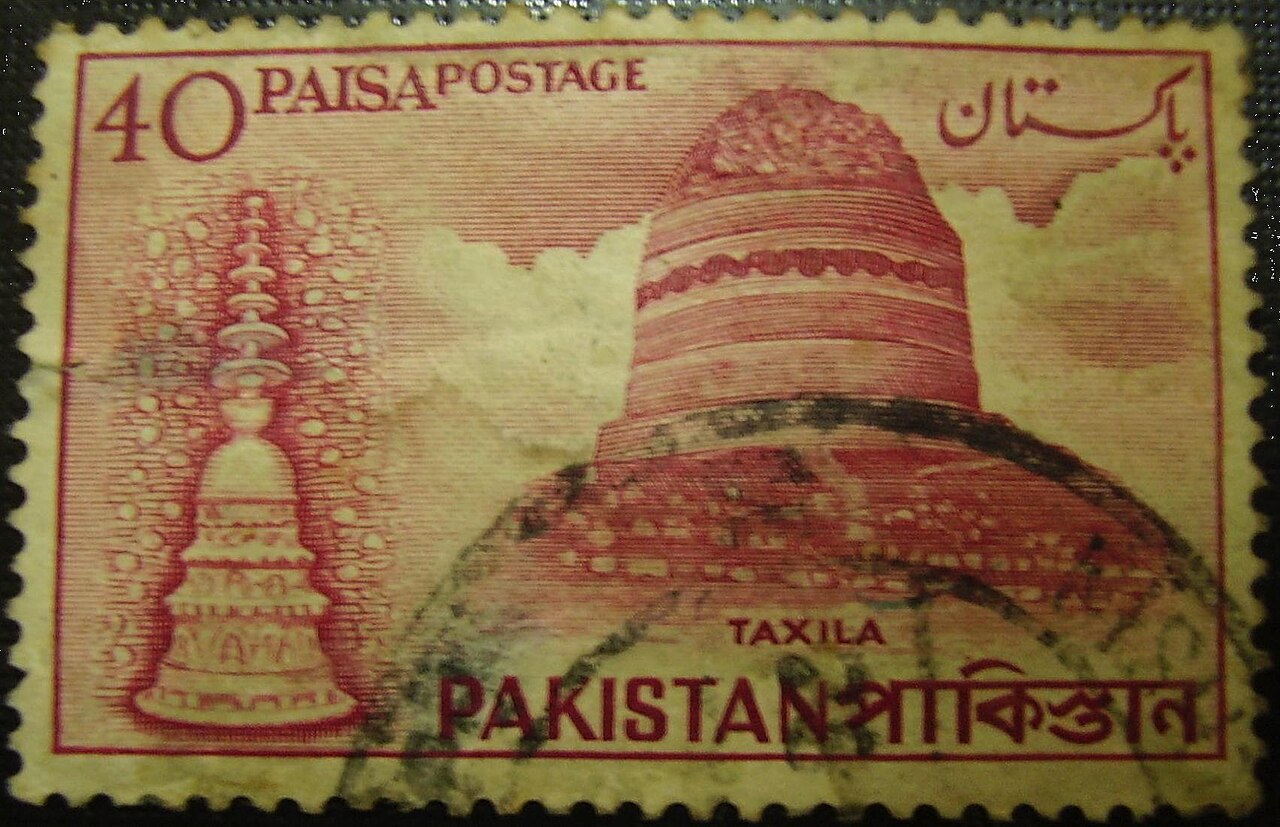
Not one site but several, spread over a few kilometres: the Dharmarajika stupa, the city of Sirkap laid out on a Greek grid, the monastery at Jaulian on the hill, and the museum that holds what came out of them.
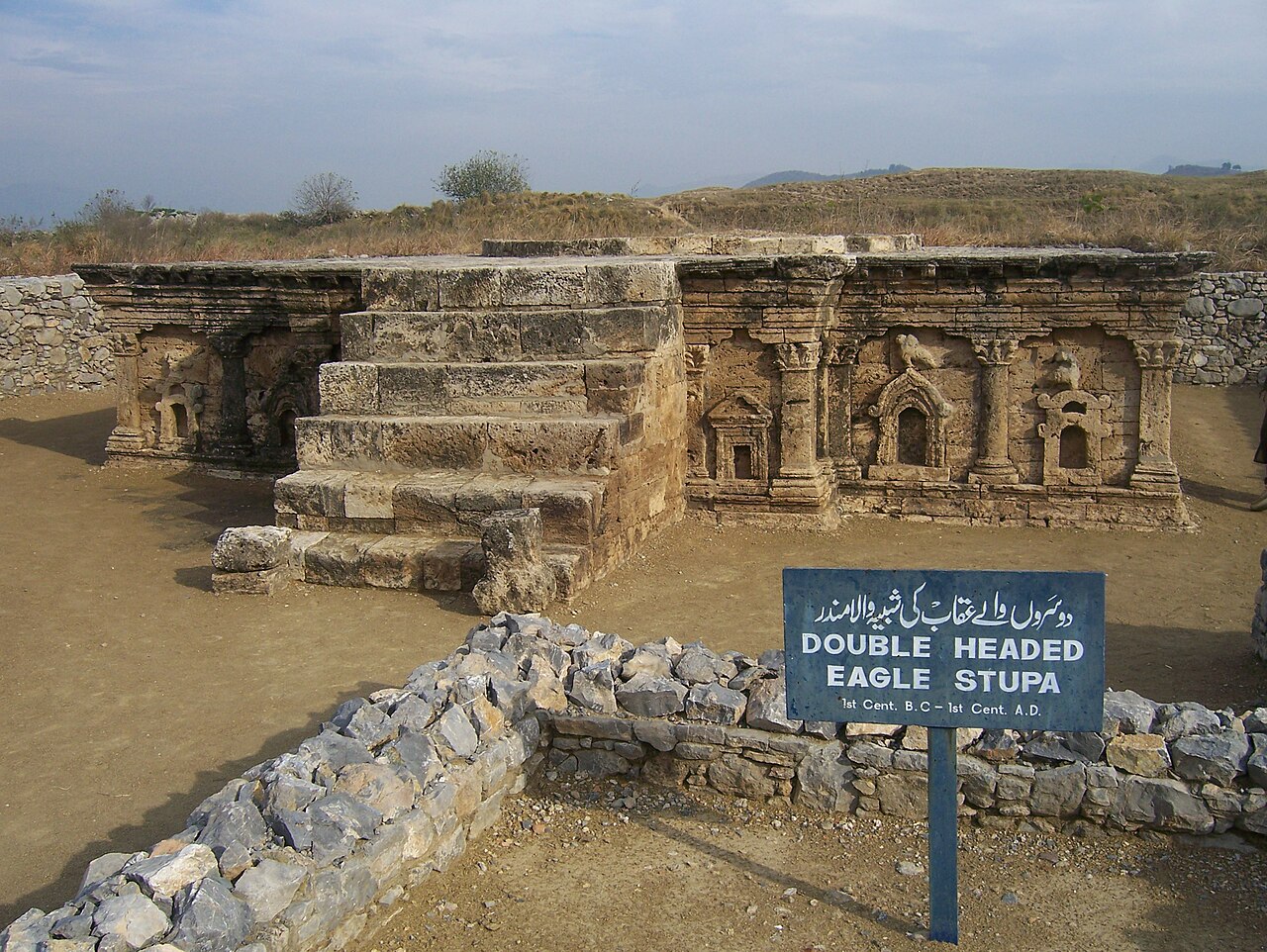
The Double-Headed Eagle stupa at Sirkap is the one worth standing in front of: Greek, Hindu and Buddhist motifs on a single building, which is the whole history of the place in one wall.
What there is to see
- Dharmarajika stupa
- The largest monument on the site, about three kilometres from the museum.
- Sirkap
- The Indo-Greek city, laid out on a grid you can still walk.
- Jaulian
- The monastery on the hill above, and the best-preserved of the group.
- Taxila Museum
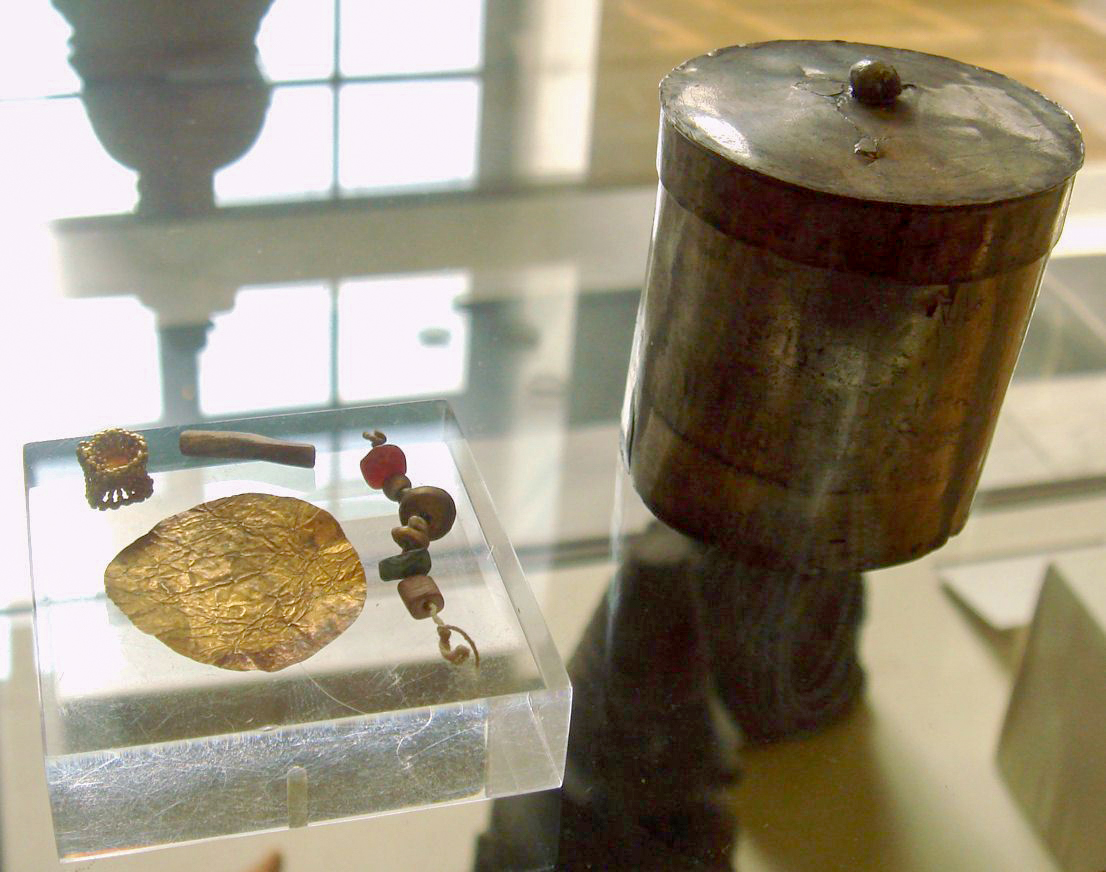
- Where the reliquaries, sculpture and small finds are. Start here.
- Khanpur Dam
- Eighteen kilometres on, if you want a second half to the day.
When to go, and when not to
October to March. The sites are spread out and exposed, with a fair amount of walking between them and little shade, and a Punjab summer afternoon makes that an endurance exercise.
Allow most of a day if you want more than one site. Doing the museum and Dharmarajika, then Sirkap and Jaulian, is a full morning and afternoon.
Where this comes from
- Taxila — Wikipedia — The c. 1000 BCE founding, the 1980 UNESCO listing, the 25 kilometres from Islamabad and the million visitors, Gandhara and the Achaemenid suggestion, Alexander and Taxiles, Ashoka, the successive dynasties, the Huna destruction and Xuanzang, and the Cunningham and Marshall excavations. Written from it, not copied; Wikipedia is CC BY-SA 4.0.
- OpenStreetMap — Road distances and driving times, via OSRM.