
BYD Atto 3 Advance 2024 Model Range, Battery and Running Cost
Range and efficiency
An electric car has no fuel average. The figure that matters is range, and the 410 km above is the manufacturer's claim on its home market's test cycle — Pakistani heat and air-conditioning use will not reproduce it. At 8.2 km per kWh, your cost per kilometre is your own electricity tariff divided by 8.2. We do not print a rupee figure because domestic tariffs in Pakistan are slabbed, and a single number would be wrong for most households.
Verified fuel figures for this variant are not available yet.
EV/PHEV placeholder: store km/kWh or combined logic later. | BYD began selling imported EVs in Pakistan March 2025; Atto 3 range ~410 km (spec). Set start 2025. [Retired 2026-09-25: superseded by a researched row for the same car.] [Kept as canonical: Search Console shows this URL earns the clicks.]
What servicing costs
Nobody has reported a bill for this one yet. Pakistani makers mostly do not publish what servicing costs, so an owner's receipt is the only figure there is.
Fuel consumption data for BYD Atto 3 in Pakistan.
| Specification | Value |
|---|---|
| Powertrain | BEV |
| Engine / Motor | EV |
| Transmission | Automatic |
| Power | 201 hp |
| Torque | 310 Nm |
| Battery | 49.92 kWh |
| Electric range | 410 km |
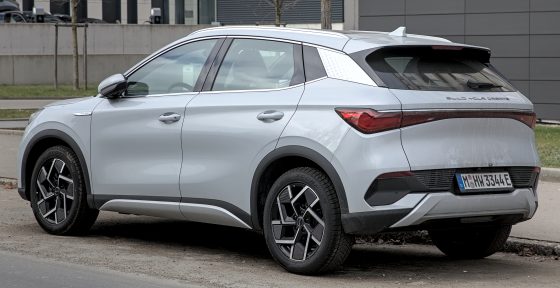
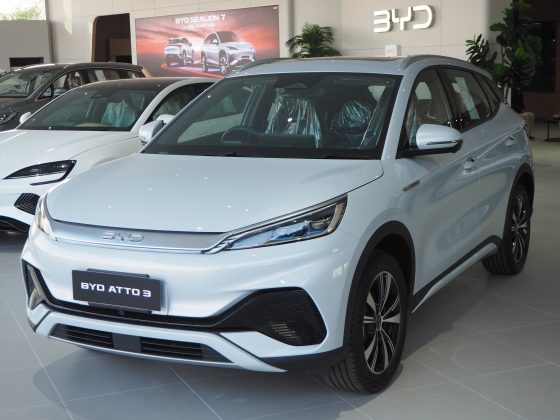
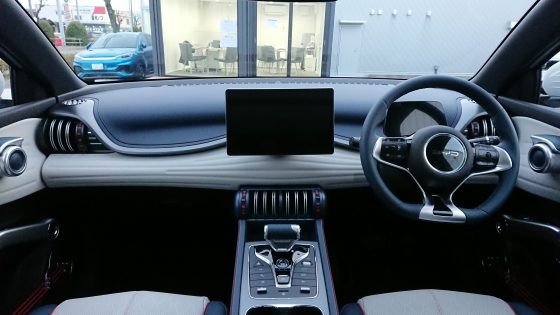
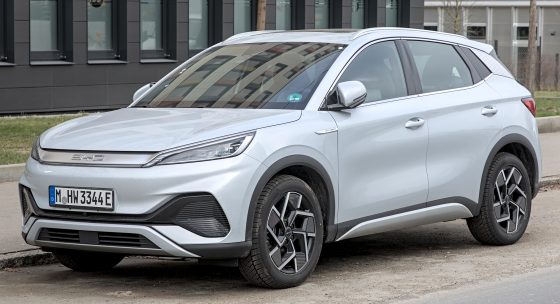
Photos
4 photos · 3 exterior, 1 interior · Photo: Alexander Migl, CC BY-SA 4.0 via Wikimedia Commons, Photo: Chanokchon, CC BY-SA 4.0 via Wikimedia Commons, Photo: 芯正, CC BY-SA 4.0 via Wikimedia Commons
2026 BYD Atto 3 variants
Prices are ex-factory and exclude freight, registration and withholding tax.
- 5
- Seat capacity
- EV
- Engine
- Automatic
- Transmission
The good & the bad
The good
- ▲Real-world range reported by Pakistani owners - roughly 350 km mixed use against a 410 km claim - is comfortably more than a week of typical city commuting between charges
- ▲The LFP Blade chemistry tolerates heat and high states of charge better than the nickel-based packs in several rivals, which matters in a country that sees 45C for months
- ▲Vehicle-to-Load lets the car run household appliances during load-shedding - genuinely useful here rather than a brochure line
- ▲Running cost per kilometre on home electricity is a fraction of petrol, and the gap widened as fuel prices rose through 2026
- ▲The distributor is a large listed power company whose sister arm is actually building the charging network rather than leaving it to third parties
- ▲Equipment at the price is generous - seven airbags, rotating central touchscreen, panoramic sunroof, adaptive cruise - and the small pool of local owner reviews is consistently positive on refinement and ride
The bad
- ▼Every Atto 3 is imported. Spare parts are a shipping lane, not a local warehouse, and a body-panel or high-voltage component order can mean weeks off the road
- ▼The authorised service network is effectively three cities. Elsewhere a warranty job means a long drive or a tow, and no independent workshop is equipped to touch a high-voltage system
- ▼Resale is unproven - BYD has about eighteen months of history here, and the cheaper Atto 2 directly undercuts used Atto 3 values
- ▼Long-term battery serviceability is untested. There is no local pack-repair capability and nobody here has yet had to price that job out of warranty
- ▼Public charging is confined to Karachi, Lahore and Islamabad, so intercity travel outside that triangle requires planning around chargers that do not exist yet
- ▼Load-shedding undercuts the home-charging premise - the standard 2.2 kW charger needs 8 to 12 uninterrupted hours, which many neighbourhoods do not get
- ▼Pakistan gets the 49.92 kWh standard-range pack, not the 60.48 kWh version other markets receive, so the car is short-changed on the one specification buyers care most about
Our BYD Atto 3 review
Colours
BYD Atto 3 by year
Photographs: Photo: Alexander Migl, CC BY-SA 4.0 via Wikimedia Commons; Photo: Chanokchon, CC BY-SA 4.0 via Wikimedia Commons; Photo: 芯正, CC BY-SA 4.0 via Wikimedia Commons.